Tag: John Adams

  • The Civil War: Henry Adams to Charles Francis Adams Jr.

    The Civil War: Henry Adams to Charles Francis Adams Jr.

    December 18, 1860

    Washington, D.C., as ever, was the site of negotiations that would change the direction of the country. A month after Abraham Lincoln’s victory in the election of 1860, the national dialogue was rife with talk of secession. However, there had not yet been any state that had made good on its threats and seceded. There was even talk of ratifying an amendment to the Constitution that would protect the institution of slavery—but it would not amount to anything more than talk.

    (more…)
  • The Revolution: Thomas Jefferson on the Draft Articles of Confederation (Part II)

    The Autobiography. By: Thomas Jefferson

    July 30, 1776 – August 1, 1776

    How the colonies would get along with each other was always going to be a monumental challenge. And, when the nation was born, there was tension between delegates and their states in setting up the framework for how the colonies would vote. With states such as Massachusetts and Pennsylvania being much larger in size and population, smaller states such as Rhode Island could justifiably fear that confederating with the colonies would bring more harms than benefits. However, to the chagrin of larger states, in the draft Articles of Confederation, at Article XVII, it stated: “In determining questions each colony shall have one vote.”

    (more…)
  • The Revolution: Thomas Jefferson on the Draft Articles of Confederation (Part I)

    The Autobiography. By: Thomas Jefferson.

    July 30, 1776 – July 31, 1776

    In Thomas Jefferson’s autobiography, he wrote of the debate and adoption of the Articles of Confederation. While the country has long learned that the Constitution is far superior to those Articles, the reasons why must extend beyond “a stronger national government was needed under the Articles, and the Constitution cured that defect.” A committee took up the Articles on July 30th and 31st and then August 1st of 1776. During the first couple days, the delegates debated how to calculate each state’s monetary contribution to the “common treasury” and the “manner of voting in Congress.” And it was there that controversy occurred; controversy that would continue to the time when the Constitution was drafted and adopted and even to nearly 250 years later.

    (more…)
  • The Election of 1872

    The Election of 1872

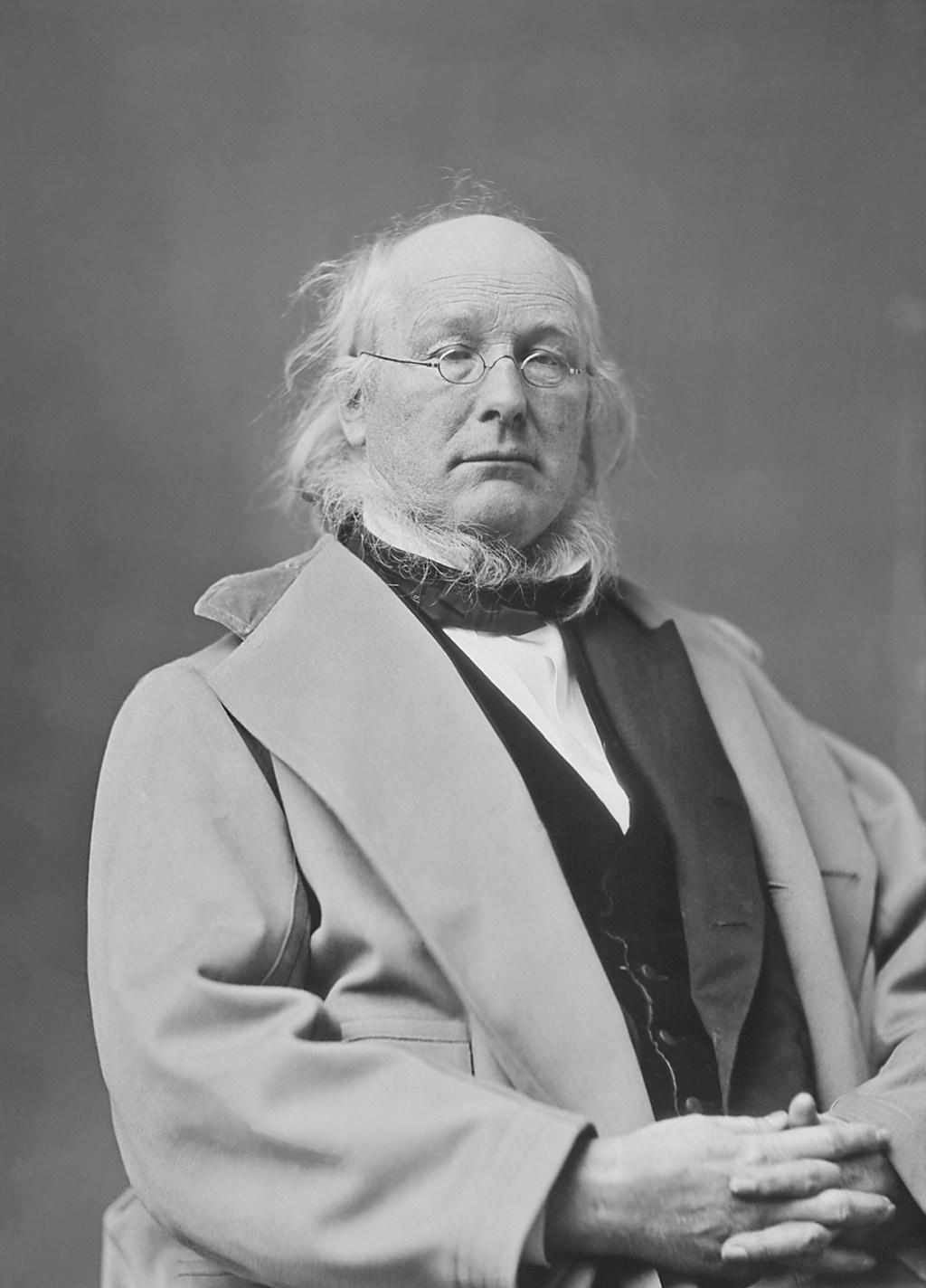
    From the time that Ulysses S. Grant became a household name in America—during the Civil War—and particularly following Lincoln’s assassination, there was no more popular American in the remainder of the Nineteenth Century. The presidential election of 1868 showed the level of support that Grant had: although it was his first election, he won the entirety of the Midwest and New England and even took six of the former Confederate states. He was always going to be a formidable opponent. As the election of 1872 approached, it became clear that Grant, a Republican, would not have to vie for re-election against a candidate with the stature of a fellow former general or even a well-established politician; instead, his challenger would be the founder and editor of a newspaper: Horace Greeley, a Democrat. Although Greeley had one term in the House of Representatives at the end of the 1840s, his following stemmed not from his brief time as a politician but rather the incisive pieces that he wrote and published in his newspaper, the New-York Tribune. As loyal as his readers were, there remained a question whether Greeley’s following could grow to unseat the man who still, seven years after the war, was viewed as bringing peace and prosperity to the country.

    (more…)
  • The North’s Attempt at Salvation

    washington-dc
    Aerial Perspective of Washington DC in 1861.

    The Deep South’s animating of a Second American Revolution, by seceding from the Union and laying the foundation for an operational Confederate government, forced the North to either suppress the South’s uprising or craft a resolution. The likelihood of war would deter any widespread northern suppression, leaving the question: What compromise could the North propose that appeased the South and put both sections of the country on a path of coexistence? While variations of this question had been posed in the years leading up to 1860, at no prior point were states seceding from the Union en masse to form a rival government. (more…)

  • The Theories of Slavery

    a89cbad2a1dccb130f3199e02ae7de2c
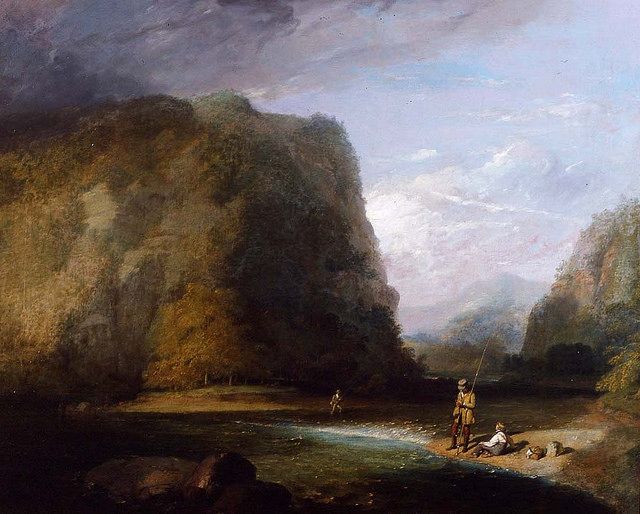
    Trout Fishing in Sullivan County, New York. By: Henry Inman.

    In the 15 years leading up to the Civil War, a wide variety of theories emerged for how the federal government should deal with slavery expanding, or not expanding, into the territories acquired by the United States.

    (more…)

  • A First Test for Separation of Church and State

    cholera-1832
    A Depiction of the Cholera Outbreak in New York City in 1832.

    With the communications and transportation revolution came new, unforeseeable consequences. One such consequence was the spread of cholera and other contagious diseases, which would test the mettle of Americans.

    (more…)

  • The Heir to the Founders

    john-quincy-adams-picture
    John Quincy Adams.

    On July 4, 1826, during America’s Golden Jubilee, celebrating the 50th anniversary of the Declaration of Independence, Thomas Jefferson and John Adams died. Daniel Walker Howe, What Hath God Wrought: Transformation of America, 1815-1848, 243. The two political rivals were two of the last three surviving signers of the Declaration of Independence, leaving only Charles Carroll of Maryland alive. Id. President John Quincy Adams, learning of his father’s death and Jefferson’s death, remarked that it was a “‘visible and palpable mark of Divine favor,’ to the nation, and most of his countrymen agreed.” Id. quoting James Morton Smith, The Republic of Letters (New York, 1995), II, 1973-74.

    (more…)

  • The Election of 1824

    m-9636
    William Harris Crawford.

    Not long after the election of 1820, an essentially uncontested election seeing the re-election of President James Monroe, the campaigning for the election of 1824 began. President Monroe had indicated that he would not seek an unprecedented third term as president, but that did not stop others from posturing for the election. As a journalist observed in the spring of 1822, “electioneering begins to wax hot.” Daniel Walker Howe, What Hath God Wrought: Transformation of America, 1815-1848, 203 quoting James F. Hopkins, “Election of 1824,” in History of American Presidential Elections, ed. Arthur M. Schlesinger Jr. (New York, 1985), 363.

    (more…)

  • The Two Scales and the Hand that Holds it

    benjamin-lincoln-5
    Benjamin Lincoln. By: John Singer Sargent.

    Benjamin Lincoln wrote a series of articles in the Boston Magazine and Independent Chronicle that would touch on many of the same subjects as John Adams in his Defence of the ConstitutionSee Gordon Wood, The Creation of the American Republic: 1776-1787, 576.

    (more…)