The American Revolution was a consequence of more than just The Stamp Act of 1765 or the frustration that Americans felt with the British imperial system. But in fact, the “American Revolution was actually many revolutions at once.” Gordon Wood, The Creation of the American Republic: 1776-1787, 75.
City Hall of New York City in 1789, where Congress convened during the 1790s.
In the earliest years of the American Republic, theories were abound about the proper structure of government to best balance equality and wise decision-making. John Adams stated, in his Thoughts on Government, that “a people cannot be long free, nor ever happy, whose government is in one assembly.” Gordon Wood, The Creation of the American Republic: 1776-1787, 208-09 quoting John Adams, Thoughts on Government, Adams, ed., Works of John Adams, IV, 194, 196. These theories became tested throughout the young country, in each of the state’s constitutions.
At the time of the American Revolution, it was commonly believed amongst Americans that formulating the ideal government would require a different system than any previously conceived. The Founding Fathers had their own ideas.
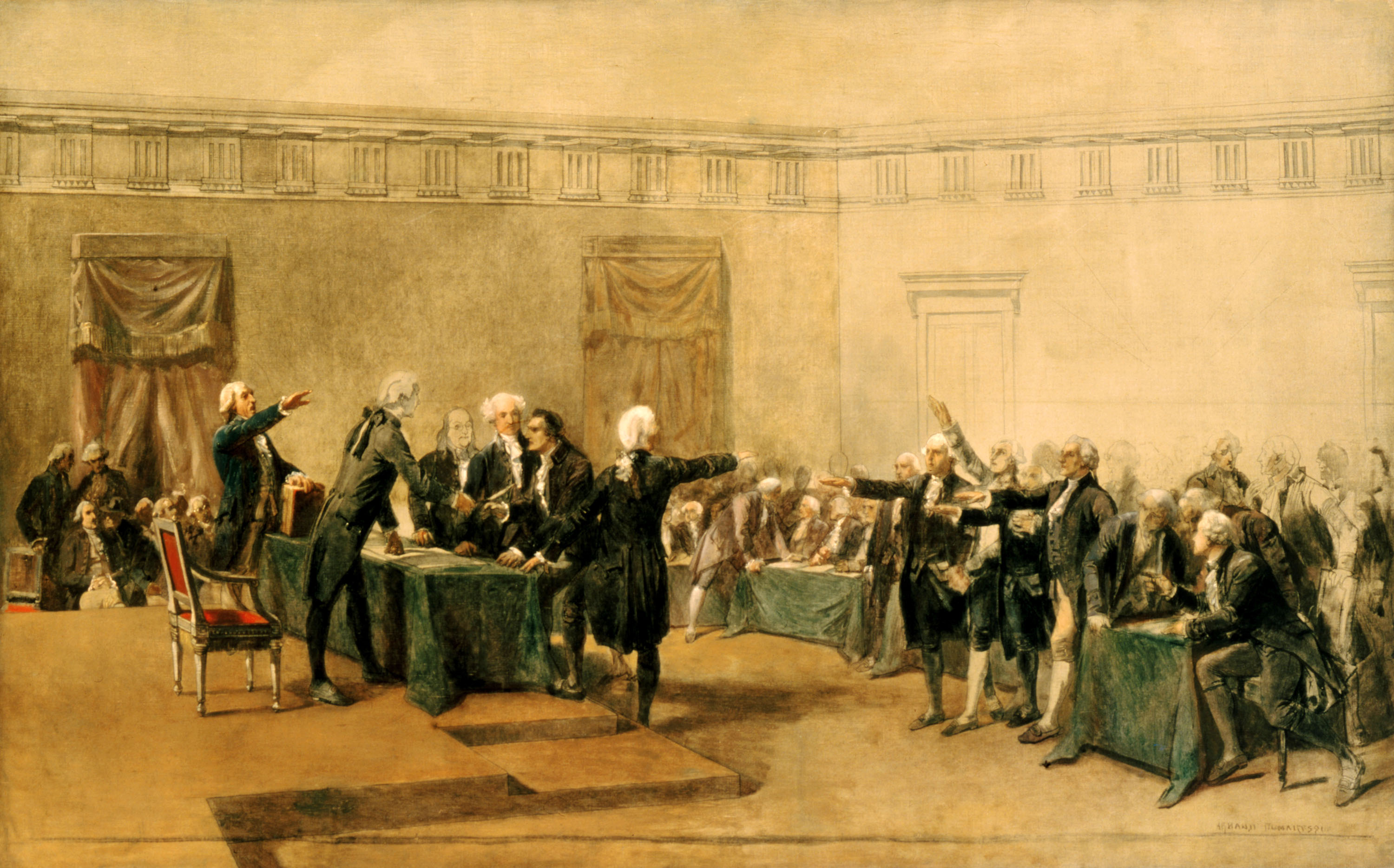
Signing of Declaration of Independence. By: Armand Dumaresq.
Tyranny, one of the early Americans’ greatest fears, may seem to contemporary Americans an unjustified fear. Perhaps that is because the early Americans’ precautionary actions relegated the threat of tyranny to the 18th Century. Perhaps not. (more…)
The success or failure of countries, and politicians for that matter, are an often studied subject. Studies have been ongoing for centuries.
James Burgh, an English Whig, wrote: “Almost all political establishments have been the creates of chance rather than of wisdom. Therefore it is impossible to say what would be the effect of a perfect commonwealth” as there was no precedent in history. James Burgh, Political Disquisitions, Vol. 1, 23. (more…)
Signing of the Constitution. By: Louis S. Glanzman.
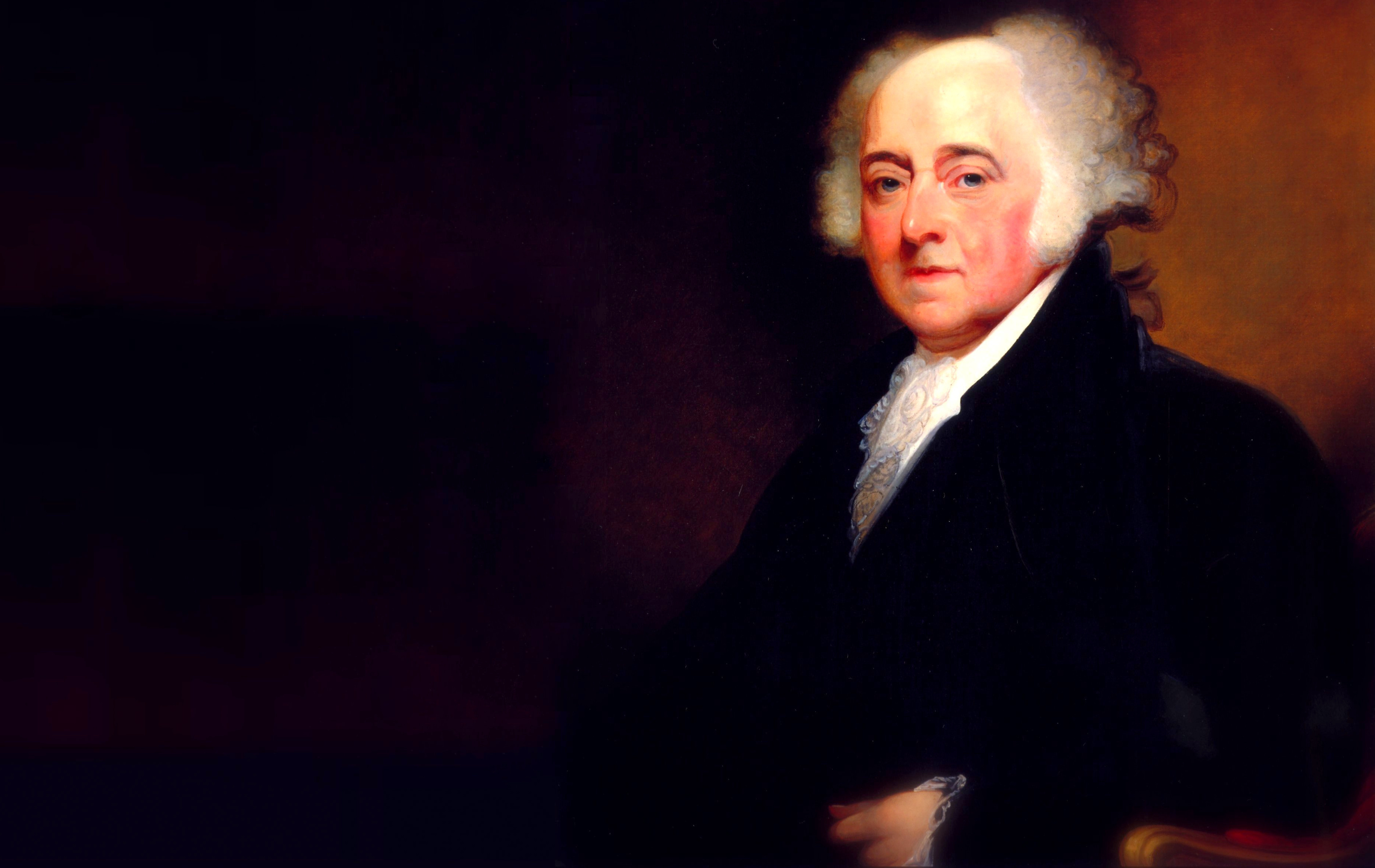
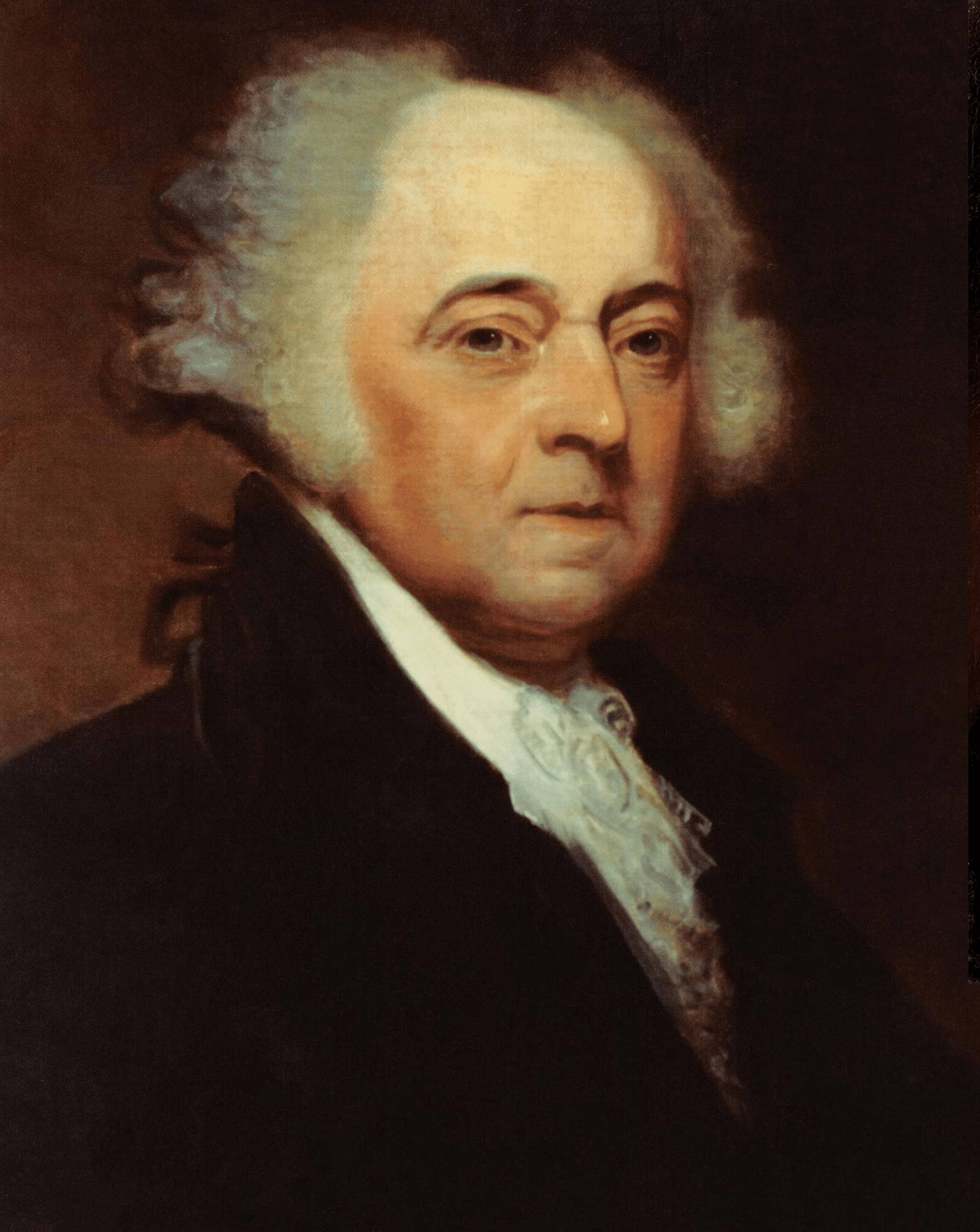
John Adams had strong opinions about federalism. He believed that the government should be structured similarly to the British Empire, given the British Empire’s extraordinary success.
At the time of the signing of the Constitution, Adams firmly believed that the Constitution had secured a national government, as opposed to a government dividing its sovereignty into states and a federal government. Gordon Wood, Revolutionary Characters: What Made the Founders Different, 191. (more…)
Painting of the Inauguration of President George Washington. By: Jean Leon Gerome Ferris.
For many of the Founding Fathers, the biggest threat to the stability and success of the United States was tyranny. Tyranny was a force that could bring down the most free and just societies. Underlying much of the creation of the institutions that now define the American government, the judiciary, the legislature, and the executive, are precautionary and prophylactic measures to prevent tyranny. (more…)
John Adams was amongst the most hopeful about America’s prospects for the future. At the time of the Declaration of Independence and the years of the American Revolution, he believed America could avoid the pitfalls of the European nations.
But just ten years later, Adams was of a different mind. In 1787, he wrote his Defenceof the Constitutions, where he concluded that “his countrymen were as corrupt as any nation in the world.” Gordon Wood, Revolutionary Characters: What Made the Founders Different, 181. (more…)
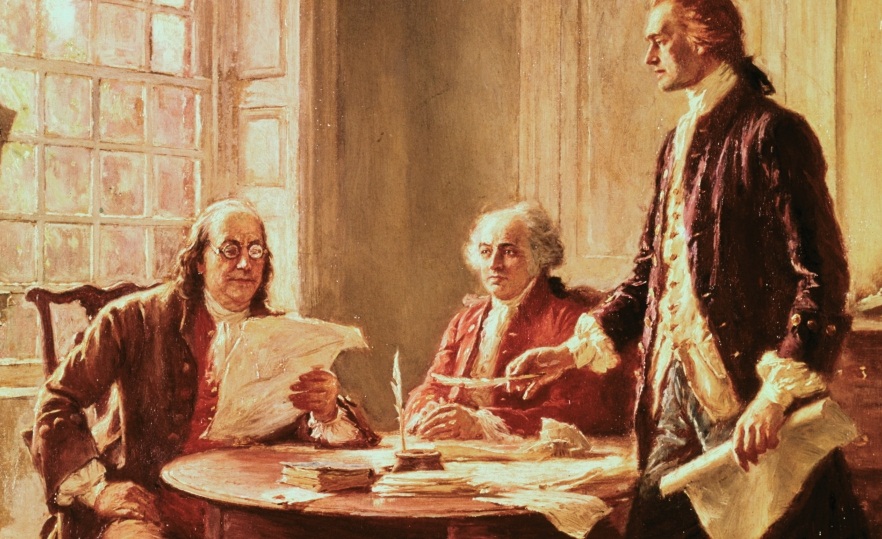
Depiction of Benjamin Franklin, John Adams, and Thomas Jefferson.
Gordon Wood began his 2006 book Revolutionary Characters: What Made the Founders Different by stating that “[n]o other major nation honors its past historical characters, especially characters who existed two centuries ago, in quite the manner we Americans do.” Gordon Wood, Revolutionary Characters: What Made the Founders Different, 3.
He continued, stating that Americans “want to know what Thomas Jefferson would think of affirmative action, or George Washington of the invasion of Iraq.” Id.
Scholars apparently have varying views as to why modern Americans revere the Founding Fathers, over two centuries after they first acquired their fame. Id. at 4.
Some scholars believe that it is because Americans are concerned “with constitutional jurisprudence and original intent” forming the basis for the Constitution. Id.
Other scholars posit that analyzing the Founding Fathers allows modern Americans to “recover what was wise and valuable in America’s past.” Id.
Another set of scholars explain that Americans look to the Founding Fathers to define the American identity. Id.
As Gordon Wood explained, this was not always the case. Toward the late 1800s and early 1900s, some Americans questioned the wisdom, accomplishments, and place of the Founding Fathers. Id. at 5. Nonetheless, for a significant portion of the 1900s and continuing into the 2000s, Americans look to the Founding Fathers for guidance.
While scholars may disagree as to the underlying purpose for modern Americans to honor the Founding Fathers, it can likely be explained by two points: (1) the Founding Fathers rigorously worked to create the best form of government possible and (2) the Founding Fathers knew adversity, difficulty, and hardship and yet held the country together.
As to the first point, the Founding Fathers engaged in one of the most substantial debates in history as to how a country should be best governed by its people to best ensure their happiness and prosperity. The resulting government was not only revolutionary and coherent, it has facilitated America’s success for two centuries with only 27 amendments to the Constitution being necessary.
The second point weighs a little heavier. The United States has endured many wars, tragedies, and difficulties. Few rival the tumultuous, uncertain times of the Revolution. Regardless, in both stable times and otherwise, America and its leaders have looked to the Founding Fathers for guidance. The logic underlying that goes “If the Founding Fathers could lead a revolution and fight a war against a mighty empire successfully, how would they deal with this scenario?”
All of the scholars’ views as to why Americans honor the Founding Fathers feeds into this point. When Americans ask these questions, like “What would the Founding Fathers do?”, they do so out of a wishful curiosity that leads to no clear answer.
This is a result that would likely please the Founding Fathers. The Founding Fathers did not have a secret to making the right decisions or coming to the right conclusions. They only did so through vigorous debate with each other and unyielding optimism about America’s future. That contentious debate spawned the system, institutions, beliefs, and ideals that define America.
Those debates should rage on with vigor. It is the least that modern Americans can do to repay the Founding Fathers.
As the 1800s progressed, the era of the Founding Fathers was coming to an end. Thomas Jefferson and John Adams would outlast most of the Founding Fathers, only to die on the same date: July 4, 1826. The Founding Fathers would leave a profoundly different country than the one they created.
Common Americans had created the sense that the United States was “a land of enterprising, optimistic, innovative, and equality-loving” people. Gordon Wood, Empire of Liberty, 733. The entrepreneurial, ambitious American spirit was born and permeating the entire country.
Particularly after the resolution of the War of 1812, manifested in the Treaty of Ghent, Americans began to feel a permanent independence from Europe and a separation from European ideals. Gordon Wood, Empire of Liberty, 735. Americans began to look at themselves as worthy of analysis, introspection, and recognition.
Thomas Jefferson believed that, as of 1823, America would serve “as a light to the world showing that mankind was capable of self-government.” Gordon Wood, Empire of Liberty, 737 citing Thomas Jefferson to Lafayette, 4 Nov. 1823, in Ford, ed., Writings of Jefferson, 10: 280. Jefferson confessed that his ideals for America “may be an Utopian dream, but being innocent, I have thought I might indulge in it till I go to the land of dreams, and sleep there with the dreams of all past and future times.” Id. at 738 citing Thomas Jefferson to J. Correa de Serra, 25 Nov. 1817, in L and B, eds. Writings of Jefferson, 15: 157.
Jefferson’s dream of America may not have been achieved in exactly the way he imagined, but the country was becoming a player on the global stage. Americans had shown that they would not be a British colony, twice, and that Americans would create their own spirit which was loosely based on Europe and the classical civilizations of Greece and Rome.
With the success of America increasing, the specter of slavery began to loom over the country. It presented an ideological divide for the North and South, but it also economically divided the country. In retrospect, the Civil War seemed inevitable, but as the sun was setting on the Founding Fathers’ America, there was hope that a major conflict could be avoided.




 Last Best Hope of Earth