Tag: Kentucky

  • The Civil War: Robert E. Lee to George Washington Custis Lee

    The Civil War: Robert E. Lee to George Washington Custis Lee

    January 23, 1861

    While Robert E. Lee was serving as the acting commander of the Department of Texas at Fort Mason, in Texas, he wrote to his son George Washington Custis Lee of the events unfolding in the east—southern states beginning to secede amid antagonism from the north.

    (more…)
  • Tightening the Cordon

    Tightening the Cordon

    By the end of 1864—with Union General William Tecumseh Sherman having cut his way through Georgia, Union General Ulysses S. Grant having confined Confederate General Robert E. Lee to a defensive position in Virginia, and President Abraham Lincoln having won his bid for re-election—the Confederacy was desperate for any sign of encouragement. While the rhetoric from Confederate President Jefferson Davis and Vice President Alexander Stephens had remained buoyant, and despite newspaper headlines throughout the South continuing to cheer for the cause, the Confederacy was nowhere near the crest it had enjoyed in 1863. Having lost the chance to put the Union on the defensive that year, the rebels now found their western and southern borders closing in on them. If ever there was going to be a negotiated peace, the chances of it occurring were rapidly diminishing as 1865 dawned. (more…)

  • The Election of 1864

    The Election of 1864

    The summer of 1864 was one of dismay for President Abraham Lincoln and his administration: throughout the Union, the appetite for war had rapidly shrunk; particularly as compared to the heady days of 1860 that ushered Lincoln into the White House. While some voters in the North saw the continued prosecution of the war as nothing more than an attempt to manifest Lincoln’s wish to abolish slavery—and therefore a war not worth fighting—others had naturally, in view of the mounting casualties, developed a fatigue for war and, if they had a choice in the matter, would have opted for a negotiated peace. If Lincoln were to lose the election—so the argument ran—then families could be reunited and the violence could come to an end. For Confederates, northern voter despair was precisely the ingredient that was needed in the giant pot that was political discourse in the Union, but it was not all that was needed: the rebels had dreamt of forcing a negotiated peace, and now, with the election in sight, they had hope that Lincoln would be voted out and the war could be brought to a favorable end. (more…)

  • The Battle of Fort Donelson

    The Battle of Fort Donelson

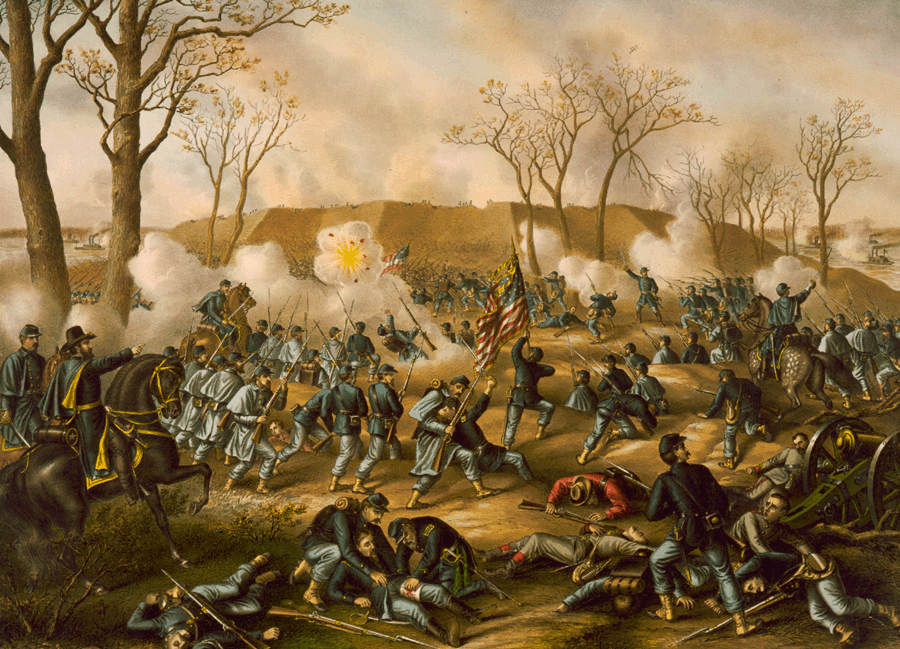
    Sited on the banks of the Cumberland River and only a matter of miles from Fort Henry, Fort Donelson was slated for Union assault even before General Ulysses S. Grant’s taking of Fort Henry. The close proximity between the two forts ensured that the Confederates would not be taken by surprise when Grant went onto Fort Donelson, but both sides knew that the ceding of Donelson would be a swift second defeat in a matter of days and inspire the Union to make further advances into Tennessee and Kentucky.

    (more…)

  • Grant’s Taking of Fort Henry

    In early 1862, heartened by his troops’ performance at the Battle of Belmont, Brigadier General Ulysses S. Grant had determined that he was capable of making inroads into the Confederacy. Securing the network of rivers feeding into the Mississippi River as well as the Mississippi itself would hinder the Confederacy’s mobility and economy, and accomplishing this objective would bring him into two states that did not officially join the Confederacy but parts of which were Confederate-controlled: Kentucky and Tennessee. Bordering those states, on the banks of the Tennessee River, Grant saw a Confederate fort ripe for the plucking: Fort Henry. (more…)

  • The Battle of Belmont

    The Battle of Belmont

    When fighting erupted between Confederate and Union forces in Mississippi County, Missouri, few could have expected that one man, a newly-promoted Brigadier General, would emerge from obscurity and tragedy and begin his upward trajectory to the heights of American myth and legend. Nonetheless, at the end of the Battle of Belmont, that man—Ulysses S. Grant—had secured himself admiration from his commanders and established a brand of warfare that would later elevate him up the ranks and define the Union’s conduct of the war. (more…)

  • On to Richmond

    On to Richmond

    Although the Confederacy had awakened the North’s spirit by initiating hostilities at Fort Sumter, both sides could have still hoped for reconciliation. While some advocated for immediate peace, others wished for a full prosecution of war against the South, viewing its expanding secession as nothing short of treason. By the end of spring 1861, there was a decisive answer to the question of whether there would soon be peace. (more…)

  • The North’s Attempt at Salvation

    washington-dc
    Aerial Perspective of Washington DC in 1861.

    The Deep South’s animating of a Second American Revolution, by seceding from the Union and laying the foundation for an operational Confederate government, forced the North to either suppress the South’s uprising or craft a resolution. The likelihood of war would deter any widespread northern suppression, leaving the question: What compromise could the North propose that appeased the South and put both sections of the country on a path of coexistence? While variations of this question had been posed in the years leading up to 1860, at no prior point were states seceding from the Union en masse to form a rival government. (more…)

  • The Secession of the Deep South

    secession-hall-583x600
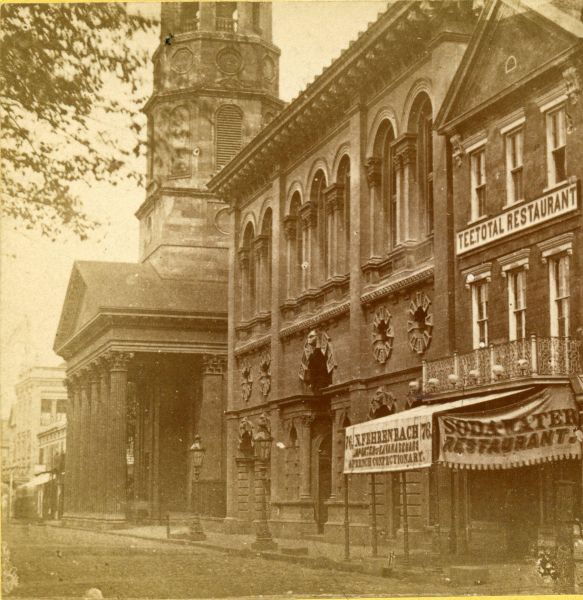
    Secession Hall in Charleston, South Carolina. Credit: The Civil War Trust.

    In the wake of the disconcerting result of the Election of 1860, the nature of southern secessionism suggested the imminent secession of at least some southern states from the Union. The timing and execution of states actually seceding from the Union was unclear, but the Deep South was prepared to act first. (more…)

  • The Precursor to the Winter of Secession

    168095
    Washington in 1860. Photographer Unknown.

    Abraham Lincoln’s victory in the Election of 1860 was disconcerting news for the South. It was the most recent event in a string of events that seemingly endangered the southern way of life and the future of the country. At a time when many northerners suspected southern threats of secession were but a bluff, there was evidence that the country had already split and the formalities were soon to follow. (more…)