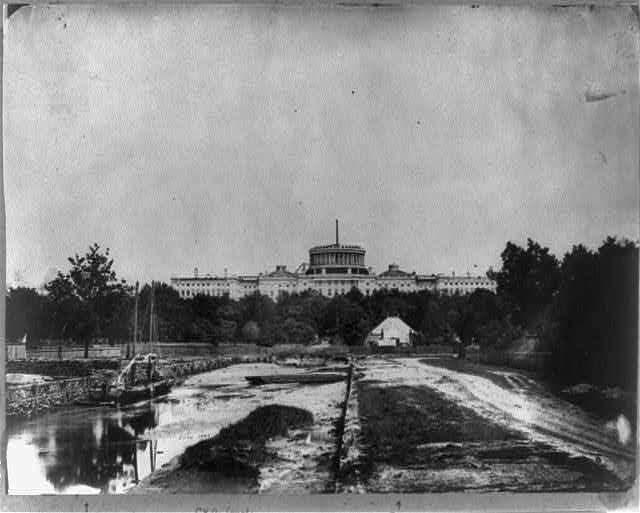
The United States Capitol in 1860. Courtesy: Library of Congress
Every presidential election is consequential, but the Election of 1860 would play a significant role in whether the United States would remain one nation. The division of the North and South on the issue of slavery threatened to cause a secession of the South. The result of the election would determine whether that threat would materialize and cause a Second American Revolution. (more…)
In 1844, Asa Whitney, a merchant in New York, proposed that a transcontinental railroad be built. While he hoped to lead the construction of the railroad and reap the benefits of the ambitious project, that was not to be. However, three components of his plan captured the spirit of Americans toward the construction of the railroad: “There must be a railroad to the Pacific; it must be financed by grants of public lands along the route; and it must be built by private interests which received these grants.” David Potter, The Impending Crisis: America Before the Civil War, 1848-1861, 146. (more…)
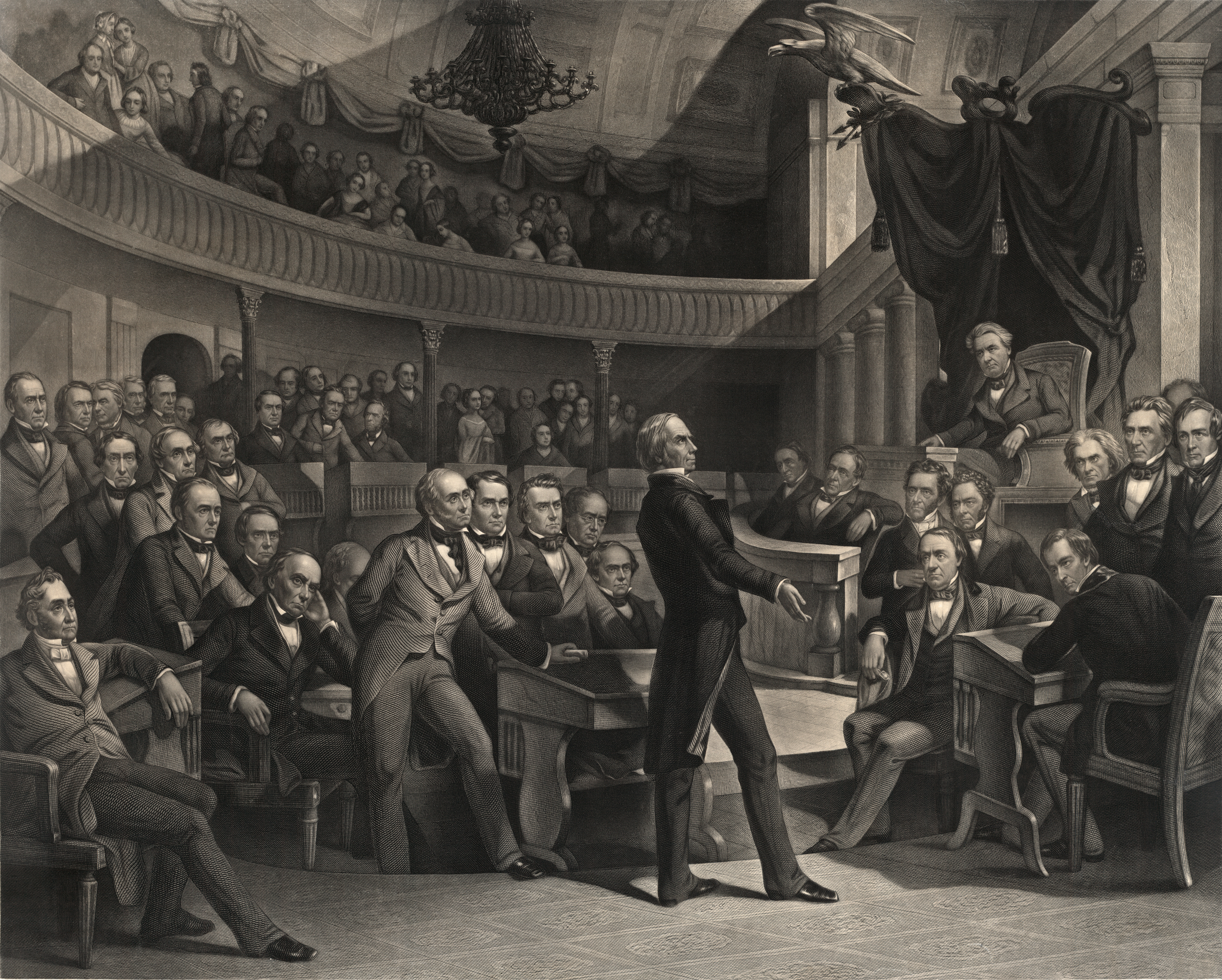
“United States Senate, A.D. 1850.” By: Peter F. Rothermel.
Upon President Zachary Taylor taking office, he sent a message to Congress deploring the sectionalism that was pervading the country. See David Potter, The Impending Crisis: America Before the Civil War, 1848-1861, 91. He looked to George Washington’s warnings against “characterizing parties by geographical discriminations,” which appeared by 1849 to be a prescient warning. Id. citing James D. Richardson, ed., A Compilation of the Messages and Papers of the Presidents (11 vols.; New York, 1907), V, 9-24. President Taylor offered hope for northerners and those Americans who wanted to preserve the Union with his vow: “Whatever dangers may threaten it [the Union] I shall stand by it and maintain it in its integrity.” David Potter, The Impending Crisis: America Before the Civil War, 1848-1861, 91 citing James D. Richardson, ed., A Compilation of the Messages and Papers of the Presidents (11 vols.; New York, 1907), V, 9-24. (more…)
Following President James Polk’s announcement of war with Mexico, and Congress’ declaration of war, those in the Whig Party and those around the country had significantly different views of the war.
In 1842, John Quincy Adams presented to the House of Representatives a petition from 42 residents of Haverhill, Massachusetts, requesting that the Union be dissolved. Daniel Walker Howe, What Hath God Wrought: Transformation of America, 1815-1848, 610. Henry Wise, Congressman from Virginia, “demanded the former president be censured.” Id.
Toward the end of President Andrew Jackson’s second term, the federal government had come to enjoy a substantial surplus, primarily coming as a result of land sales and “proceeds from the Tariff 0f 1833.” Daniel Walker Howe, What Hath God Wrought: Transformation of America, 1815-1848, 499.
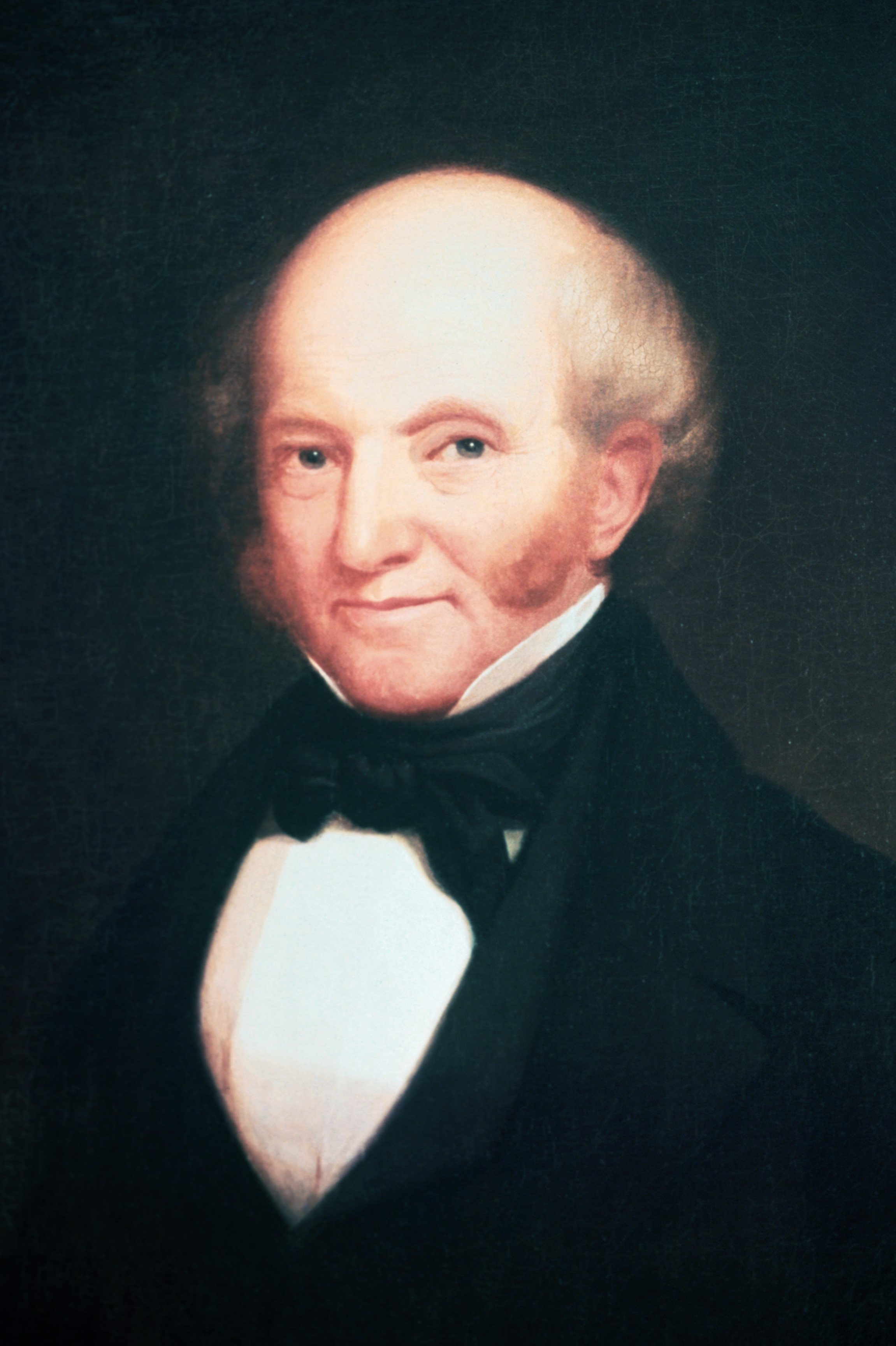
Both President John Quincy Adams and Henry Clay were of the mindset that much could be accomplished in developing the American economy with the help of the government. Martin Van Buren had different ideas, however.
Not long after the election of 1820, an essentially uncontested election seeing the re-election of President James Monroe, the campaigning for the election of 1824 began. President Monroe had indicated that he would not seek an unprecedented third term as president, but that did not stop others from posturing for the election. As a journalist observed in the spring of 1822, “electioneering begins to wax hot.” Daniel Walker Howe, What Hath God Wrought: Transformation of America, 1815-1848, 203 quoting James F. Hopkins, “Election of 1824,” in History of American Presidential Elections, ed. Arthur M. Schlesinger Jr. (New York, 1985), 363.
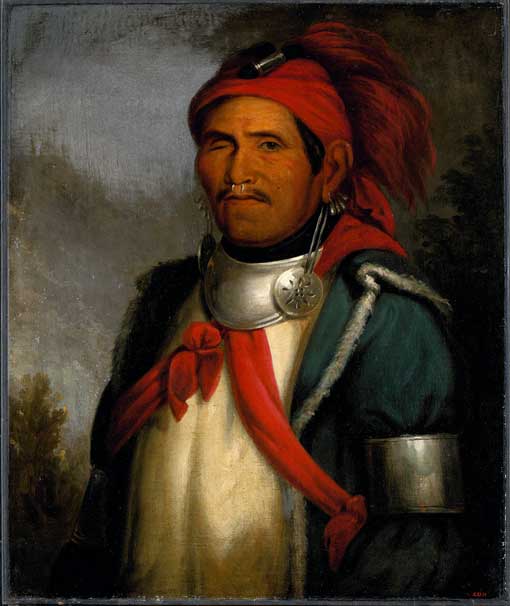
For centuries prior to the War of 1812, the Native Americans were able to manipulate the British, French, Spanish, and Americans to sustain themselves. After the War of 1812, the entirety of the land east of the Mississippi River was owned by America, effectively ended the Native Americans’ strategy. Daniel Walker Howe, What Hath God Wrought: Transformation of America, 1815-1848, 74.




 Last Best Hope of Earth