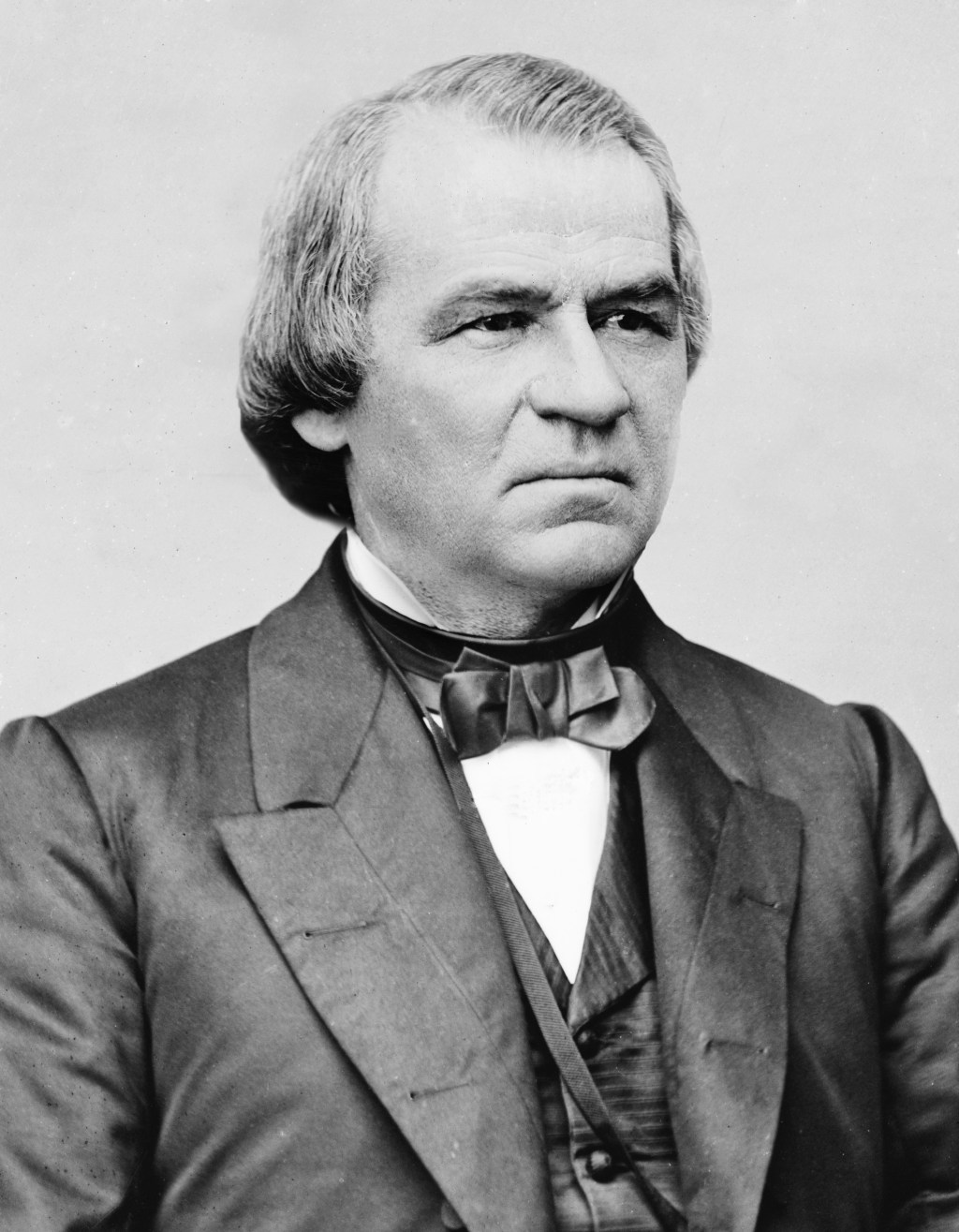
In the same way that the Second World War would reshape the globe in the Twentieth Century, the Civil War reshaped America for the remainder of the Nineteenth Century. Veterans of both wars came to define their respective generations and rise to positions of power: just as Union General Ulysses S. Grant’s meteoric rise culminated in him becoming President three years after the war, General Dwight D. Eisenhower would find himself being elected President seven years after the war of his generation. Lesser generals also worked their way into office—some of those offices being elected and others being executive offices of companies in the emerging industries following the wars—but that would occur over the course of decades: the last Civil War veteran to reach the presidency, William McKinley, occupied the White House as the Nineteenth Century faded into the Twentieth. As ever, those who held power determined the direction of the country’s future. In the weeks and months following the end of the Civil War, and President Abraham Lincoln’s assassination, people in power would be sketching out the contours of a post-war America; and it was then, at that nascent stage of the newly reborn nation’s life, that new factions emerged—factions that would vie for weeks, months, and even years to cast the die of America in their own image and either keep, or make, the nation they wished to have.
(more…)Tag: Louisiana
-

The Battle of the Wilderness
By the spring of 1864, changes were abound on the Union side. Three generals—Ulysses S. Grant, William Tecumseh Sherman, and Philip Sheridan—had become the preeminent leaders of the northern army. With Congress having revived the rank of lieutenant general, a rank last held by George Washington, President Abraham Lincoln promoted Grant to that rank and bestowed on him the title of general in chief.[i] While the North was in the ascendancy, the Confederate army had suffered through the winter. The Confederate Congress had eliminated substitution, which had allowed wealthy southerners to avoid conscription, and “required soldiers whose three-year enlistments were about to expire to remain in the army.”[ii] Even with Congress taking the extraordinary step of adjusting the draft age range to seventeen years old through fifty years old, the rebels still numbered fewer than half their opponents.[iii] Nonetheless, hope was not lost: a camaraderie pervaded the Southern army—particularly amongst the many veteran soldiers—which was perhaps best encapsulated in General Robert E. Lee’s saying that if their campaign was successful, “we have everything to hope for in the future. If defeated, nothing will be left for us to live for.”[iv] (more…)
-
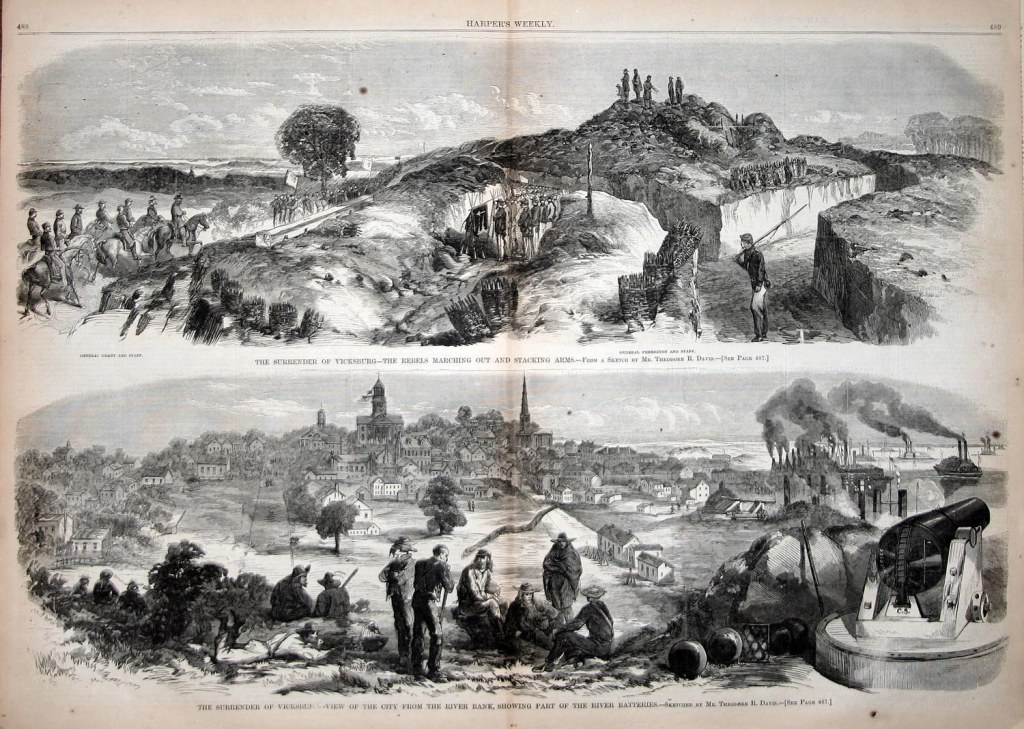
The Siege of Vicksburg
In the western theater of war, Ulysses S. Grant had set his sights on a goal early in his campaigning: Vicksburg, a town hugging the Mississippi River on the border of Louisiana and Mississippi. Taking the city would not only secure the Mississippi River; taking it would give the Union a lasso around the Confederacy. Just as spring of 1863 was getting underway, Grant had drawn up a plan to take the town and tighten the Union grip on the Confederacy. (more…)
-

On to Richmond
Although the Confederacy had awakened the North’s spirit by initiating hostilities at Fort Sumter, both sides could have still hoped for reconciliation. While some advocated for immediate peace, others wished for a full prosecution of war against the South, viewing its expanding secession as nothing short of treason. By the end of spring 1861, there was a decisive answer to the question of whether there would soon be peace. (more…)
-
The North’s Attempt at Salvation

Aerial Perspective of Washington DC in 1861. The Deep South’s animating of a Second American Revolution, by seceding from the Union and laying the foundation for an operational Confederate government, forced the North to either suppress the South’s uprising or craft a resolution. The likelihood of war would deter any widespread northern suppression, leaving the question: What compromise could the North propose that appeased the South and put both sections of the country on a path of coexistence? While variations of this question had been posed in the years leading up to 1860, at no prior point were states seceding from the Union en masse to form a rival government. (more…)
-
The Secession of the Deep South
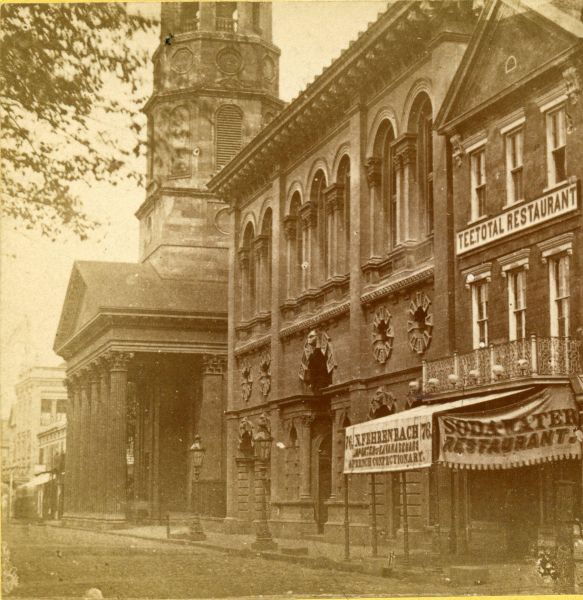
Secession Hall in Charleston, South Carolina. Credit: The Civil War Trust. In the wake of the disconcerting result of the Election of 1860, the nature of southern secessionism suggested the imminent secession of at least some southern states from the Union. The timing and execution of states actually seceding from the Union was unclear, but the Deep South was prepared to act first. (more…)
-
The Election of 1860

The United States Capitol in 1860. Courtesy: Library of Congress Every presidential election is consequential, but the Election of 1860 would play a significant role in whether the United States would remain one nation. The division of the North and South on the issue of slavery threatened to cause a secession of the South. The result of the election would determine whether that threat would materialize and cause a Second American Revolution. (more…)
-
Halting Manifest Destiny
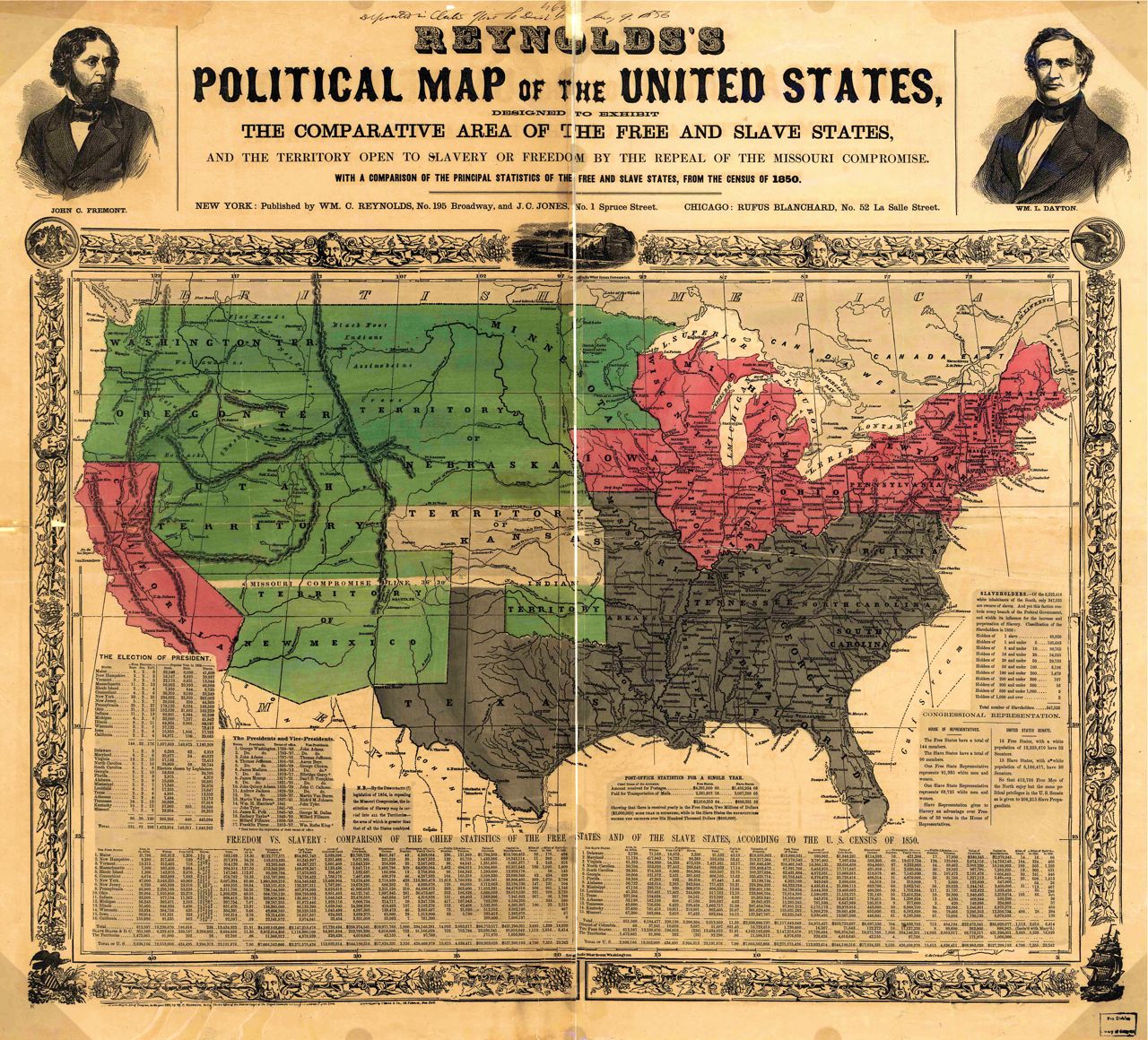
Map of America in 1850. During 1854, while the Kansas-Nebraska Act was making its way through Congress and to President Franklin Pierce’s desk, there were significant developments throughout the country that would have lessen the manifest destiny fever that had captured the nation’s attention up to that point. One of the hallmarks of American progress was nearing its end. (more…)
-
Negotiating with Mexico

Congressman John Slidell. By: Mathew Brady. In the fall of 1845, prior to the Mexican-American War, President James Polk attempted to use what he perceived as leverage to negotiate with the Mexican government to expand American borders.
-
The Legalities of Slavery

A Depiction of Franklin & Armfield’s Slave Prison in Alexandria, Virginia in 1836. By the 1830s and 1840s, slavery had become engrained in the American legal system, enjoying protections and safeguards against its abolition and ultimately ensuring its continuation.
 Last Best Hope of Earth