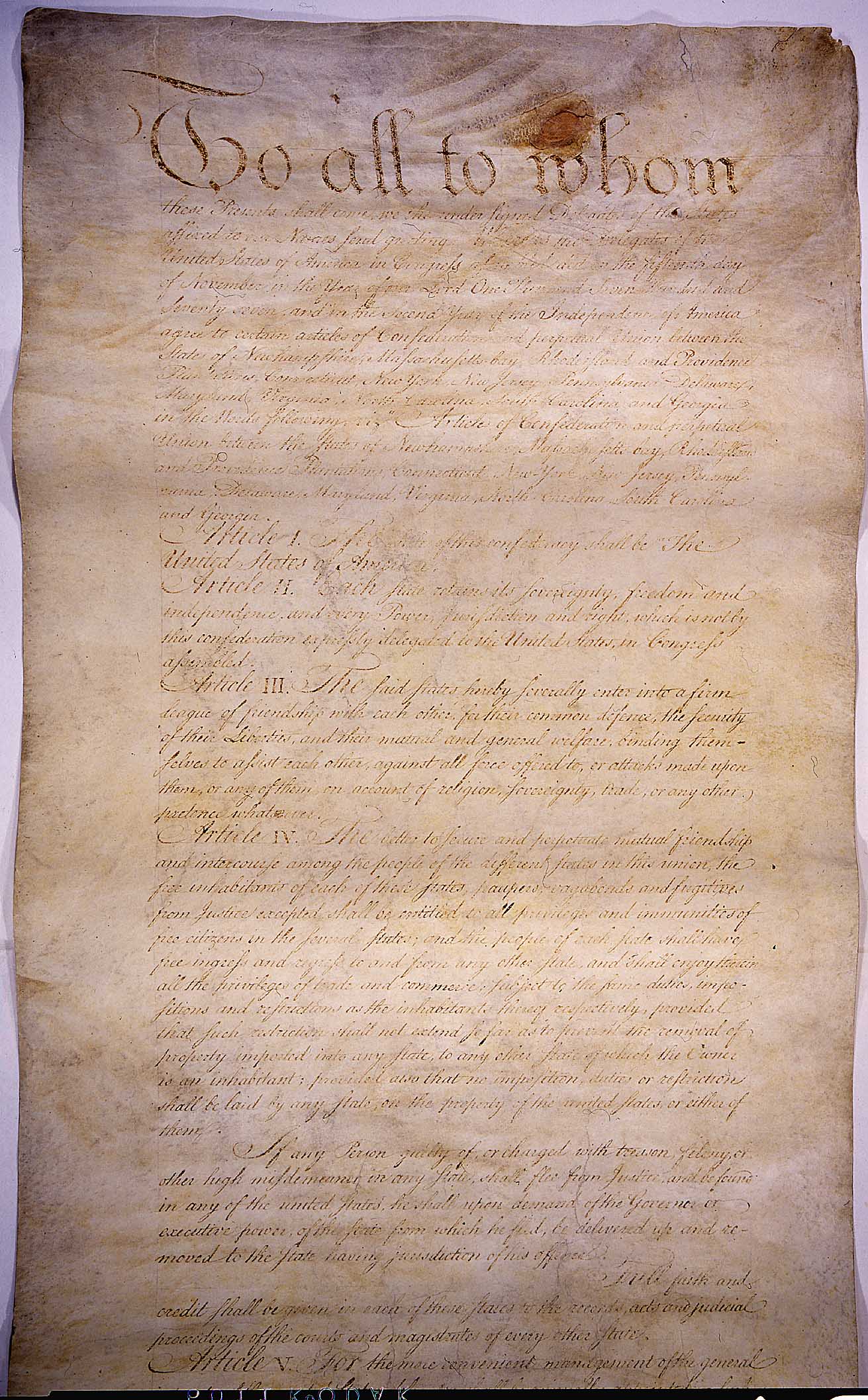
Despite the fact that the Articles of Confederation loosely held the states together, there was still a remarkable union achieved. There were privileges and immunities granted, “reciprocity of extradition and judicial proceedings among the states,” no “travel and discriminatory trade restrictions between states, and the substantial grant of powers to the Congress in Article 9 made the league of states as cohesive and strong as any similar sort of republican confederation in history—stronger in fact than some Americans had expected.” Gordon Wood, The Creation of the American Republic: 1776-1787, 359. (more…)
Americans had a keen understanding of the idea, popularized by Montesquieu, that “only a small homogeneous society whose interests were essentially similar could properly sustain a republican government.” Gordon Wood, The Creation of the American Republic: 1776-1787, 356. This idea created a fundamental problem for America: it was not a small homogeneous society, and it was rapidly expanding.
Throughout American history, there has always been a question about the nature of representation: do representatives represent only their constituents in their district or do they represent the entire people, as their actions impact the entire people? This debate played out in the years surrounding the American Revolution and continues today.
At the time of the American Revolution, it was commonly believed amongst Americans that formulating the ideal government would require a different system than any previously conceived. The Founding Fathers had their own ideas.
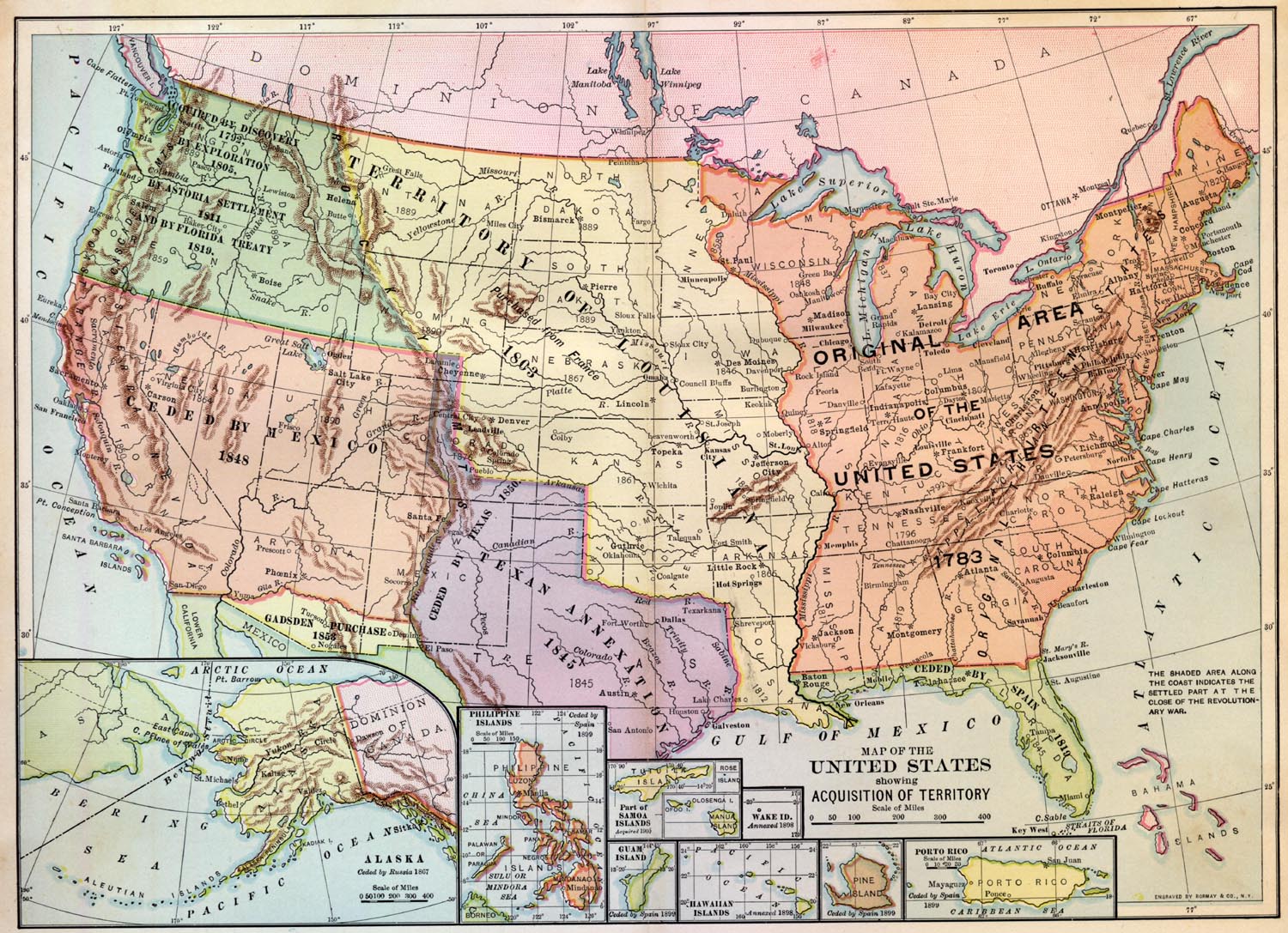
A map portraying the Louisiana Purchase’s territory.
The Louisiana Purchase in 1803 added approximately 823,000 square miles to the United States’ territory. At that time, Thomas Jefferson favored the purchase, as it protected America from the threat of France or Britain invading the United States, particularly through New Orleans. Gordon Wood, Empire of Liberty, 369. The acquisition also would force the territory of Florida, owned by Spain then, to join the United States, which it of course eventually did.
A majority of Americans saw the Louisiana Purchase as a momentous occasion for America, in that it ended the struggle for control of the Mississippi River but it also allowed America to gain independence from the European powers of France and Britain. Id.
Fisher Ames, a Representative of Massachusetts from 1789-1797, declared that the Louisiana Purchase was “a great waste, a wilderness unpeopled with any beings except wolves and wandering Indians.” He explained that it was a waste by stating: “We are to spend money of which we have too little for land of which we already have too much.” Id. He saw it as instead a way for “Imperial Virginia to move its slaveholding population westward to gain influence. Id. at 370.
Even Alexander Hamilton favored the purchase, but expressed his reservations as to its effect on the United States as a whole: Could it be made “an integral part of the United States,” or would it merely be a colony of America? Id.
Certainly, very few modern Americans would now question the wisdom and the investment of the Louisiana Purchase, for territorial purposes alone. The short term security benefits are long forgotten, as the European powers who then threatened the United States are now its strongest allies.
Nonetheless, these views by Fisher Ames and Alexander Hamilton show that even the most popular and beneficial decisions by presidents are not without dissent. Now, sometimes analysts and commentators are tempted to speculate that there was a moment in American history where a presidents’ actions were widely appreciated and admired and free of dissent.
While that may occasionally be true, even with the Louisiana Purchase, that added so much territory for settlers to use and security for the existing states, there was dissent.


 Last Best Hope of Earth