As time passes and collective morals change, the legacies of prominent figures in American history often evolve. The context in which these individuals earned their place in American memory becomes increasingly difficult to uncover.
Tag: Mexican-American War
-
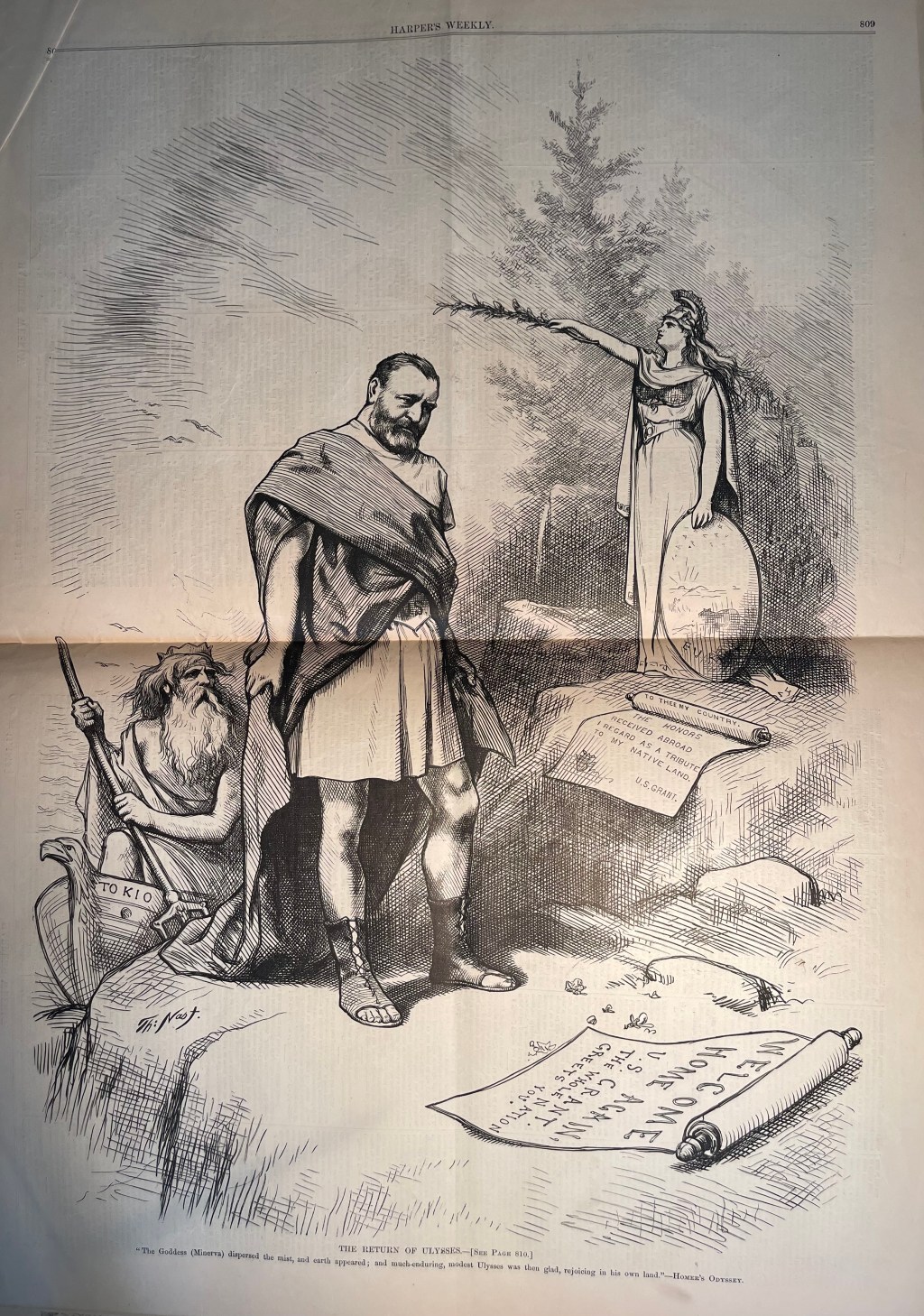
Ulysses S. Grant: An American Hero
-
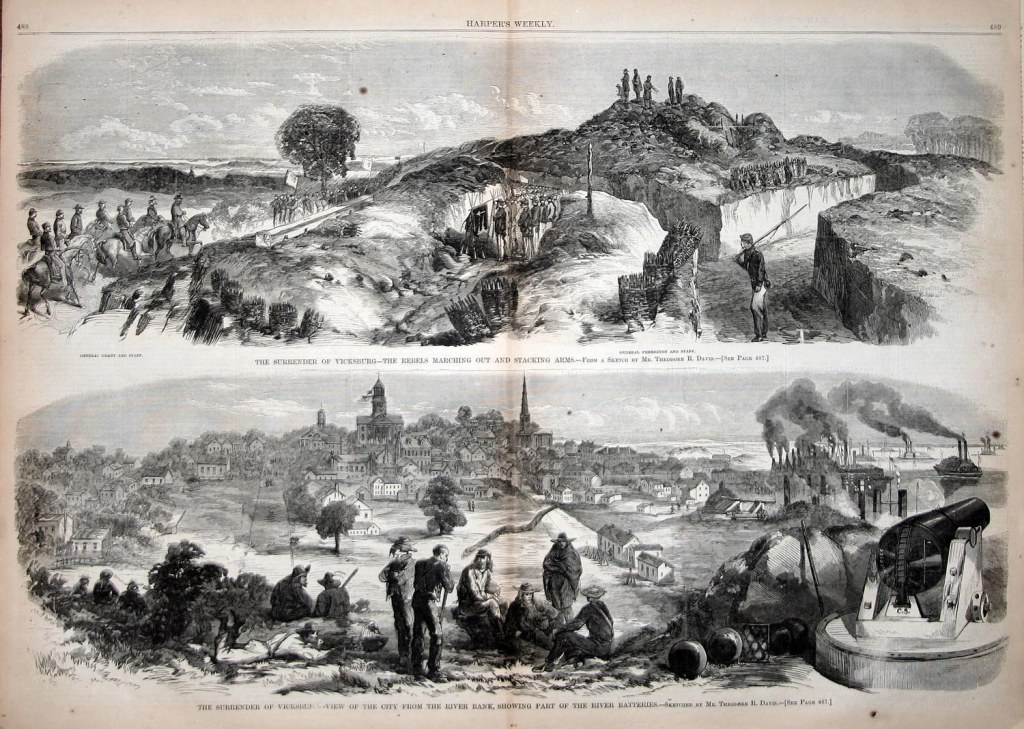
The Siege of Vicksburg
In the western theater of war, Ulysses S. Grant had set his sights on a goal early in his campaigning: Vicksburg, a town hugging the Mississippi River on the border of Louisiana and Mississippi. Taking the city would not only secure the Mississippi River; taking it would give the Union a lasso around the Confederacy. Just as spring of 1863 was getting underway, Grant had drawn up a plan to take the town and tighten the Union grip on the Confederacy. (more…)
-
The Battle of Fredericksburg
Throughout 1862, the Union embraced a defensive, passive approach to prosecuting the Civil War—shying away from incisive troop movements and relentless pursuits even after battles that left Confederates fatigued and fleeing—while the Confederacy had most recently displayed its more aggressive strategy by its attack near the Antietam Creek in Maryland. At the helm of the Union army, and the epitome of its quiescent nature, stood General George McClellan: a man who had come under fire for his failed Peninsula Campaign and refusal to pursue Confederate General Robert E. Lee after the Battle of Antietam. The latter decision prompted action from the White House. President Abraham Lincoln, whom McClellan had labeled as the “Gorilla,” replaced McClellan with General Ambrose E. Burnside on November 7, 1862.[i] (more…)
-

The Battle of Belmont
When fighting erupted between Confederate and Union forces in Mississippi County, Missouri, few could have expected that one man, a newly-promoted Brigadier General, would emerge from obscurity and tragedy and begin his upward trajectory to the heights of American myth and legend. Nonetheless, at the end of the Battle of Belmont, that man—Ulysses S. Grant—had secured himself admiration from his commanders and established a brand of warfare that would later elevate him up the ranks and define the Union’s conduct of the war. (more…)
-

The Anaconda Plan
Although George McClellan succeeded Winfield Scott as general in chief of the Union army in late 1861, Scott had already set a plan in motion that would, in one form or another, last the duration of the war. It was a plan that would be a factor in constricting the Confederate economy, choking the Confederacy into a defensive posture from which it would be impossible to escape. (more…)
-

The Battle of Ball’s Bluff
By the end of 1861, the Union changed its commander but also suffered its third major defeat; this one northwest of Washington at Ball’s Bluff on the banks of the Potomac River. (more…)
-
The First Battle of Bull Run
Three months after the firing on Fort Sumter, the Confederacy and Union had produced armies capable of fighting and mobilized to northern Virginia; roughly halfway between Washington and Richmond. There, near a “sluggish, tree-choked river” known as Bull Run, the first major battle following the secession of the South would occur.[i] (more…)
-
The Election of 1852

President Franklin Pierce. By: George P.A. Healy. With the first term of Millard Fillmore’s presidency winding down in 1852, the Democrats felt a sense of momentum that they could reclaim the White House. In the midterm elections of 1850, the Democrats secured 140 of the 233 seats in the House of Representatives, eclipsing the Whig Party. See David Potter, The Impending Crisis: America Before the Civil War, 1848-1861, 141.
-
The Theories of Slavery
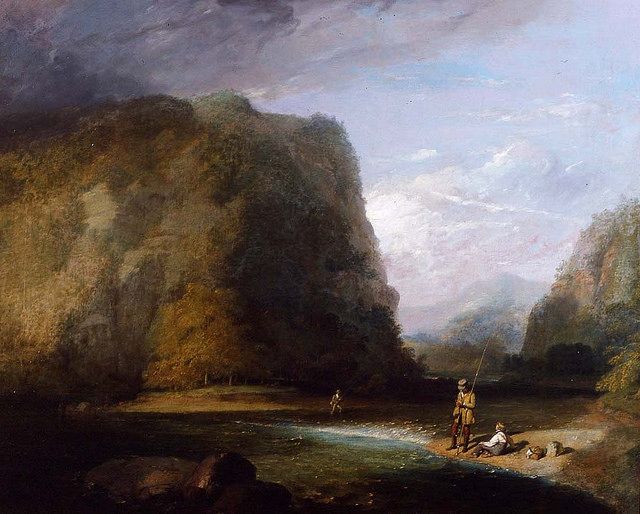
Trout Fishing in Sullivan County, New York. By: Henry Inman. In the 15 years leading up to the Civil War, a wide variety of theories emerged for how the federal government should deal with slavery expanding, or not expanding, into the territories acquired by the United States.
-
Election of 1848: The Candidates

The Whig Ticket for President, Zachary Taylor, and Vice President, Millard Fillmore. The Election of 1848 was bound to be unique, as President James Polk had made clear that he would serve only one term as president. With that, the Whigs and the Democrats had to put forth candidates that could meet the parties’ respective goals of reversing President Polk’s policies (the Whigs) and expanding on President Polk’s policies (the Democrats).
 Last Best Hope of Earth