Some Americans may suppose that during wartime, partisanship declines and a sense of unity prevails. During the Mexican-American War, this was not the case. The Whigs were vocal in their disagreement with President James Polk and the Democrats.
Some Americans may suppose that during wartime, partisanship declines and a sense of unity prevails. During the Mexican-American War, this was not the case. The Whigs were vocal in their disagreement with President James Polk and the Democrats.
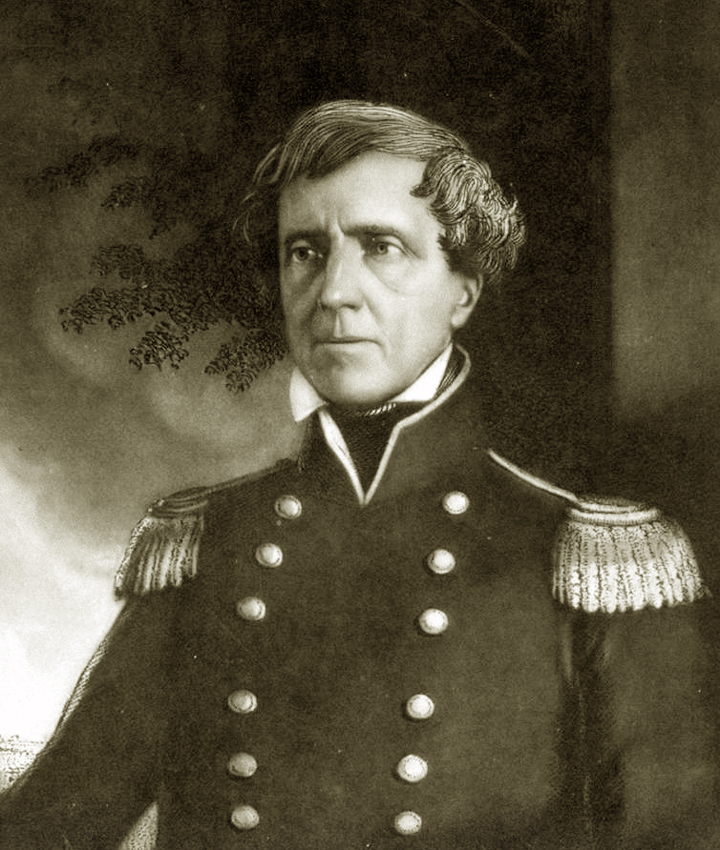
Upon America’s declaring war with Mexico in May 1846, President James Polk sent “the Army of the West” to New Mexico. See Daniel Walker Howe, What Hath God Wrought: Transformation of America, 1815-1848, 758. This army was sent for the sole purpose of conquest, and it was led by Brigadier General Stephen Watts Kearny. Id.
President James Polk, prior to the beginning of the Mexican-American War, had an idea for how to gain new territory for America. He was not going to limit the acquisitions solely to what could be gained with Mexico through military conflict south of Texas. He had his eyes on California and New Mexico, and he had a plan for how to get those two territories.

President James Polk, at the outbreak of the Mexican-American War, was concerned about the ramifications of a significant, drawn-out conflict. He was aware that a Whig military hero could emerge, just as William Henry Harrison had. See Daniel Walker Howe, What Hath God Wrought: Transformation of America, 1815-1848, 750.

Some historians have classified the Mexican-American War as a rehearsal for the Civil War, which would erupt approximately 15 years later.

Leading up to President James Polk’s May 13, 1846 announcement of the Mexican-American War, tension arose between President Polk and the Secretary of State, James Buchanan.

Following President James Polk’s announcement of war with Mexico, and Congress’ declaration of war, those in the Whig Party and those around the country had significantly different views of the war.

In the fall of 1845, prior to the Mexican-American War, President James Polk attempted to use what he perceived as leverage to negotiate with the Mexican government to expand American borders.

On the evening of April 24, 1846, Captain Seth Thornton and 68 American dragoons “went to confirm intelligence that a Mexican military force had crossed the Rio Grande” just miles away from where Brigadier General Zachary Taylor was camped. Daniel Walker Howe, What Hath God Wrought: Transformation of America, 1815-1848, 731.

Following the Democrats’ victory in the Election of 1844, President James Polk began negotiating with the British about the Oregon territory, which America had permitted Britain to occupy for several decades. See Daniel Walker Howe, What Hath God Wrought: Transformation of America, 1815-1848, 715.
 Last Best Hope of Earth