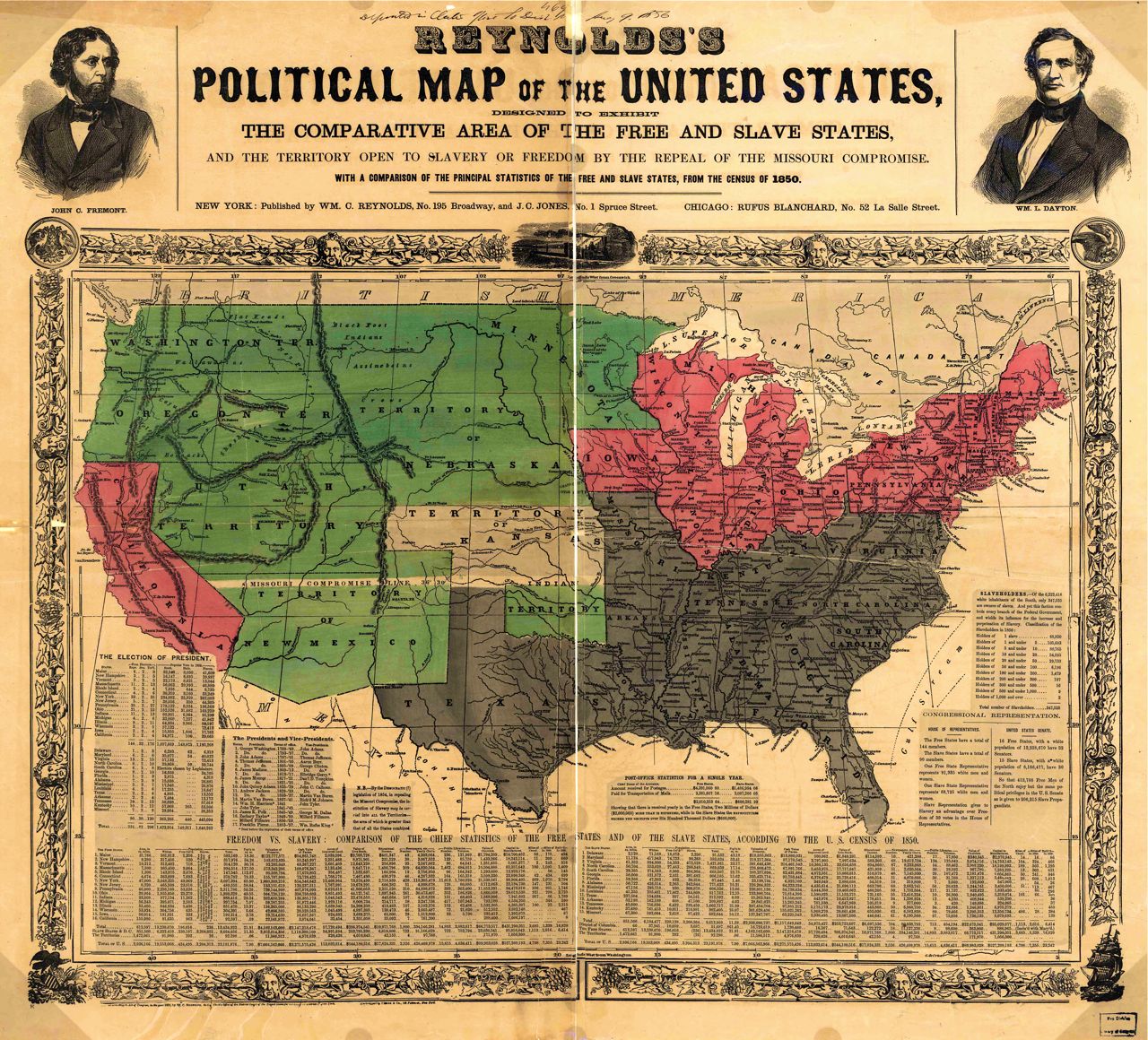
During 1854, while the Kansas-Nebraska Act was making its way through Congress and to President Franklin Pierce’s desk, there were significant developments throughout the country that would have lessen the manifest destiny fever that had captured the nation’s attention up to that point. One of the hallmarks of American progress was nearing its end. (more…)
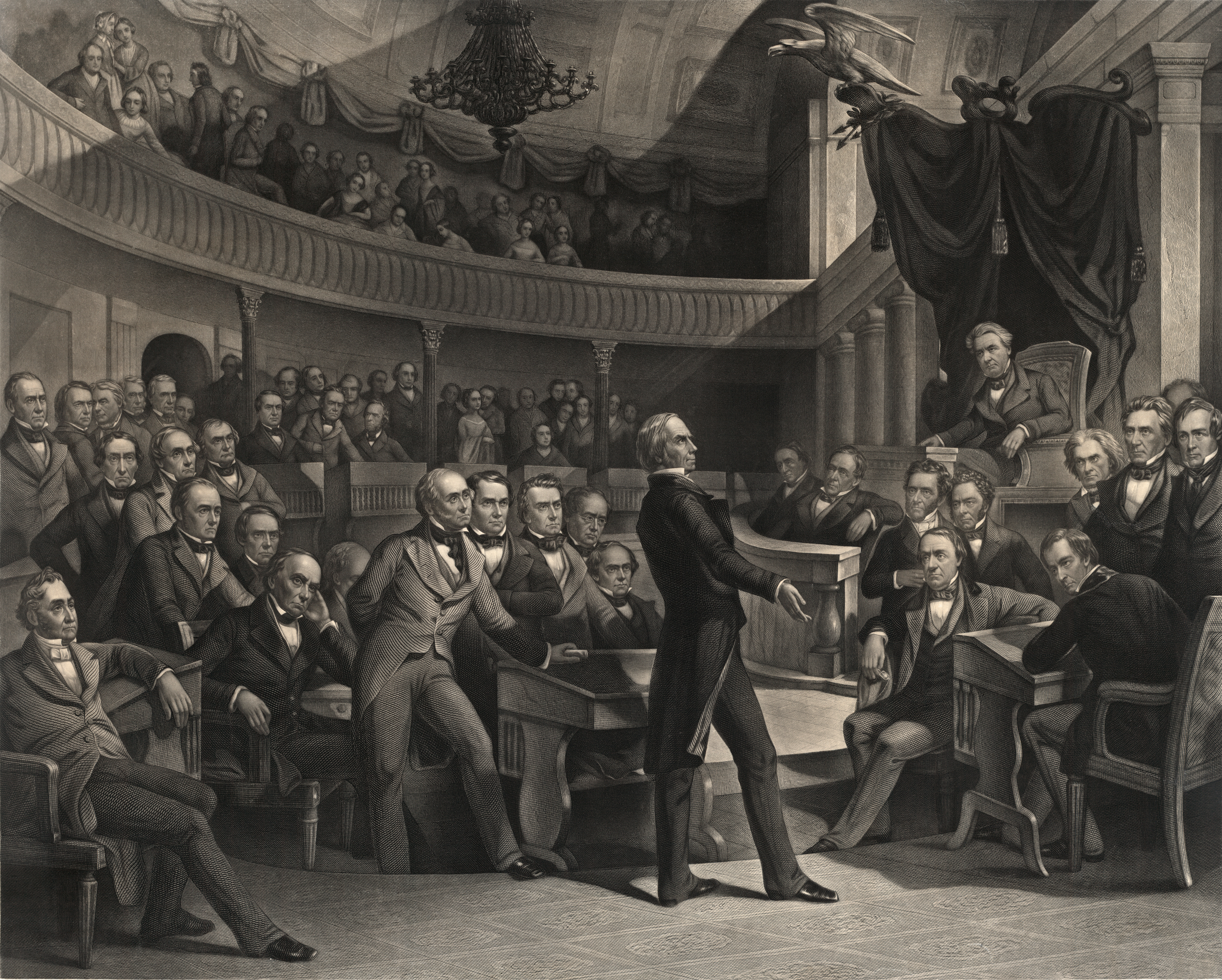
“United States Senate, A.D. 1850.” By: Peter F. Rothermel.
Upon President Zachary Taylor taking office, he sent a message to Congress deploring the sectionalism that was pervading the country. See David Potter, The Impending Crisis: America Before the Civil War, 1848-1861, 91. He looked to George Washington’s warnings against “characterizing parties by geographical discriminations,” which appeared by 1849 to be a prescient warning. Id. citing James D. Richardson, ed., A Compilation of the Messages and Papers of the Presidents (11 vols.; New York, 1907), V, 9-24. President Taylor offered hope for northerners and those Americans who wanted to preserve the Union with his vow: “Whatever dangers may threaten it [the Union] I shall stand by it and maintain it in its integrity.” David Potter, The Impending Crisis: America Before the Civil War, 1848-1861, 91 citing James D. Richardson, ed., A Compilation of the Messages and Papers of the Presidents (11 vols.; New York, 1907), V, 9-24. (more…)
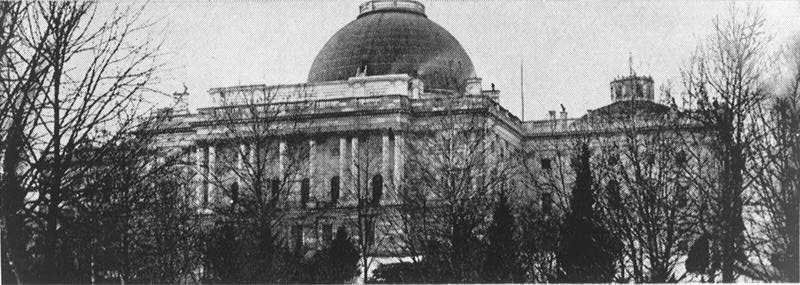
The United States Capitol in 1848. Unknown Photographer, credit Library of Congress.
During President James Polk’s administration, Congress grappled with resolving sectional tension arising out of whether slavery would be extended to newly acquired land from Mexico as well as the Oregon territory. Congress did not resolve that sectional tension but exacerbated it in what may have been one of the most deadlocked and destructive Congresses in American history. (more…)
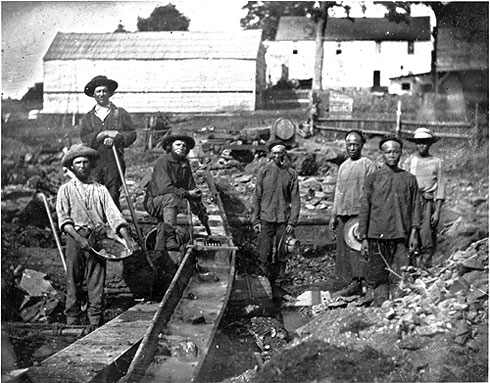
Gold Miners During the California Gold Rush. Photographer Unknown.
On January 24, 1848, James Marshall and Johann Sutter made a discovery that would transform the territory of California and bring about pandemonium in American society. The specks of gold that they discovered, while they may have hoped to keep secret, were anything but a secret.
One of the most outspoken Representatives in the House of Representatives, John Quincy Adams, had opposed the declaration of war on Mexico and fought President James Polk’s policies for the duration of his presidency.
With the execution of the Treaty of Guadalupe Hidalgo, the Mexican-American War had come to an end. The territory that Mexico relinquished to America held “some ninety thousand Hispanics and a considerably larger number of tribal Indians,” despite President James Polk characterizing the territory as “almost unoccupied.” Daniel Walker Howe, What Hath God Wrought: Transformation of America, 1815-1848, 809.
At the end of the Mexican-American War, President James Polk proposed taking as much as Mexico’s land as possible. However, he proposed this plan to a majority Whig House of Representatives.
In 1848, when word spread to America that a revolution was breaking out in France, President James Polk wrote: “The great principles of popular sovereignty which were proclaimed in 1776 by the immortal author of our Declaration of Independence, seem now to be in the course of rapid development throughout the world.” James Knox Polk to Richard Rush, April 18, 1848, quoted in Michael Morrison, “American Reactions to European Revolutions, 1848-1852,” Civil War History 49 (June 2003): 117.
President James Polk, expecting a fast resolution to the Mexican-American War, “requested from Congress in August 1846 a $2 million appropriation for ‘defraying any extraordinary expenses which may be incurred in the intercourse between the United States and foreign nations.’” Daniel Walker Howe, What Hath God Wrought: Transformation of America, 1815-1848, 766 quoting James Polk, Diary, II, 76-77 (Aug. 10, 1846). Shortly after Congress followed this instruction and drafted a bill, David Wilmot of Pennsylvania introduced an amendment to specify that slavery would not be lawful in any territory acquired. See Daniel Walker Howe, What Hath God Wrought: Transformation of America, 1815-1848, 767.



 Last Best Hope of Earth