
During the Gilded Age, millions of Americans saw their work lives transform: no longer would it be so common for the working man or woman to survive based on what he or she produced; rather, that worker would receive payment—from an employer or a contractor—for the time worked. That change allowed for the possibility during the Gilded Age for the older generation to reflect on their younger years, before the Civil War, and how they had sold most of what they had grown or made (and how they had then needed a wide variety of skills to not only grow or make those goods but to bring those goods to market and actually sell them). During the Gilded Age, that same generation could have been working the last years of their working lives reporting to a factory for work; work that likely had a significant element of danger and that may have required them to use a fraction of the skills that had served as their saving grace during their younger years. For the generations of Americans that have come after the Gilded Age, the system of wage labor has been no oddity. It became a substantial part of the modern way of life and not only in America. What would have struck and should strike subsequent generations, however, were the mechanics of the American economy in which wage labor was born and how the wage labor system in its rawest form did not extend even some of the most basic protections to workers.
(more…)Tag: Missouri
-

The Battle of Belmont
When fighting erupted between Confederate and Union forces in Mississippi County, Missouri, few could have expected that one man, a newly-promoted Brigadier General, would emerge from obscurity and tragedy and begin his upward trajectory to the heights of American myth and legend. Nonetheless, at the end of the Battle of Belmont, that man—Ulysses S. Grant—had secured himself admiration from his commanders and established a brand of warfare that would later elevate him up the ranks and define the Union’s conduct of the war. (more…)
-
The Battle of Wilson’s Creek
The First Battle of Bull Run, which was fought near Manassas, Virginia, inaugurated the Eastern Theater of the Civil War. Weeks later, the first major battle of the Western Theater would occur on the banks of a creek in Missouri: Wilson’s Creek. The battle resulted in another Confederate victory and the first death of a Union general in the war. It also served as foreshadowing to the Confederacy; showing it that the Union was going to make a vigorous effort to prevent any other states from joining the Confederacy. (more…)
-

On to Richmond
Although the Confederacy had awakened the North’s spirit by initiating hostilities at Fort Sumter, both sides could have still hoped for reconciliation. While some advocated for immediate peace, others wished for a full prosecution of war against the South, viewing its expanding secession as nothing short of treason. By the end of spring 1861, there was a decisive answer to the question of whether there would soon be peace. (more…)
-
The Secession of the Deep South
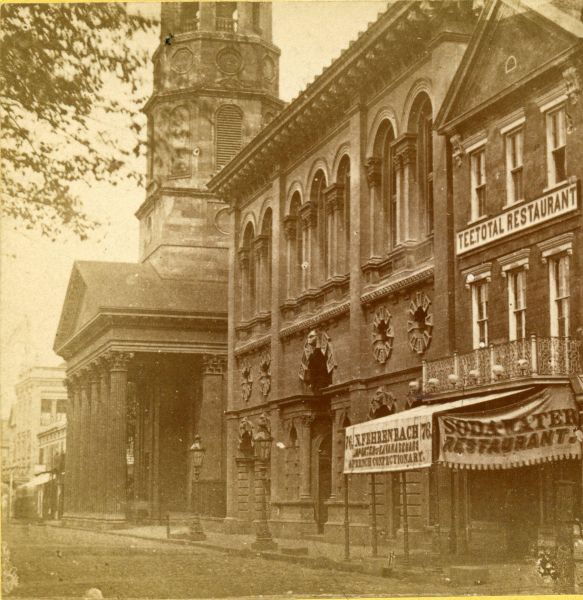
Secession Hall in Charleston, South Carolina. Credit: The Civil War Trust. In the wake of the disconcerting result of the Election of 1860, the nature of southern secessionism suggested the imminent secession of at least some southern states from the Union. The timing and execution of states actually seceding from the Union was unclear, but the Deep South was prepared to act first. (more…)
-
The Precursor to the Winter of Secession

Washington in 1860. Photographer Unknown. Abraham Lincoln’s victory in the Election of 1860 was disconcerting news for the South. It was the most recent event in a string of events that seemingly endangered the southern way of life and the future of the country. At a time when many northerners suspected southern threats of secession were but a bluff, there was evidence that the country had already split and the formalities were soon to follow. (more…)
-
The Election of 1860

The United States Capitol in 1860. Courtesy: Library of Congress Every presidential election is consequential, but the Election of 1860 would play a significant role in whether the United States would remain one nation. The division of the North and South on the issue of slavery threatened to cause a secession of the South. The result of the election would determine whether that threat would materialize and cause a Second American Revolution. (more…)
-
A Supreme Court Tragedy: Dred Scott v. Sandford

The Taney Supreme Court. In 1857, the United States Supreme Court decided one of the most controversial cases in the history of the country. Just days after James Buchanan began his term as president, Chief Justice Roger Taney wrote the opinion for the Court, ruling that neither slaves nor freedmen could be citizens of the United States. The implications of this decision, and its reasoning, have been analyzed, dissected, and discussed since 1857. While many have concluded it is one of the Supreme Court’s worst decisions, its impact on Antebellum America should not be overlooked.
-
Bleeding Kansas

Tallgrass Prairie, Kansas. After the passage of the Kansas-Nebraska Act, William Seward proclaimed to the Senate that “[w]e will engage in competition for the virgin soil of Kansas, and God give the victory to the side which is stronger in numbers as it is in right.” Congressional Globe, 33 Cong., 1 sess., appendix, 769. Rather than settling the issue of slavery in Kansas, the Act made Kansas the figurative and literal battleground for the issue of slavery.
-
The Kansas-Nebraska Act
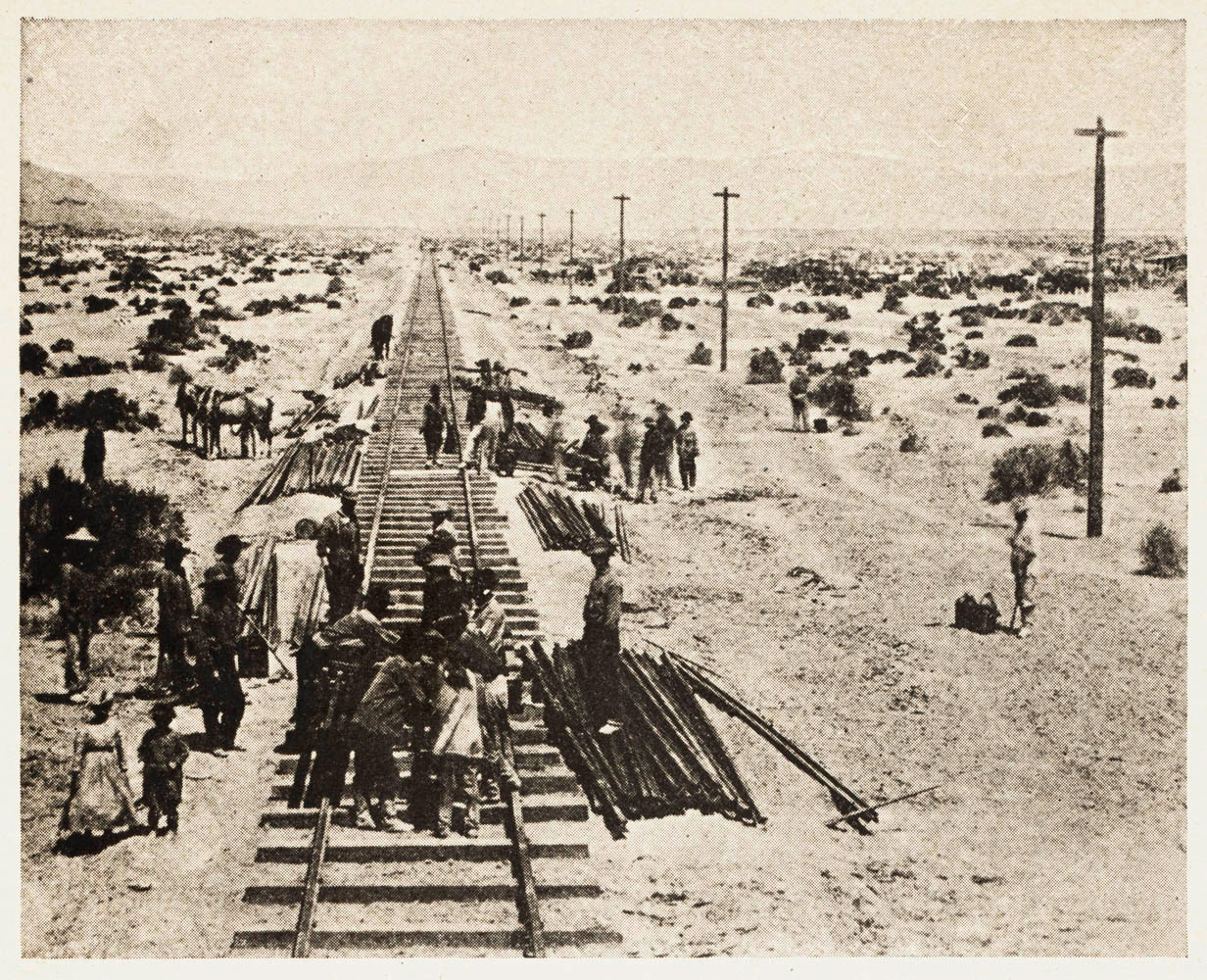
Construction of the Transcontinental Railroad. In 1844, Asa Whitney, a merchant in New York, proposed that a transcontinental railroad be built. While he hoped to lead the construction of the railroad and reap the benefits of the ambitious project, that was not to be. However, three components of his plan captured the spirit of Americans toward the construction of the railroad: “There must be a railroad to the Pacific; it must be financed by grants of public lands along the route; and it must be built by private interests which received these grants.” David Potter, The Impending Crisis: America Before the Civil War, 1848-1861, 146. (more…)
 Last Best Hope of Earth