Tag: Montesquieu

  • Constitution Sunday: “Publius,” The Federalist XLIII [James Madison]

    Independent Journal (New York)

    January 23, 1788

    An effective government is supposed to take care of its people’s problems. To even pretend to take care of people’s problems, a government must learn of the problems. When problems arise in smaller countries, those governments are likelier than those in large countries to have their governments learn of the problems: the proximity between the government and its people is closer. But in large countries, with their expanded geography and higher populations, arguably more problems arise, and problems can be confined to certain regions. This raises tensions between those regions—which can be far from the capital and have little chance to even voice the problems—, and it invariably leads to calls for a more responsive government. Sometimes, it even leads to calls for secession—for the region to break away and to have its own government that is tuned into the local issues. A system that has a federal government and local governments, in theory, should account for such regional issues. But there are some issues that add layers of complexity: if the local problem is one that can fester into violence, or insurrection, this raises questions about how a federal government should handle the situation. In a country with a federal government and state governments, with overlapping spheres of power between them, questions arise: what if a state begins to move away from a republican form of government or there is an outbreak of political violence or insurrection? What might the federal government do, based on the Constitution, to intervene and control the situation? There is a section of the Constitution—rarely discussed—that addresses these issues, and in The Federalist XLIII, James Madison deeply analyzed that portion of the Constitution.

    (more…)
  • The Revolution: Cato’s Thoughts on a Question Proposed to the Public (Part II)

    Pamphlet by “Cato”: Thoughts on a Question of Importance Proposed to the Public, Whether it is probable that the Immense Extent of Territory acquired by this Nation at the late Peace, will operate towards the Prosperity, or the Ruin of the Island of Great-Britain?

    London, 1765.

    Part I here.

    When a nation has “Elegance and Luxury” introduced to its people, “it must be Manufacture and Commerce only, which can make a People numerous and prosperous.” So wrote Cato, and he continued by noting that when a nation has a more expansive territory, there is “less Necessity either of Manufactures or Commerce” as the “Multitude of common People, by whose Hands National Industry must be carried on, can easily find Support without them.” But, what if, as was the case with the British Empire, the territories become so far spread? Cato doubted that the same rules applied to such a situation; he predicted that manufacture and commerce were indeed still necessary for making the common people “numerous and prosperous.” And he made that prediction based on three reasons.

    (more…)
  • Constitution Sunday: “A Citizen of America” [Noah Webster]

    “A Citizen of America” [Noah Webster]

    Philadelphia, October 17, 1787

    Following are excerpts from Noah Webster’s writing:

    “Another idea that naturally presents itself to our minds, on a slight consideration of the subject, is, that in a perfect government, all the members of a society should be (more…)

  • Coalescing All the States

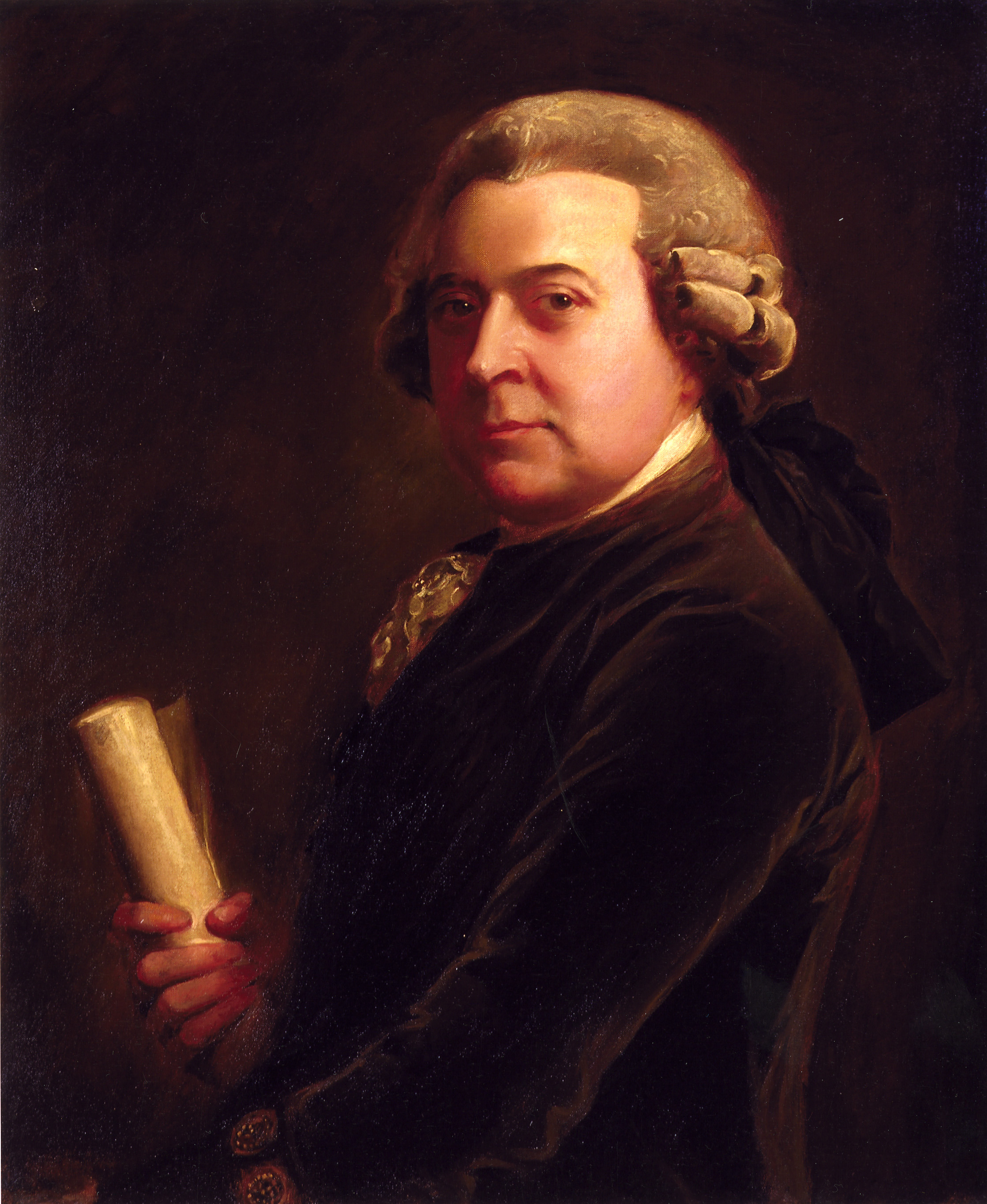
    johnadams-copley1784-2237
    John Adams. By: John Singleton Copley.

    Americans had a keen understanding of the idea, popularized by Montesquieu, that “only a small homogeneous society whose interests were essentially similar could properly sustain a republican government.” Gordon Wood, The Creation of the American Republic: 1776-1787, 356. This idea created a fundamental problem for America: it was not a small homogeneous society, and it was rapidly expanding.

    (more…)

  • A First Principle of Free Government

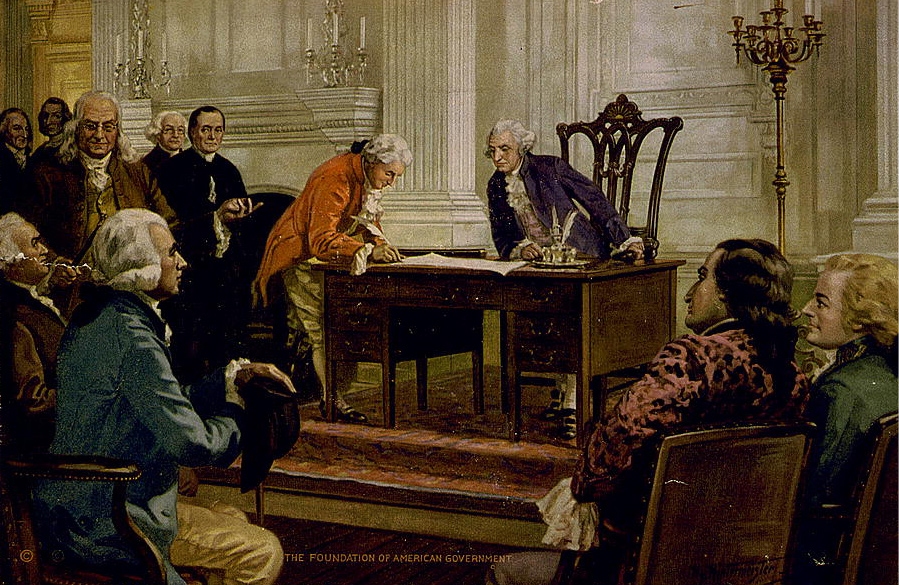
    constitutional_convention_4_630_pxlw
    The Signing of the Constitution of the United States.

    The separation of powers in the government of the United States has “come to define the very character of the American political system.” Gordon Wood, The Creation of the American Republic: 1776-1787, 151. (more…)

  • Infancy, Manhood, and Decline

    Portrait of Niccolo' Machiavelli
    Portrait of Niccolo Machiavelli. By: Santi di Tito.

    The political spirit of the colonies in the 1700s, while unfamiliar in many respects, has parallels to the modern political landscape in America. The colonies political thought was closer to Niccolo Machiavelli and Montesquieu, rather than John Locke.

    The colonists generally “did not conceive of society in rational, mechanistic terms; rather society was organic and developmental.” Gordon Wood, Creation of the American Republic: 1776-1787, 29. One of the common views at the time was: “It is with states as it is with men, they have their infancy, their manhood, and their decline.” Id. quoting Stow Persons, “The Cyclical Theory of History in Eighteenth-Century America,” American Quarterly, 6 (1954), 147-63.

    This theory of nations and people presented “a variable organic cycle of birth, maturity, and death, in which states, like the human body, carried within themselves the seeds of their own dissolution,” with the speed of dissolution “depending on the changing spirit of the society.” Gordon Wood, Creation of the American Republic: 1776-1787, 29 quoting Stow Persons, “The Cyclical Theory of History in Eighteenth-Century America,” American Quarterly, 6 (1954), 147-63.

    In contemporary America, these beliefs regarding the cyclical nature of nations would resonate with many. Even if most modern Americans do not think in terms of analogizing nations with men, the rise and fall of nations is still a popular subject.

    Notably, Americans, and their immediate predecessors, have always been painfully aware of the seemingly temporary nature of prosperity in the strongest of nations. Optimistically, Americans have always hoped to devise a system of government and a culture that was capable of avoiding what seems to be inevitable decline.

    Whether that is possible or not, this American hope fuels an insecurity of decline and a desire to study history so as not to repeat it. Perhaps this insecurity can prevent or mitigate the most common causes of decline and even significantly delay decline, but can it stop decline from happening altogether? It is doubtful.