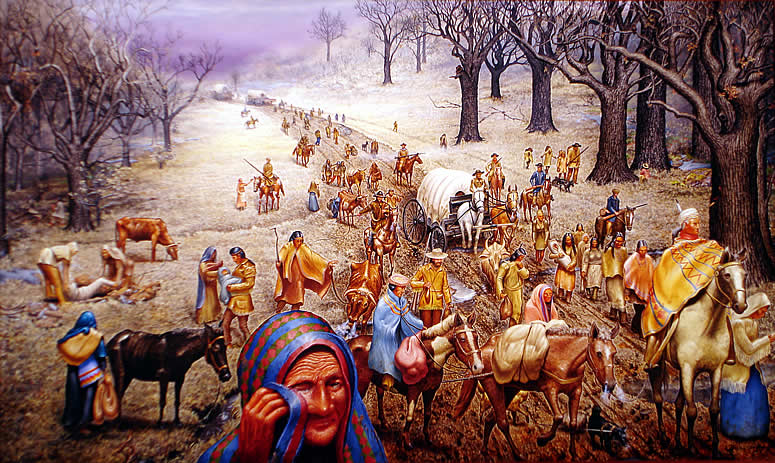
Tag: Native Americans

  • Bleeding Kansas

    6615782369_473115a671_o
    Tallgrass Prairie, Kansas.

    After the passage of the Kansas-Nebraska Act, William Seward proclaimed to the Senate that “[w]e will engage in competition for the virgin soil of Kansas, and God give the victory to the side which is stronger in numbers as it is in right.” Congressional Globe, 33 Cong., 1 sess., appendix, 769. Rather than settling the issue of slavery in Kansas, the Act made Kansas the figurative and literal battleground for the issue of slavery.

    (more…)

  • The Country of the Future

    home_in_the_woods_1847_thomas_cole
    Home in the Woods. By: Thomas Cole.

    By 1848, America had undergone a significant transformation from the America that the Founding Fathers left just a few decades before.

    (more…)

  • Election of 1848: The Candidates

    hd_1848electiontopic
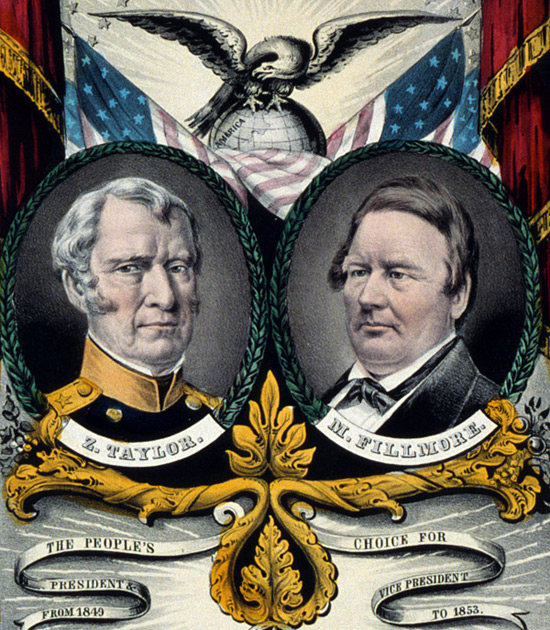
    The Whig Ticket for President, Zachary Taylor, and Vice President, Millard Fillmore.

    The Election of 1848 was bound to be unique, as President James Polk had made clear that he would serve only one term as president. With that, the Whigs and the Democrats had to put forth candidates that could meet the parties’ respective goals of reversing President Polk’s policies (the Whigs) and expanding on President Polk’s policies (the Democrats).

    (more…)

  • The Mass Immigration of the 1840s

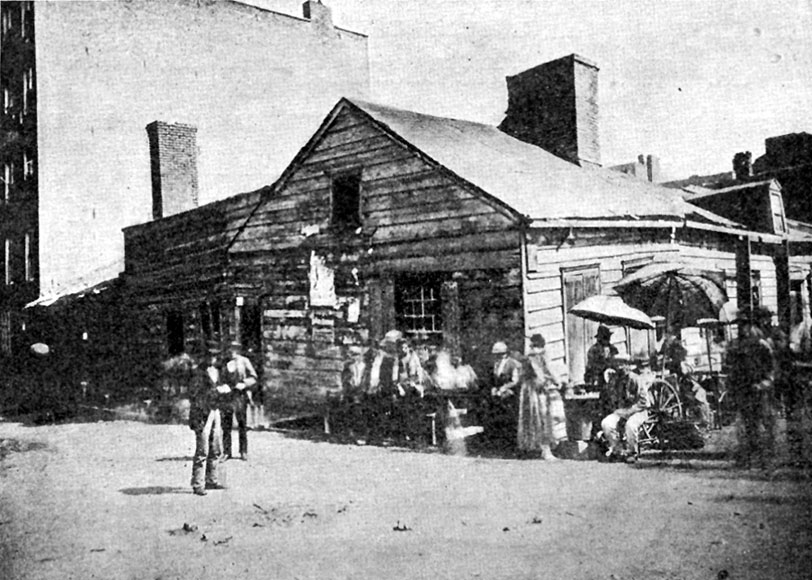
    five_points_new_york_city_1852
    Photograph of the Five Points Neighborhood of New York City. Photographer Unknown.

    In the mid-1840s, the last major famine in European history would take place in Ireland. This famine would have significant ramifications for America, as it would lead to a massive wave of immigrants.

    (more…)

  • The Gold Rush of 1849

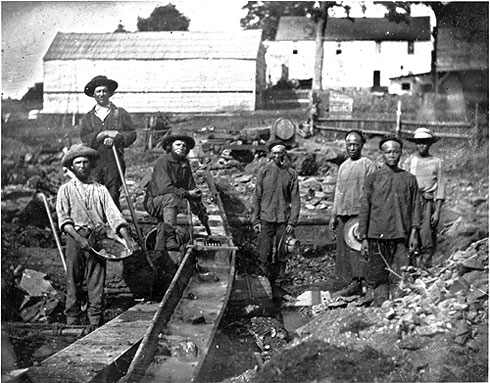
    miners_
    Gold Miners During the California Gold Rush. Photographer Unknown.

    On January 24, 1848, James Marshall and Johann Sutter made a discovery that would transform the territory of California and bring about pandemonium in American society. The specks of gold that they discovered, while they may have hoped to keep secret, were anything but a secret.

    (more…)

  • The Treaty of Guadalupe Hidalgo

    treaty_of_guadalupe_hidalgo
    The Treaty of Guadalupe Hidalgo.

    With the execution of the Treaty of Guadalupe Hidalgo, the Mexican-American War had come to an end. The territory that Mexico relinquished to America held “some ninety thousand Hispanics and a considerably larger number of tribal Indians,” despite President James Polk characterizing the territory as “almost unoccupied.” Daniel Walker Howe, What Hath God Wrought: Transformation of America, 1815-1848, 809.

    (more…)

  • Manifest Destiny

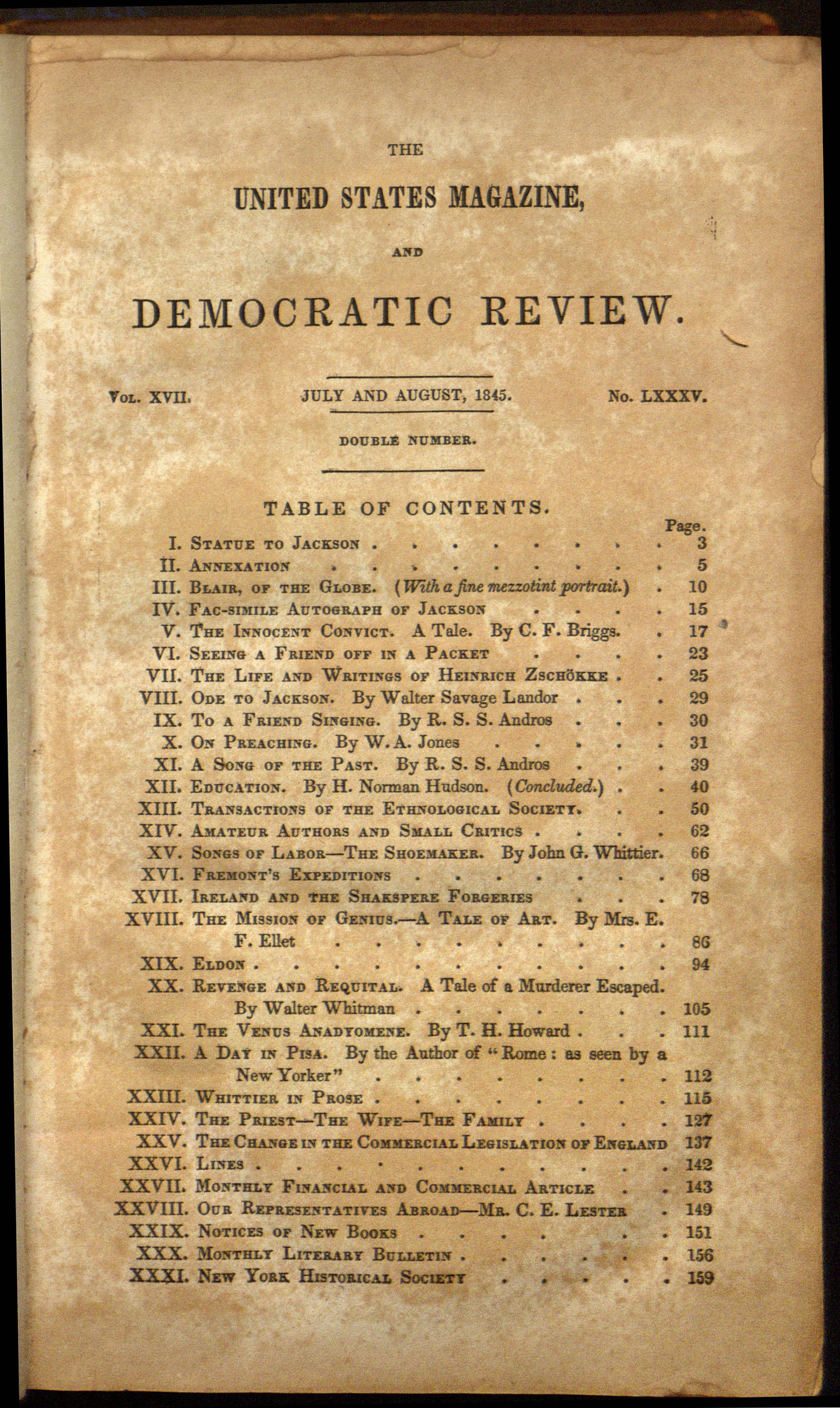
    demrevcontentspage
    The Democratic Review Magazine.

    While many Americans would come to embrace manifest destiny, the idea that America would achieve its imperial destiny and dominate the continent, it was not a politician or president who coined the term. Rather, it was coined in 1845 in New York’s Democratic Review magazine. See Daniel Walker Howe, What Hath God Wrought: Transformation of America, 1815-1848, 702-03.

    (more…)

  • Election of 1840: The Rhetoric

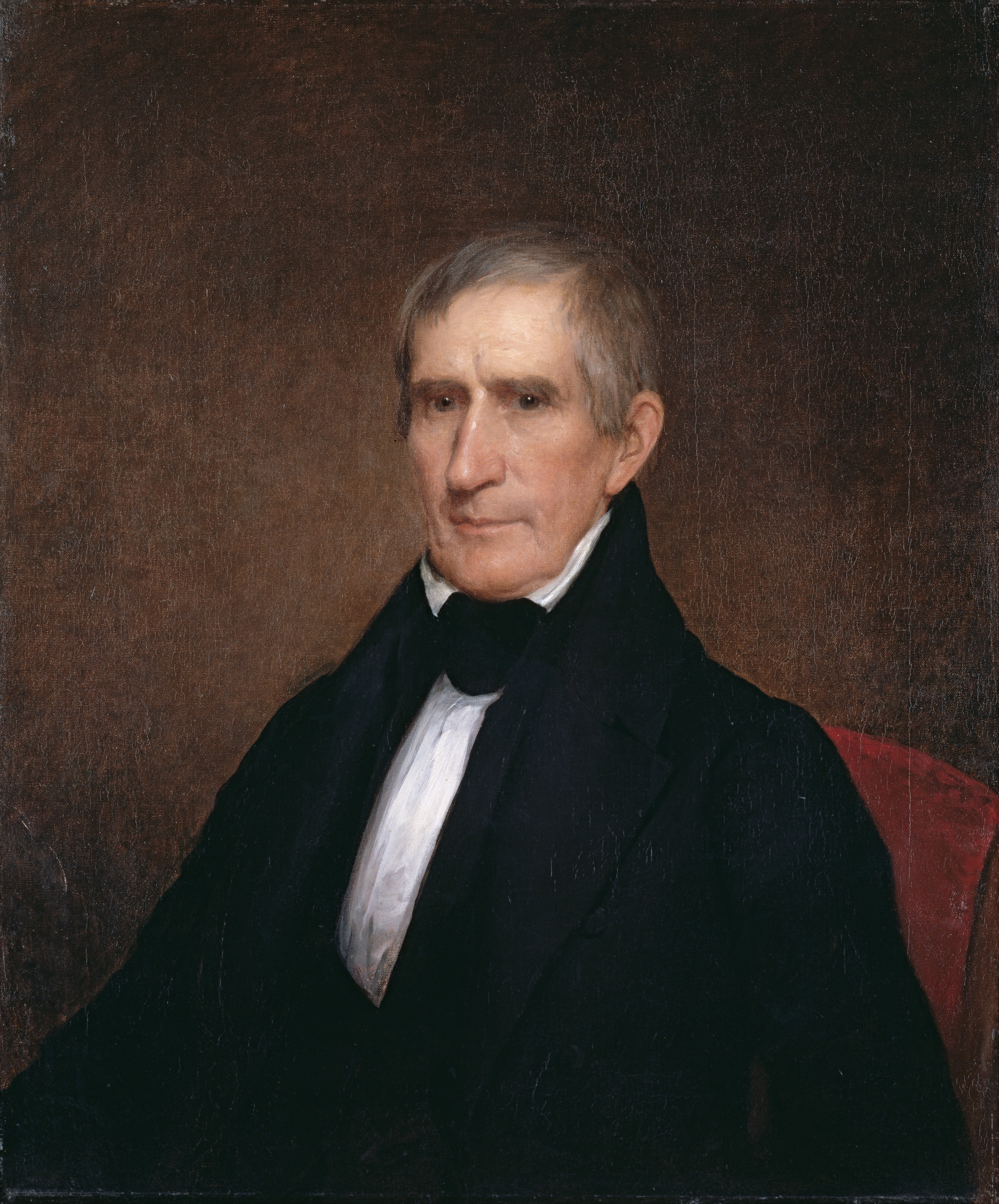
    albert_gallatin_hoit_-_william_henry_harrison_-_google_art_project
    William Henry Harrison. By: Albert Gallatin Hoit.

    The Election of 1840 juxtaposed the Whig Party’s policies against the Democratic Party’s more fluid policies. The Whigs “possessed a more coherent program: a national bank, a protective tariff, government subsidies to transportation projects, the public lands treated as a source of revenue, and tax-supported public schools.” Daniel Walker Howe, What Hath God Wrought: Transformation of America, 1815-1848, 583-84. The Democrats did not have such rigid policies, relying instead on the “emotional bond” they they had with their followers, rather than policy initiatives. Id. at 584 citing Matthew Crenson, The Federal Machine: Beginnings of Bureaucracy in Jacksonian America (Baltimore, 1975), 29.

    (more…)

  • The Second Florida War

    seminole_war_in_everglades
    A Depiction of United States Marines Searching for Native Americans.

    With President Martin Van Buren in the White House came increasing extermination of the Native Americans. While many will recall the Trail of Tears leading to thousands of Native American deaths, the Second Florida War would be the “longest and most costly of all the army’s Indian Wars,” as it stretched from 1835 to 1842. Daniel Walker Howe, What Hath God Wrought: Transformation of America, 1815-1848, 516.

    (more…)

  • The Extermination of Native Americans

    max-d-stanley-trail-of-tears
    Trail of Tears. By: Max D. Stanley.

    Under President Andrew Jackson, and his successor President Martin Van Buren, there was mass removal of Native Americans westward across America.

    (more…)