
The news from Fort Sumter spread throughout the country, and its coming awakened a restless energy in the North. That energy ignited patriotism and a new sense of collectivism throughout northern cities and states that would lead to a then-unparalleled war effort directed against the Confederacy. (more…)
Tag: New York
-
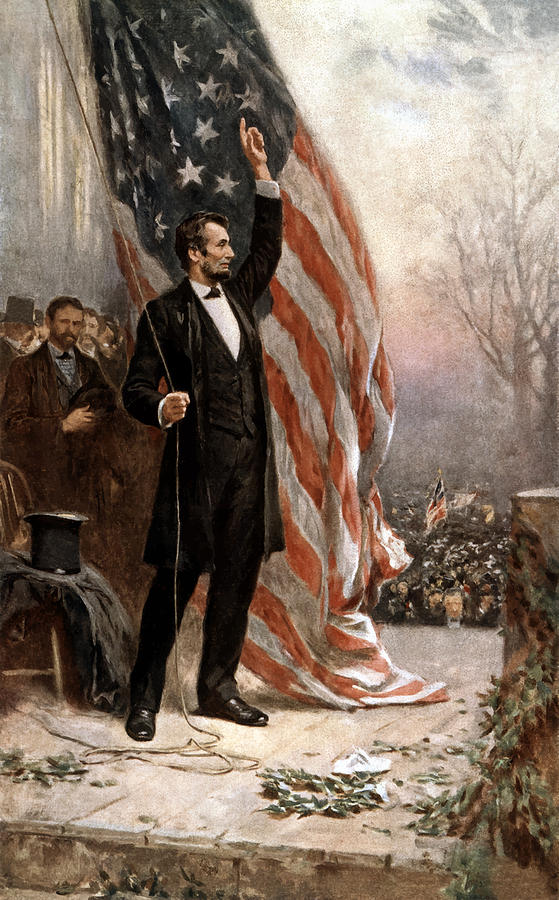
The Inauguration of Abraham Lincoln
From the time of the Election of 1860 to the beginning of Abraham Lincoln’s presidency, there was uncertainty as to how Lincoln and his administration would handle the growing Confederacy and existential crisis facing the country. (more…)
-
The Precursor to the Winter of Secession

Washington in 1860. Photographer Unknown. Abraham Lincoln’s victory in the Election of 1860 was disconcerting news for the South. It was the most recent event in a string of events that seemingly endangered the southern way of life and the future of the country. At a time when many northerners suspected southern threats of secession were but a bluff, there was evidence that the country had already split and the formalities were soon to follow. (more…)
-
The Election of 1860
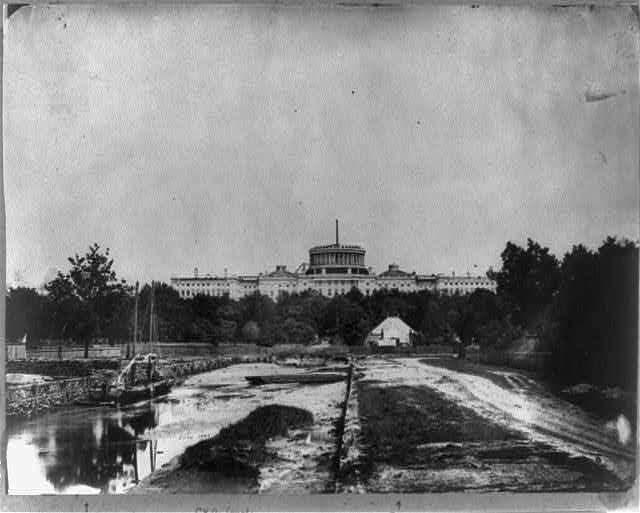
The United States Capitol in 1860. Courtesy: Library of Congress Every presidential election is consequential, but the Election of 1860 would play a significant role in whether the United States would remain one nation. The division of the North and South on the issue of slavery threatened to cause a secession of the South. The result of the election would determine whether that threat would materialize and cause a Second American Revolution. (more…)
-
The Raid on Harpers Ferry

Depiction of the Raid on Harpers Ferry. For the bulk of the early 19th Century, slaveholders in the South had a deep fear that a slave revolt would erupt and metastasize, leading to an eradication of the institution, similar to what happened in Haiti in the first years of the 19th Century. In 1859, John Brown, one of the instigators in Bleeding Kansas, would attempt to lead such a revolt, starting at a federal armory in Harpers Ferry, Virginia. The immediate effects of his raid would pale in comparison to its impact over the course of the following two years. (more…)
-
A Supreme Court Tragedy: Dred Scott v. Sandford

The Taney Supreme Court. In 1857, the United States Supreme Court decided one of the most controversial cases in the history of the country. Just days after James Buchanan began his term as president, Chief Justice Roger Taney wrote the opinion for the Court, ruling that neither slaves nor freedmen could be citizens of the United States. The implications of this decision, and its reasoning, have been analyzed, dissected, and discussed since 1857. While many have concluded it is one of the Supreme Court’s worst decisions, its impact on Antebellum America should not be overlooked.
-
The Evolving Political Parties of the 1850s
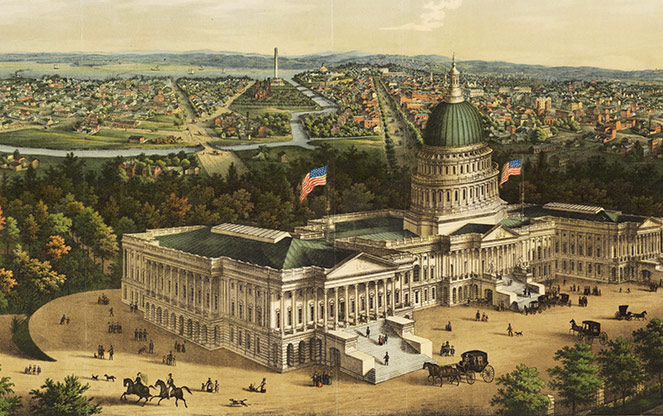
Panoramic View of Washington, DC in 1856. Courtesy: E. Sachse & Co. The Democratic Party and Whig Party were the dominant political parties from the early 1830s up until the mid-1850s. Both were institutions in national politics despite not having a coherent national organization by cobbling together a diverse group of states to win elections. While the Democrats had a more populist agenda, the Whigs were more focused on pursuing industrialization and development of the country. See David Potter, The Impending Crisis: America Before the Civil War, 1848-1861, 226. While the Democratic Party would survive to the present day, the Whig Party would not survive the mid-1850s, not as a result of its own ineptness but because of the changing political landscape of that era. (more…)
-
The Kansas-Nebraska Act

Construction of the Transcontinental Railroad. In 1844, Asa Whitney, a merchant in New York, proposed that a transcontinental railroad be built. While he hoped to lead the construction of the railroad and reap the benefits of the ambitious project, that was not to be. However, three components of his plan captured the spirit of Americans toward the construction of the railroad: “There must be a railroad to the Pacific; it must be financed by grants of public lands along the route; and it must be built by private interests which received these grants.” David Potter, The Impending Crisis: America Before the Civil War, 1848-1861, 146. (more…)
-
Election of 1848: The Barnburners
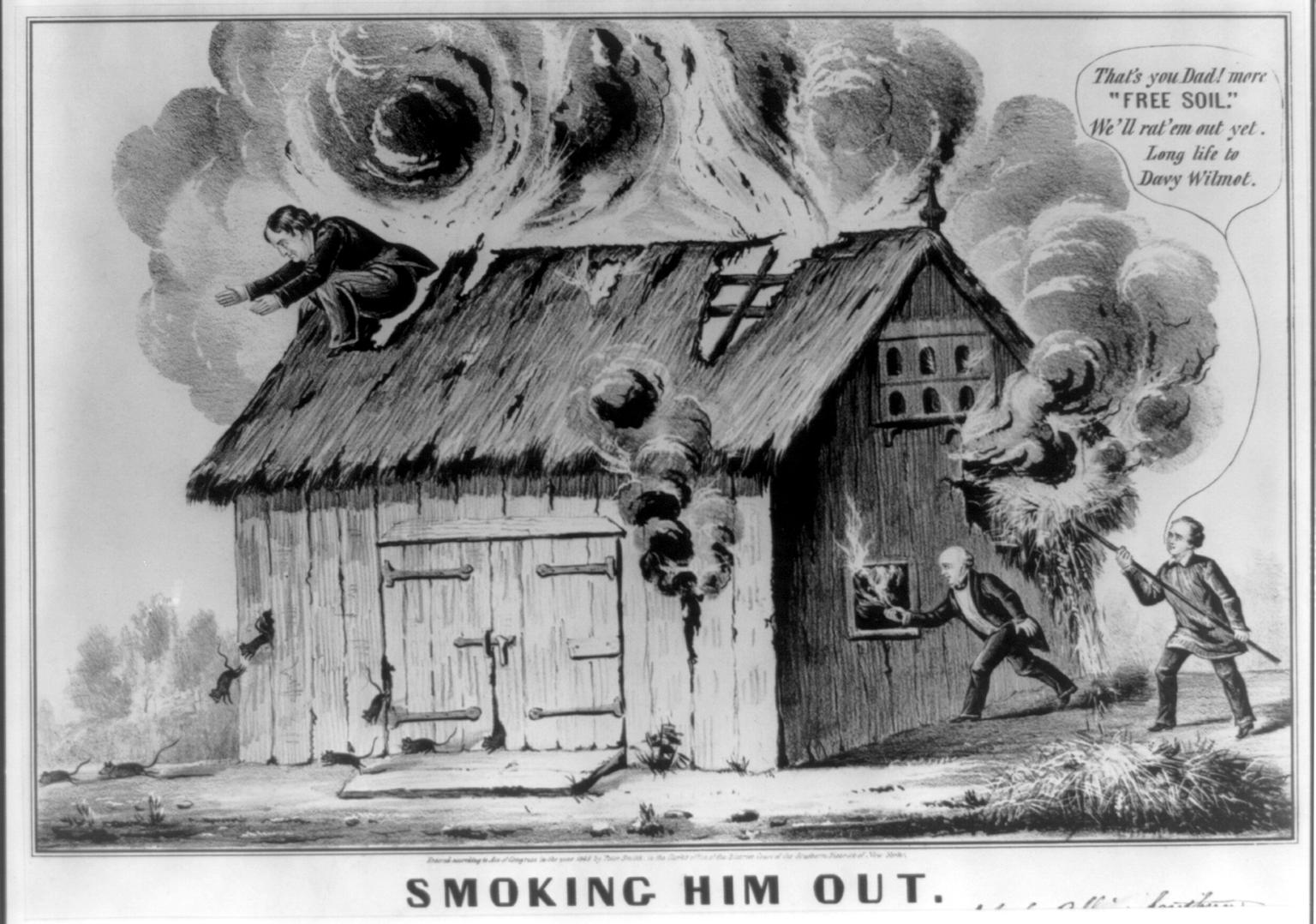
A Political Cartoon Regarding the Barnburners. Approaching the Election of 1848, President James Polk did not have unanimous support amongst Democrats. In fact, quite the opposite.
-
The Mass Immigration of the 1840s
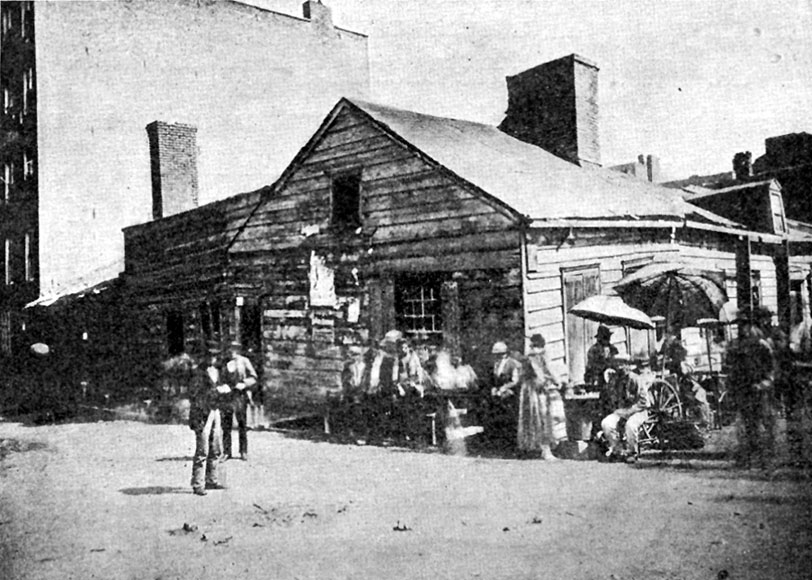
Photograph of the Five Points Neighborhood of New York City. Photographer Unknown. In the mid-1840s, the last major famine in European history would take place in Ireland. This famine would have significant ramifications for America, as it would lead to a massive wave of immigrants.
 Last Best Hope of Earth