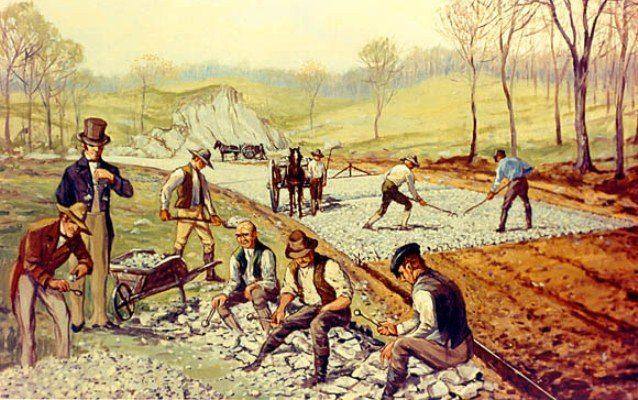
Following the end of the War of 1812, the United States underwent a transportation revolution. This transportation revolution came about as a result of Americans moving westward but also as more Americans moved into cities to engage in industrial work. Daniel Walker Howe, What Hath God Wrought: Transformation of America, 1815-1848, 212. (more…)
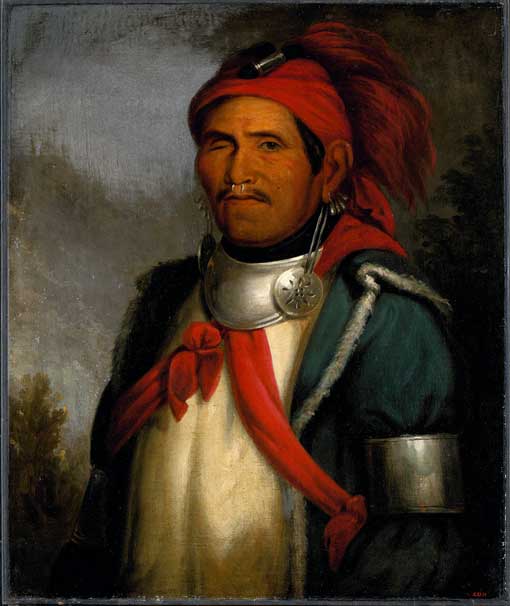
For centuries prior to the War of 1812, the Native Americans were able to manipulate the British, French, Spanish, and Americans to sustain themselves. After the War of 1812, the entirety of the land east of the Mississippi River was owned by America, effectively ended the Native Americans’ strategy. Daniel Walker Howe, What Hath God Wrought: Transformation of America, 1815-1848, 74.
As the Constitution was being drafted and ratified, opinions ranged on the prospects for it effectively governing America. Some in the Philadelphia Convention believed it was “nothing more than a combination of the peculiarities of two of the State Governments which separately had been found insufficient.” Gordon Wood, The Creation of the American Republic: 1776-1787, 519 quoting Madison, in Farrand, ed., Records of the Federal Convention, II, 291. Even some Federalists, who favored a strong national government, concluded that there was “a preposterous combination of powers in the President and Senate, which may be used improperly.” Edward Carrington to Jefferson, Oct. 23, 1787, Boyd, ed., Jefferson Papers, XII, 255.
While during the American Revolution, the judiciary was mostly forgotten, in the interest of controlling gubernatorial power by empower legislatures, that began to change during the 1780s.
Prior to the American Revolution, the colonists had become familiar with the concept of charters. Charters, whether royal, corporate, or proprietary, operated “as the evidence of a compact between an English King and the American subjects.” Gordon Wood, The Creation of the American Republic: 1776-1787, 268; see also Leonard Krieger, The Politics of Discretion: Pufendorf and the Acceptance of Natural Law (Chicago, 1965), 121.
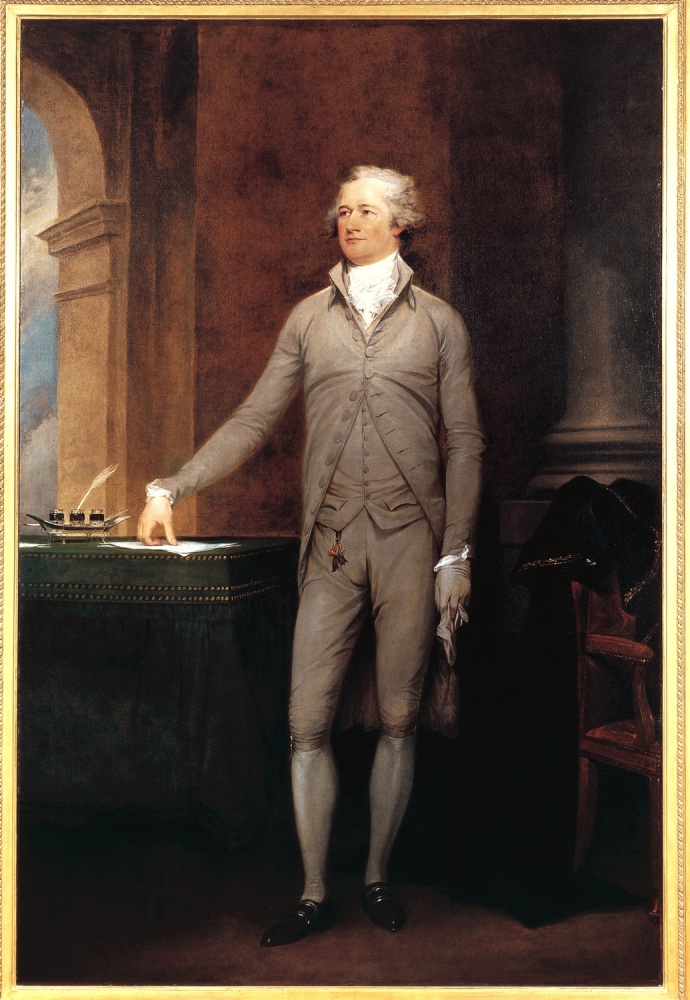
Alexander Hamilton, as Secretary of the Treasury. By: John Trumbull.
Conservatives and liberals during the Revolutionary years realized that democracy must have power distributed throughout various sources, known as a mixed government, so as to survive.
As touched on in Unalterable Constitutions, Americans began resorting to conventions for amending their state constitutions, and this was only one example of Americans looking to advance their causes outside of the bounds of government. See Gordon Wood, The Creation of the American Republic: 1776-1787, 310. This was not a novel approach, however, and it was not the only approach that Americans were increasingly taking to advance their interests.
By 1776, the states were debating their respective constitutions and the Declaration of Independence was becoming a reality, all of which was fostering an environment of great debate. One part of that debate was what the role of governor should be for each state, and many of the conclusions and decisions made during that debate carry forth to modern America.
In the months leading up to the Declaration of Independence, the states began the process of adopting their own constitutions. These constitutions, being drafted in 1776, approximately 13 years before the United States Constitution would be ratified, had to confront many of the same issues as the United States Constitution, with various approaches being taken. (more…)




 Last Best Hope of Earth