The two dominant American political parties of the late 1860s, the Republicans and the Democrats, are the parties that continue to dominate the political landscape into the early Twenty-First Century. Although they are the same parties in name, many of the policies they espouse—and the place on the political spectrum their supporters find themselves—have almost entirely reversed in the intervening century and a half. In modern parlance, a liberal is one that finds himself or herself on the left side of the political spectrum and is more likely to be a member of the Democratic Party. In the late Nineteenth Century, the term had an entirely different meaning. (more…)
Tag: Political Parties
-
The Evolving Political Parties of the 1850s
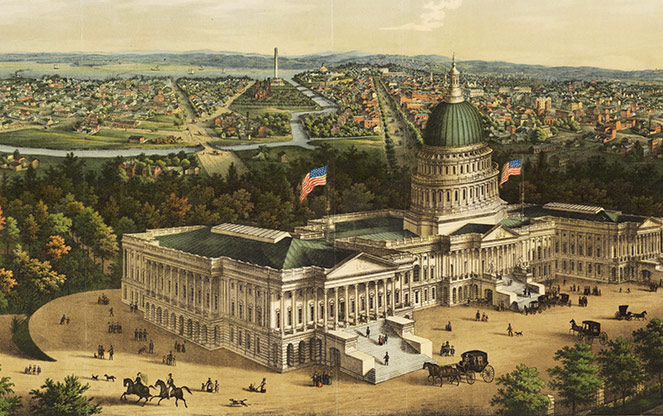
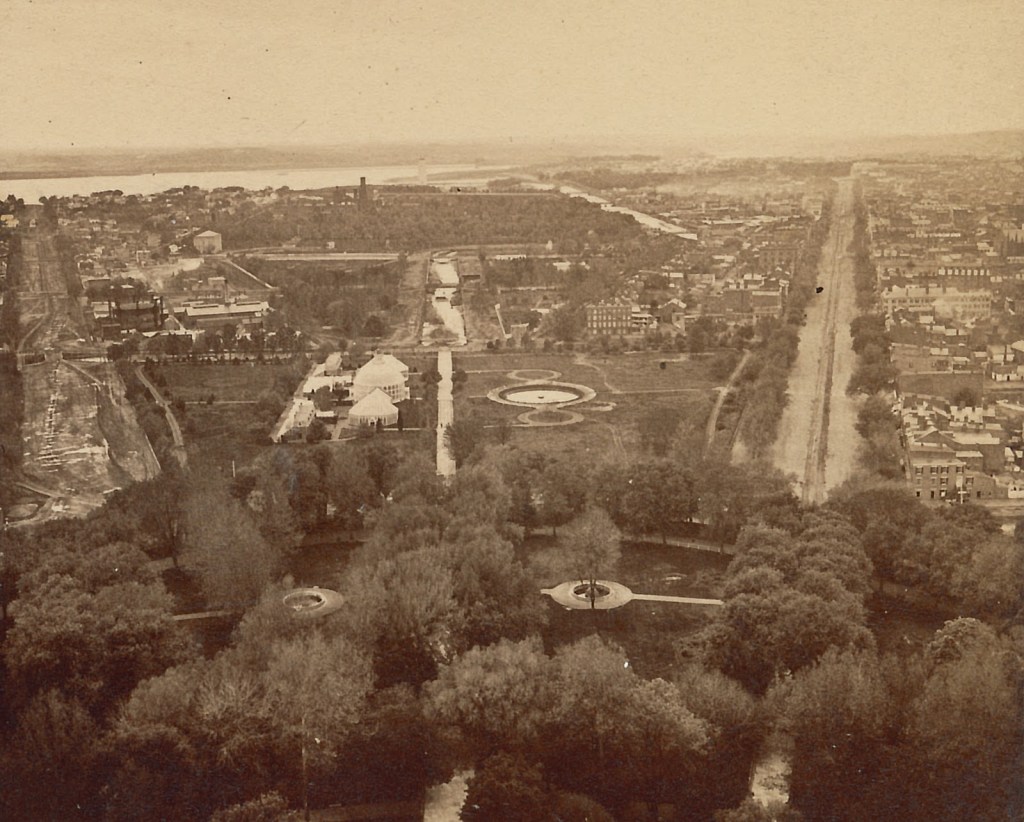
Panoramic View of Washington, DC in 1856. Courtesy: E. Sachse & Co. The Democratic Party and Whig Party were the dominant political parties from the early 1830s up until the mid-1850s. Both were institutions in national politics despite not having a coherent national organization by cobbling together a diverse group of states to win elections. While the Democrats had a more populist agenda, the Whigs were more focused on pursuing industrialization and development of the country. See David Potter, The Impending Crisis: America Before the Civil War, 1848-1861, 226. While the Democratic Party would survive to the present day, the Whig Party would not survive the mid-1850s, not as a result of its own ineptness but because of the changing political landscape of that era. (more…)
-
Election of 1848: The Barnburners
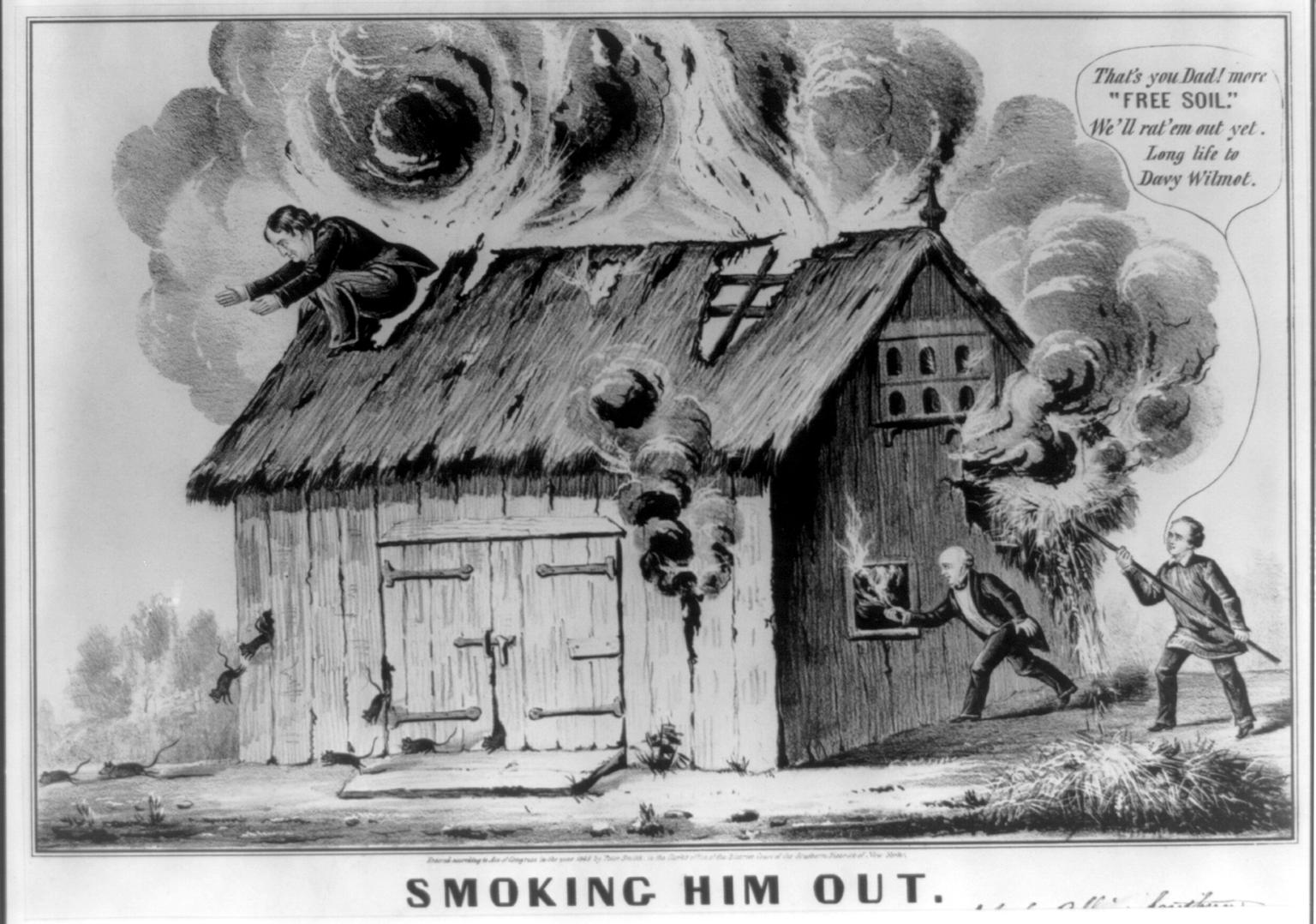
A Political Cartoon Regarding the Barnburners. Approaching the Election of 1848, President James Polk did not have unanimous support amongst Democrats. In fact, quite the opposite.
-
The Whig Revolution

The County Election. By: George Caleb Bingham. With the Mexican-American War well underway, the midterm elections in 1846-47 were bound to be consequential.
-
Election of 1844: Democratic Party Platform

Robert Walker. By: Mathew Brady. As part of the Democratic platform for the Election of 1844, the Democrats incorporated their positions on “strict construction, banking, and congressional noninterference with slavery.” Daniel Walker Howe, What Hath God Wrought: Transformation of America, 1815-1848, 683. However, the Democrats took things one step further.
-
The Legacy of the Whig Party

The New York Tribune, a Whig Newspaper, Endorsing its Candidates. Following the Election of 1840, members of the Whig Party must have been optimistic about their future. They likely imagined that the dominance of the Jacksonian Democrats could be replicated within the ranks of the Whigs and supplant the Democrats. It was not to be, however.
-
Election of 1840: The Rhetoric
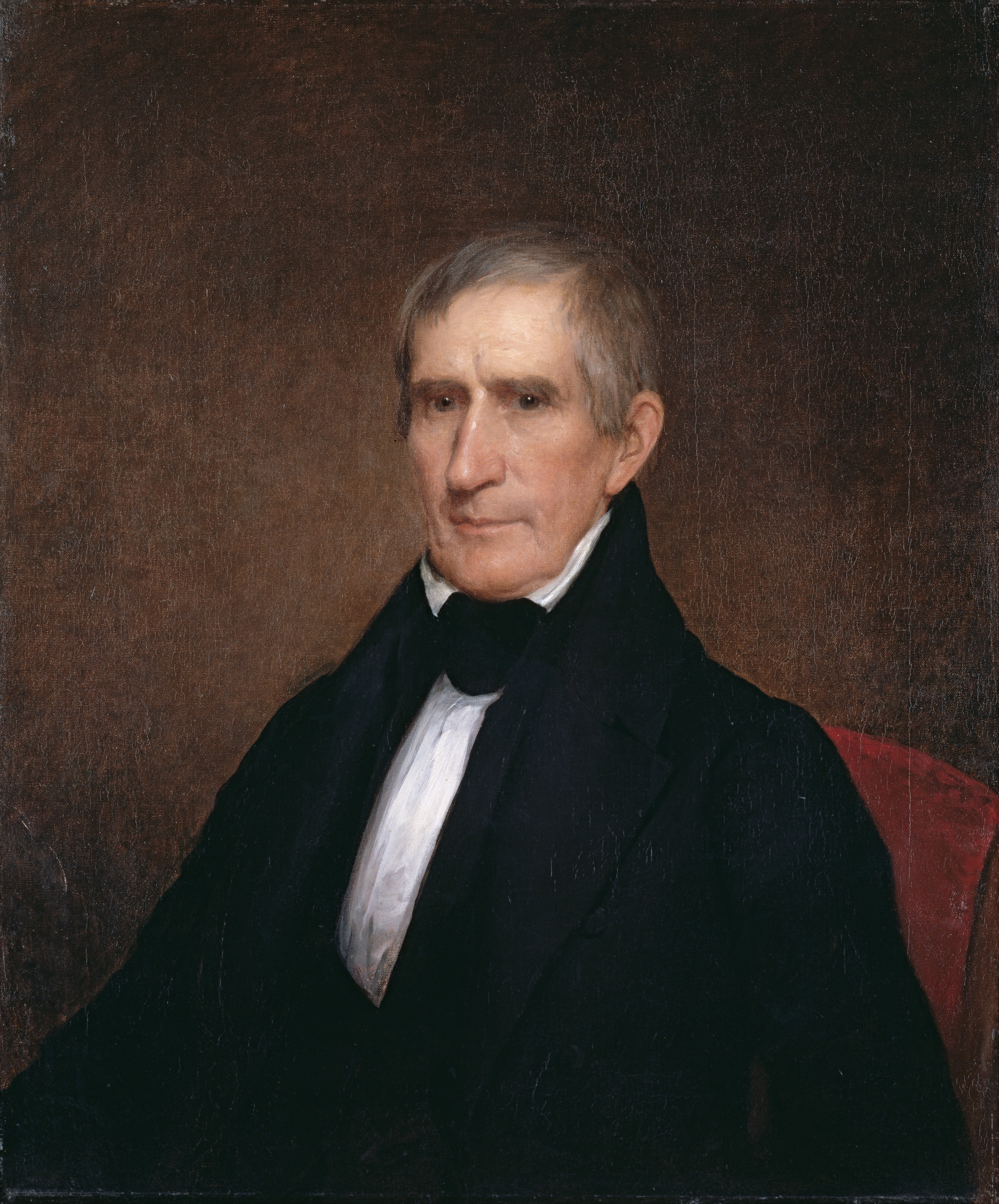
William Henry Harrison. By: Albert Gallatin Hoit. The Election of 1840 juxtaposed the Whig Party’s policies against the Democratic Party’s more fluid policies. The Whigs “possessed a more coherent program: a national bank, a protective tariff, government subsidies to transportation projects, the public lands treated as a source of revenue, and tax-supported public schools.” Daniel Walker Howe, What Hath God Wrought: Transformation of America, 1815-1848, 583-84. The Democrats did not have such rigid policies, relying instead on the “emotional bond” they they had with their followers, rather than policy initiatives. Id. at 584 citing Matthew Crenson, The Federal Machine: Beginnings of Bureaucracy in Jacksonian America (Baltimore, 1975), 29.
-
The Political Parties of the 1820s and 1830s

Posting in a Pennsylvania Newspaper from the Working Men’s Political Parties. In the 1820s and 1830s, Working Men’s political parties emerged, changing the discourse of the two major political parties, the Democrats and Whigs. From Philadelphia outward, “Working Men’s political parties sprang up in various places . . . , fed by the discontents of journeymen under the impact of industrialization.” Daniel Walker Howe, What Hath God Wrought: Transformation of America, 1815-1848, 539 citing Sean Wilentz, Chants Democratic: New York City and the Rise of the American Working Class (New York, 1984), 109.
-
Voting in the Early 1800s
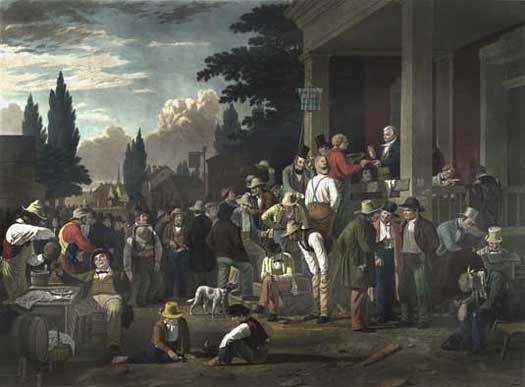
Depiction of Voting in the Early 1800s. In the early 1800s, an American polling place “displayed many of the worst features of all-male society: rowdy behavior, heavy drinking, coarse language, and occasional violence.” Daniel Walker Howe, What Hath God Wrought: Transformation of America, 1815-1848, 491.
-
Andrew Jackson’s Third Term

Martin Van Buren. Martin Van Buren, President Andrew Jackson’s hand-picked heir, would carry out many of Jackson’s policies, such as the removal of the Native Americans westward, as he was elected in the election of 1836. President Jackson also fundamentally changed the nature of the presidency.
 Last Best Hope of Earth