
At the time of the American Revolution, it was commonly believed amongst Americans that formulating the ideal government would require a different system than any previously conceived. The Founding Fathers had their own ideas.
At the time of the American Revolution, it was commonly believed amongst Americans that formulating the ideal government would require a different system than any previously conceived. The Founding Fathers had their own ideas.

As the American Revolution became more and more inevitable, states began contemplating the role and responsibilities of their legislatures. Those contemplations centered around curing the perceived ills and shortcomings of the English constitution.

In the 1760s and 1770s, Americans had a complicated relationship with the English constitution. The English constitution was both a model for government, in some respects, and the strongest wedge being driven between the colonists and the English.

While revolution was necessary to reinvent the American system of government to best meet the needs of Americans, another key element was necessary. The early Americans realized that “[p]eace is seldom made, and never kept, unless the subject retain such a power in his hands as may oblige the prince to stand to what is agreed.” Gordon Wood, The Creation of the American Republic: 1776-1787, 24 quoting Foster, Short Essay on Civil Government, 29-30.
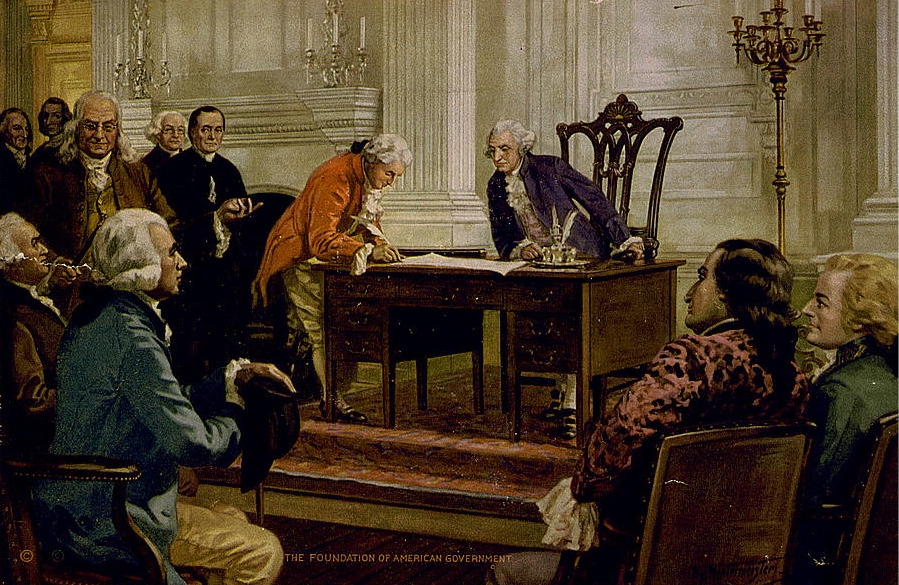
The separation of powers in the government of the United States has “come to define the very character of the American political system.” Gordon Wood, The Creation of the American Republic: 1776-1787, 151. (more…)
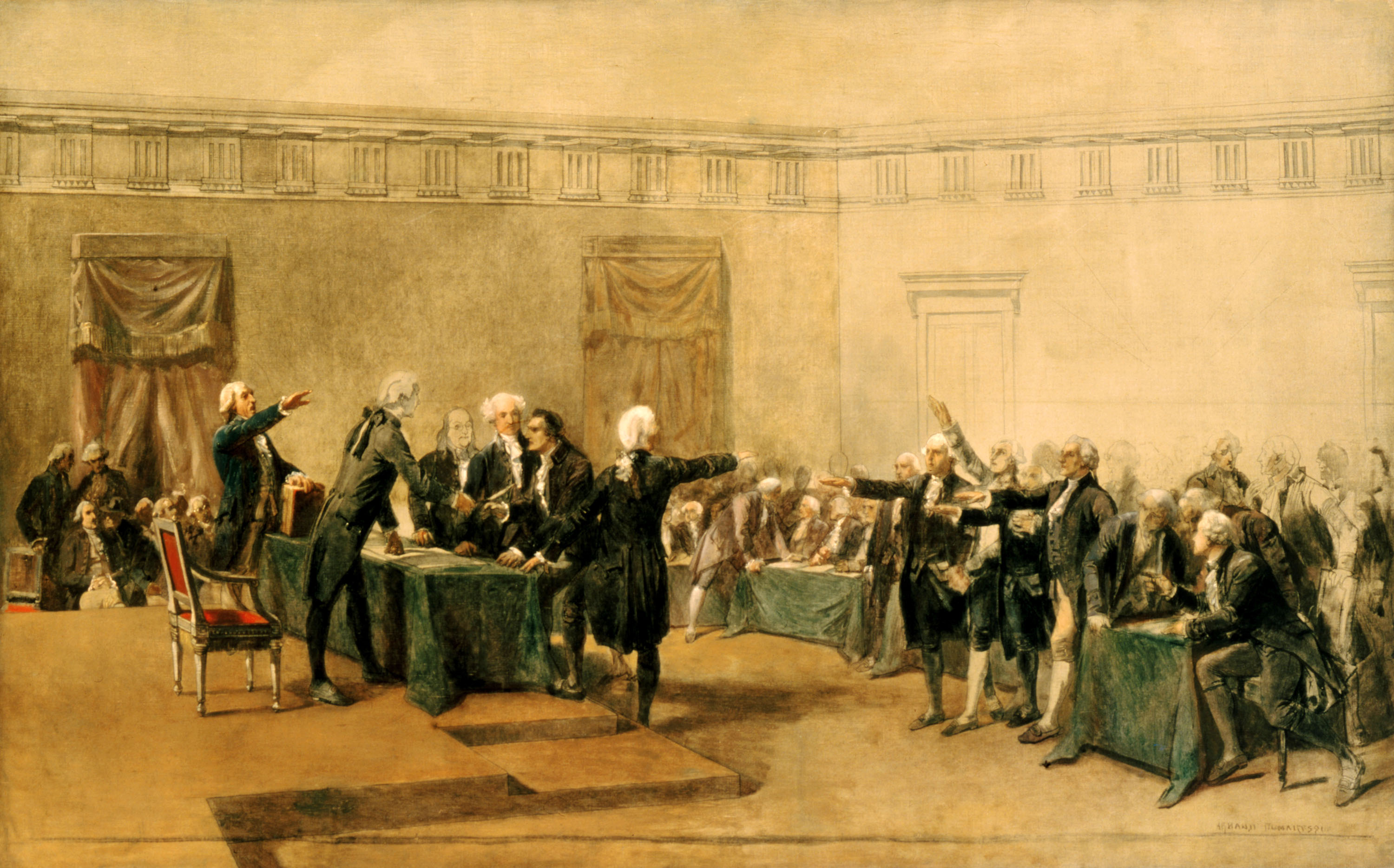
Tyranny, one of the early Americans’ greatest fears, may seem to contemporary Americans an unjustified fear. Perhaps that is because the early Americans’ precautionary actions relegated the threat of tyranny to the 18th Century. Perhaps not. (more…)

In the months leading up to the Declaration of Independence, the states began the process of adopting their own constitutions. These constitutions, being drafted in 1776, approximately 13 years before the United States Constitution would be ratified, had to confront many of the same issues as the United States Constitution, with various approaches being taken. (more…)

The American Revolution is a topic that has been dissected, analyzed, and retold by every generation of Americans. The political theory of the American Revolution is conventionally believed to be centered on the revolutionaries’ genius. (more…)

The success or failure of countries, and politicians for that matter, are an often studied subject. Studies have been ongoing for centuries.
James Burgh, an English Whig, wrote: “Almost all political establishments have been the creates of chance rather than of wisdom. Therefore it is impossible to say what would be the effect of a perfect commonwealth” as there was no precedent in history. James Burgh, Political Disquisitions, Vol. 1, 23. (more…)

John Adams had strong opinions about federalism. He believed that the government should be structured similarly to the British Empire, given the British Empire’s extraordinary success.
At the time of the signing of the Constitution, Adams firmly believed that the Constitution had secured a national government, as opposed to a government dividing its sovereignty into states and a federal government. Gordon Wood, Revolutionary Characters: What Made the Founders Different, 191. (more…)
 Last Best Hope of Earth