Painting of the Inauguration of President George Washington. By: Jean Leon Gerome Ferris.
For many of the Founding Fathers, the biggest threat to the stability and success of the United States was tyranny. Tyranny was a force that could bring down the most free and just societies. Underlying much of the creation of the institutions that now define the American government, the judiciary, the legislature, and the executive, are precautionary and prophylactic measures to prevent tyranny. (more…)
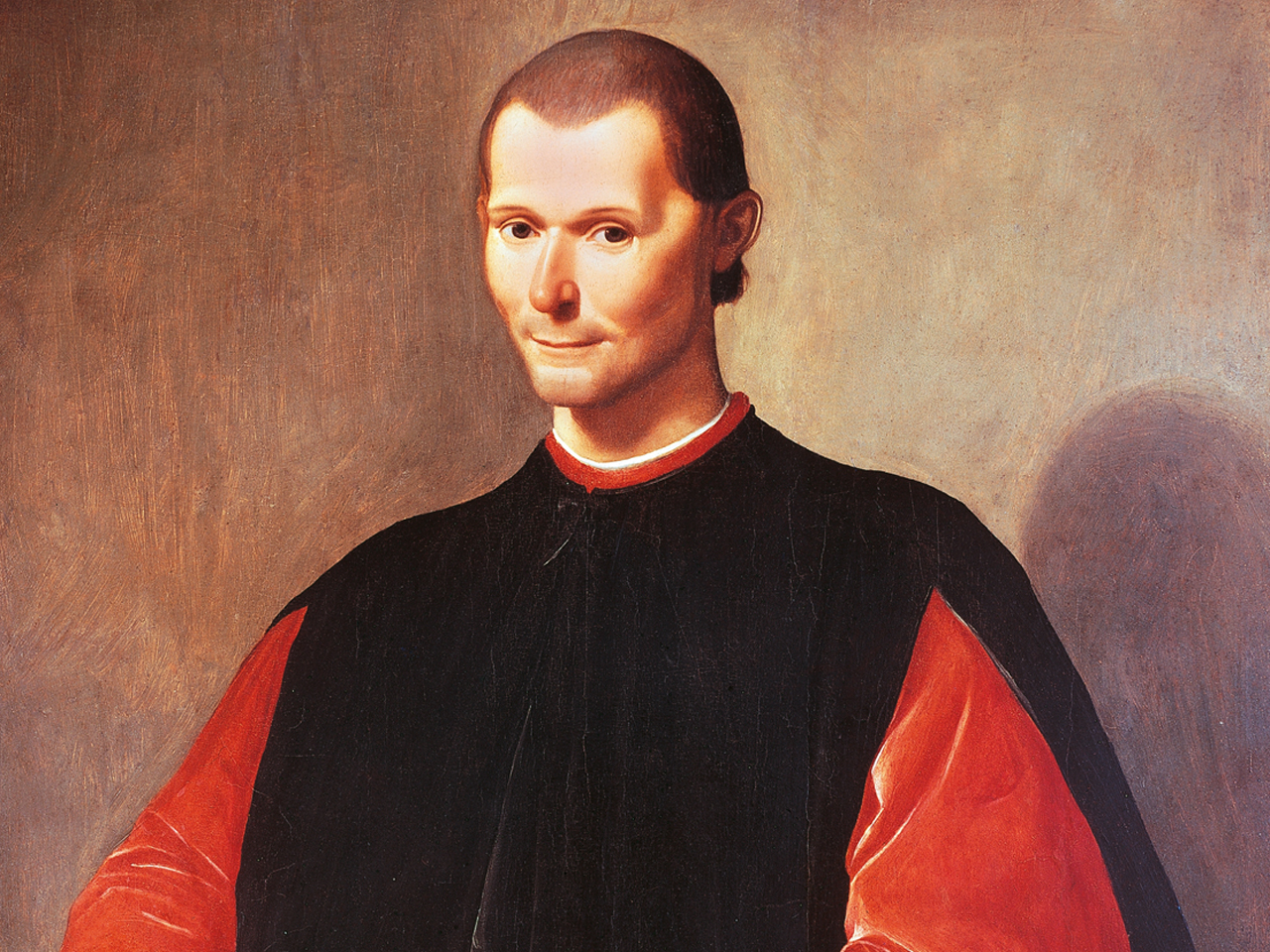
Portrait of Niccolo Machiavelli. By: Santi di Tito.
The political spirit of the colonies in the 1700s, while unfamiliar in many respects, has parallels to the modern political landscape in America. The colonies political thought was closer to Niccolo Machiavelli and Montesquieu, rather than John Locke.
The colonists generally “did not conceive of society in rational, mechanistic terms; rather society was organic and developmental.” Gordon Wood, Creation of the American Republic: 1776-1787, 29. One of the common views at the time was: “It is with states as it is with men, they have their infancy, their manhood, and their decline.” Id. quoting Stow Persons, “The Cyclical Theory of History in Eighteenth-Century America,” American Quarterly, 6 (1954), 147-63.
This theory of nations and people presented “a variable organic cycle of birth, maturity, and death, in which states, like the human body, carried within themselves the seeds of their own dissolution,” with the speed of dissolution “depending on the changing spirit of the society.” Gordon Wood, Creation of the American Republic: 1776-1787, 29 quoting Stow Persons, “The Cyclical Theory of History in Eighteenth-Century America,” American Quarterly, 6 (1954), 147-63.
In contemporary America, these beliefs regarding the cyclical nature of nations would resonate with many. Even if most modern Americans do not think in terms of analogizing nations with men, the rise and fall of nations is still a popular subject.
Notably, Americans, and their immediate predecessors, have always been painfully aware of the seemingly temporary nature of prosperity in the strongest of nations. Optimistically, Americans have always hoped to devise a system of government and a culture that was capable of avoiding what seems to be inevitable decline.
Whether that is possible or not, this American hope fuels an insecurity of decline and a desire to study history so as not to repeat it. Perhaps this insecurity can prevent or mitigate the most common causes of decline and even significantly delay decline, but can it stop decline from happening altogether? It is doubtful.
For many colonists and early Americans, politics was a contentious, yet simple subject. Many believed that politics “was nothing more than a perpetual battle between the passions of the rulers, whether one or a few, and the united interest of the people.” Gordon Wood, The Creation of the American Republic: 1776-1787, 18.
Thomas Gordon, an Englishman and a Whig, wrote that “[w]hatever is good for the People is bad for their Governors; and what is good for the Governors, is pernicious to the People.” Id.quoting John Trenchard and Thomas Gordon, Cato’s Letters: Or, Essays on Liberty, Civil and Religious, and Other Important Subjects, 5th ed. (London, 1748), II, 249.
These beliefs defined the Whigs, the Americans who identified with the British Whig political party led by Charles James Fox. The British Whigs were adamantly opposed to a strong monarchy. Later, in the 1830s, a movement would emerge in America called the Whig Party, which was opposed to a strong presidency.
The American Revolution developed these views in a uniquely American way. The British Whigs were focused on restraining the power of one of the mightiest empires, led by a monarchy, the world has ever known. They hoped to displace the Tories, the political party who supported the powerful monarchy. Colonists in America who embraced the Whig ideology realized that to prevent such a dilemma from playing out in America, those colonists had to develop new systems and institutions that prevented such a concentration of power in the government.
Despite the colonists progress in creating those systems and institutions, the dynamic that Whigs identified between rulers and their people still resonates today. Many modern Americans believe that government officials will inevitably only cater to the interests of government officials, not the common people. Some say it is human nature and no amount of political theorizing can conjure up a system that prevents it from happening.
One has to wonder, does the American system’s representative nature not curtail that dynamic from occurring? Has America effectively addressed rulers only looking out for rulers?


 Last Best Hope of Earth