Tag: Reconstruction

  • The Civil War: Joseph E. Brown to Alfred H. Colquitt

    December 7, 1860

    A false dichotomy, or false dilemma, is a situation where a person is choosing from two options and believes that there are no other options available. The worst kind of false dichotomy occurs where there are not only other options but false information matriculating into the public discourse and creeping into the minds of people—particularly those people who are easily influenced; the kind of people who can come to believe anything, no matter how outlandish.

    (more…)
  • Reconstruction

    Reconstruction

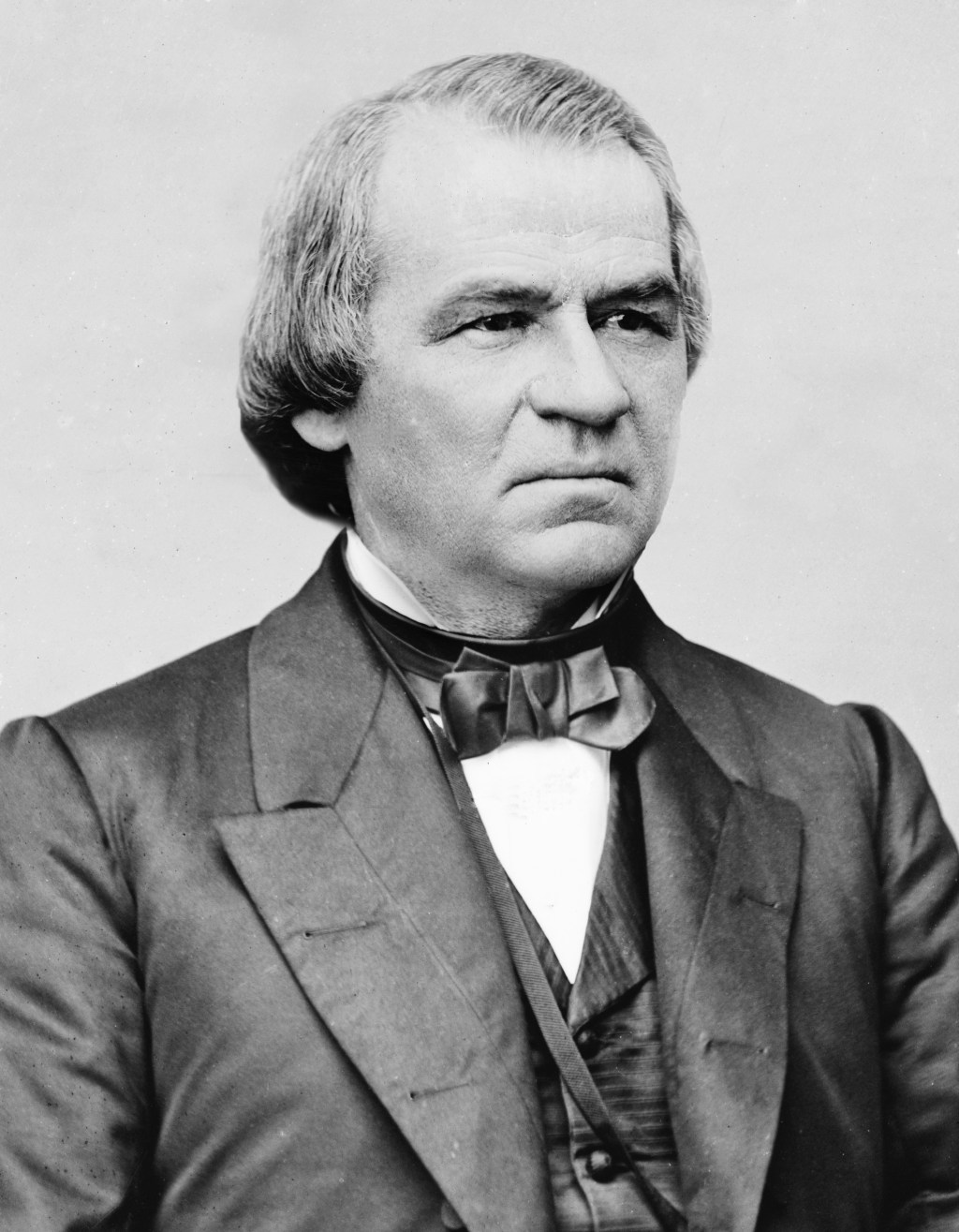
    The years after the Civil War, until 1877, were replete with novel uncertainties. The country had changed: the qualities that defined antebellum America had vanished; those who had been the most vocal before the war—soon-to-be Confederates—had seen their soapbox taken by the “Radical Republicans,” Republicans who sought to not only end slavery but to bring into effect equality amongst the races. Regardless of political party or geographic location, the country and its citizens had the task of reconstructing the United States, every one of them, and that task began before the Civil War’s end. President Abraham Lincoln spoke of his hope to reconcile the “disorganized and discordant elements” of the country, and he said: “I presented a plan of re-construction (as the phrase goes) which, I promised, if adopted by any State, should be acceptable to, and sustained by, the Executive government of the nation. I distinctly stated that this was not the only plan which might possibly be acceptable.”[i] Lincoln died four days later without fully setting forth his vision for how the nation may reconstruct itself, but events would soon render that vision—broad and ambiguous as it was—antiquated: soon after his death, the same federal government that had grown to enjoy extraordinary power (such as suspending the writ of habeas corpus) would go from having an authentic political genius, Lincoln, at its helm to having Andrew Johnson, a disagreeable at best (belligerent at worst) as executive; and not so long after Johnson took power, roving bands of the Ku Klux Klan acted in concert with state officials throughout the South to subjugate—by any means—those who had been freed.

    (more…)
  • The Election of 1876

    The Election of 1876

    In celebrating America’s first centennial, on July 4, 1876, one must have recalled the tumult of that century: a war to secure independence, a second war to defend newly-obtained independence, and then a civil war the consequences of which the country was still grappling with eleven years after its end. But there also had been extraordinary success in that century, albeit not without cost; by the 100-year mark, the country had shown itself and the world that its Constitution—that centerpiece of democracy—was holding strong (with 18 Presidents, 44 Congresses, and 43 Supreme Court justices already having served their government by that time), and the country had expanded several times over in geographic size, putting it in command of a wealth of resources as its cities, industries, and agriculture prospered. Several months after the centennial celebration was the next presidential election, and during the life of the country, while most elections had gone smoothly, some had not—the elections of 1800 and 1824 were resolved by the House of Representatives choosing the victor as no candidate secured a majority of Electoral College votes and the election of 1860 was soon followed by the secession of Southern states. And yet, even with those anomalous elections in view, the upcoming election of 1876 was to become one unlike any other in American history.

    (more…)
  • A Nation Reborn

    A Nation Reborn

    In the same way that the Second World War would reshape the globe in the Twentieth Century, the Civil War reshaped America for the remainder of the Nineteenth Century. Veterans of both wars came to define their respective generations and rise to positions of power: just as Union General Ulysses S. Grant’s meteoric rise culminated in him becoming President three years after the war, General Dwight D. Eisenhower would find himself being elected President seven years after the war of his generation. Lesser generals also worked their way into office—some of those offices being elected and others being executive offices of companies in the emerging industries following the wars—but that would occur over the course of decades: the last Civil War veteran to reach the presidency, William McKinley, occupied the White House as the Nineteenth Century faded into the Twentieth. As ever, those who held power determined the direction of the country’s future. In the weeks and months following the end of the Civil War, and President Abraham Lincoln’s assassination, people in power would be sketching out the contours of a post-war America; and it was then, at that nascent stage of the newly reborn nation’s life, that new factions emerged—factions that would vie for weeks, months, and even years to cast the die of America in their own image and either keep, or make, the nation they wished to have.

    (more…)