Tag: Republicans

  • The Civil War: Benjamin F. Wade: Remarks in the U.S. Senate

    The Civil War: Benjamin F. Wade: Remarks in the U.S. Senate

    December 17, 1860

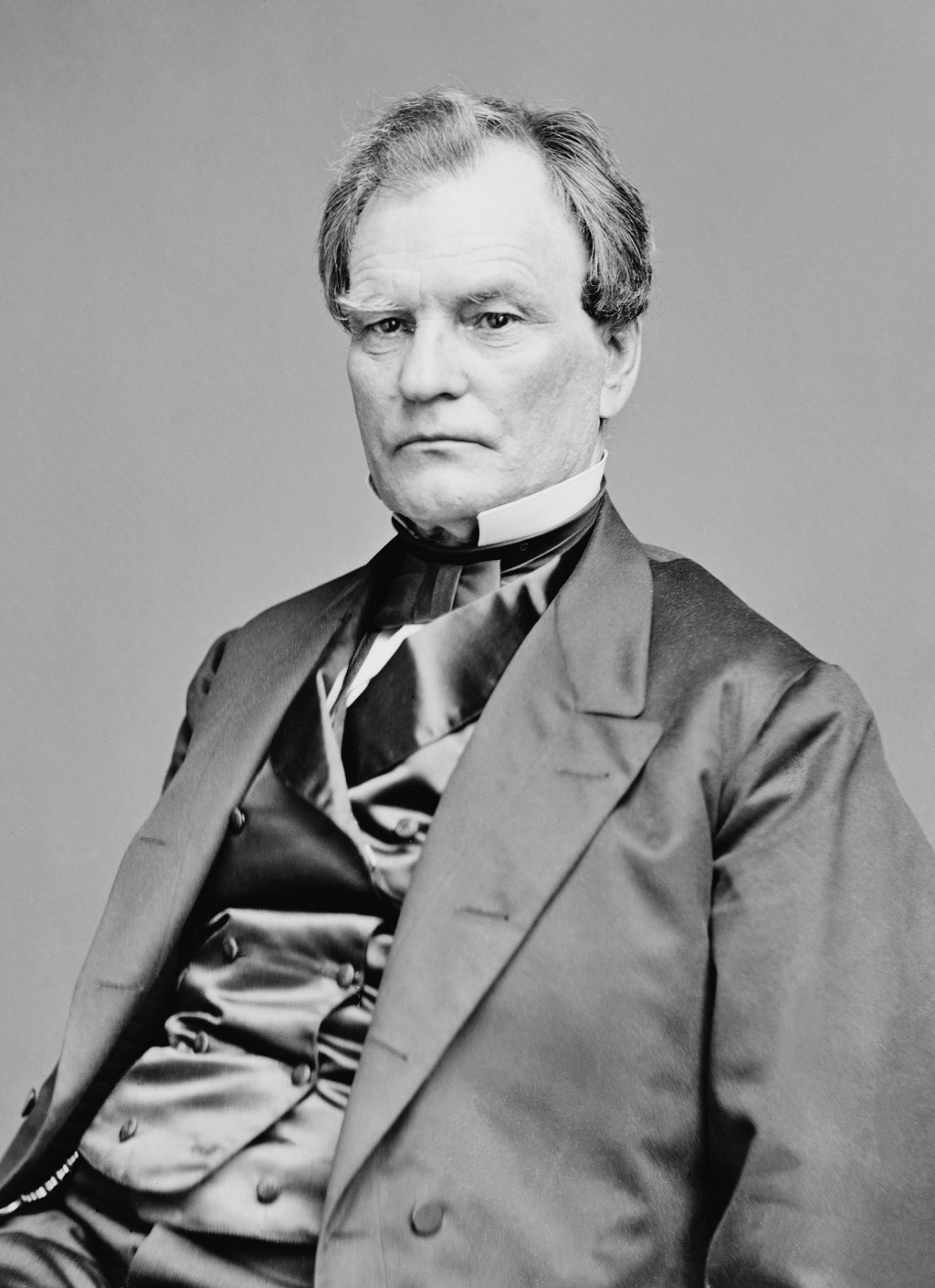
    Benjamin Wade, a Republican Senator from Ohio, rose to speak in the Senate. There were murmurs abound of averting the crisis—of stopping states from seceding from the Union. Some talked of forming a committee to explore the potential for a compromise between northern and southern states, even though no one knew what contours such a compromise could take. After all, for decades, Congress had been encapsulating compromises into bills, presidents had been signing those bills into law, and none of the laws resolved the tensions between the states.

    (more…)
  • The Civil War: Frederick Douglass: The Late Edition

    December 1860

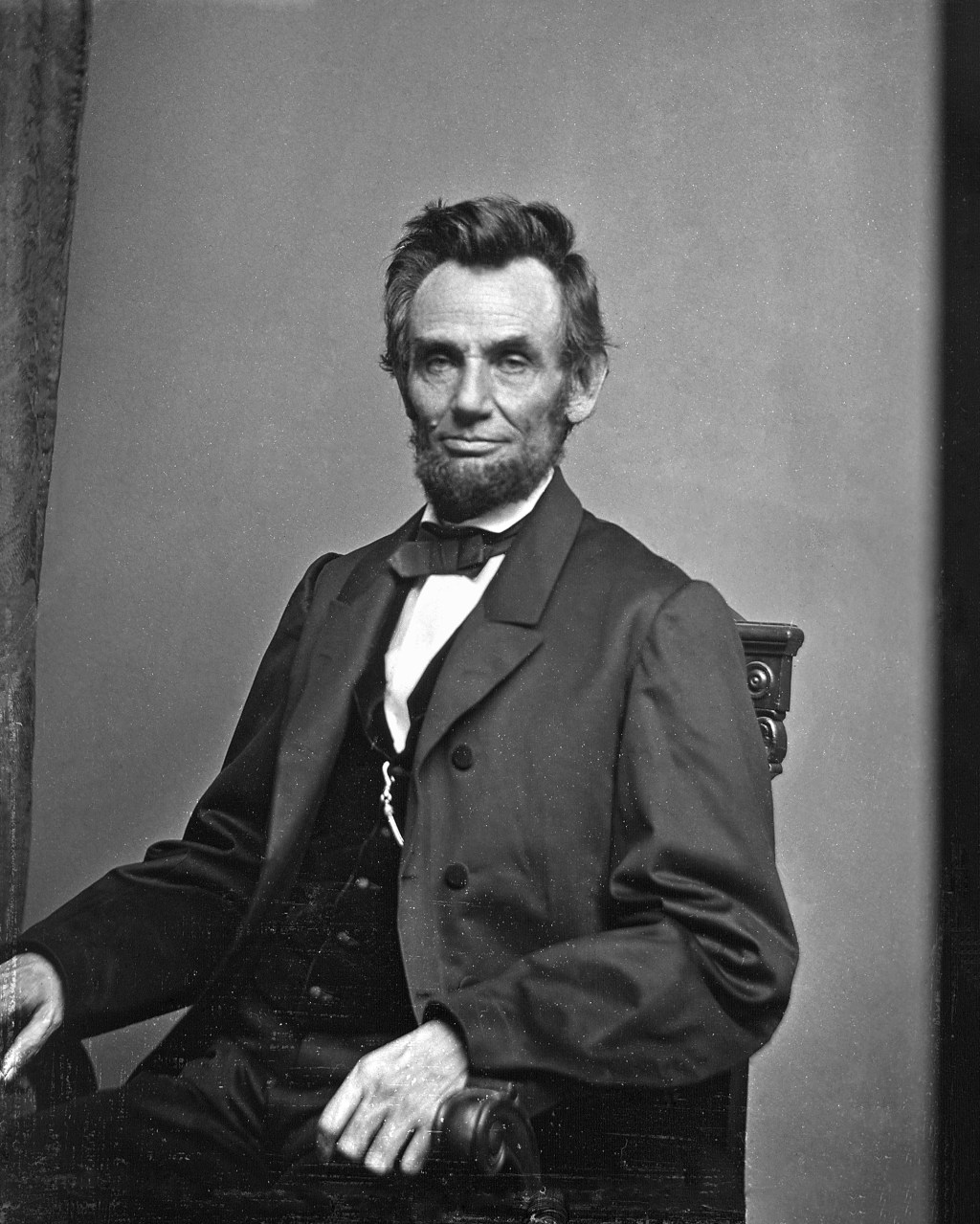
    Politicians walk a tightrope when they choose their positions on political issues, especially when it’s a thorny issue. And when critics attempt to pigeonhole a politician as an extremist, those critics often achieve exactly the opposite: that politician then essentially has license to choose any position except an extreme one—defying the critics and potentially pleasing the constituency. Meanwhile, other politicians—less “extreme” ones—continue walking the tightrope, carefully planning their next steps. When Abraham Lincoln won the election of 1860, this dynamic took hold: the South made dark predictions about what the “extreme” Lincoln administration would seek to accomplish—opening up space for Lincoln to navigate and gifting him the opportunity to placate fellow northerners while searching for ways to steer the country away from the menace of prolonged civil war.

    (more…)
  • The Election of 1884

    The Election of 1884

    The Democratic Party was in turmoil. Its candidates were not winning, and many of its ideas had fallen out of favor. It was a long way from the days of the Party’s founding: Andrew Jackson and his disciple, Martin Van Buren, held power for the twelve years spanning 1829 to 1841 and—into the 1840s and 1850s—James Polk, Franklin Pierce, and James Buchanan continued to lead the Party into the White House albeit against candidates from the newly-formed and then soon-to-be-disbanded Whig Party. Then, following the emergence of the Republican Party—an emergence which culminated in its candidate, Abraham Lincoln, prevailing in the elections of 1860 and 1864—Andrew Johnson, Lincoln’s Vice President and then successor as President, oversaw a one-term presidency which came to an end in 1869. Johnson, partly because he was serving between two titans of the century (Lincoln and Civil War hero Ulysses S. Grant), was always going to struggle to earn admiration but, unlike Lincoln and Grant, Johnson was technically a Democrat, and perhaps because he was so thoroughly shamed for his actions as President, the Party would scarcely recognize him as a member. Whether a result of Johnson’s malfeasance or not, following Johnson’s presidency came an era of Republican dominance: Republican Grant won two consecutive terms, Republican Rutherford B. Hayes secured a succeeding term, Republican James Garfield then was victorious, and following his assassination, Republican Chester Arthur served out the remainder of that term. That brought the parties and the country to 1884. As the election of 1884 approached, it had been decades since a strong, effective Democrat—a Democrat who embodied the Party’s principles and would be a standard bearer for the Party, unlike the postbellum Democratic President, Johnson, or the last antebellum one, Buchanan—held office, and for Democrats to win this election, it would take someone special; someone who would be transformative even if only in a way that was possible at the time. As fortune would have it, it could not be a wartime presidency or a presidency that birthed fundamental change in American government, but that was because the circumstances of the era did not call for such a President; it could, however, be a presidency that tackled one of the biggest issues of the time: corruption.

    (more…)
  • The Election of 1876

    The Election of 1876

    In celebrating America’s first centennial, on July 4, 1876, one must have recalled the tumult of that century: a war to secure independence, a second war to defend newly-obtained independence, and then a civil war the consequences of which the country was still grappling with eleven years after its end. But there also had been extraordinary success in that century, albeit not without cost; by the 100-year mark, the country had shown itself and the world that its Constitution—that centerpiece of democracy—was holding strong (with 18 Presidents, 44 Congresses, and 43 Supreme Court justices already having served their government by that time), and the country had expanded several times over in geographic size, putting it in command of a wealth of resources as its cities, industries, and agriculture prospered. Several months after the centennial celebration was the next presidential election, and during the life of the country, while most elections had gone smoothly, some had not—the elections of 1800 and 1824 were resolved by the House of Representatives choosing the victor as no candidate secured a majority of Electoral College votes and the election of 1860 was soon followed by the secession of Southern states. And yet, even with those anomalous elections in view, the upcoming election of 1876 was to become one unlike any other in American history.

    (more…)
  • The Election of 1872

    The Election of 1872

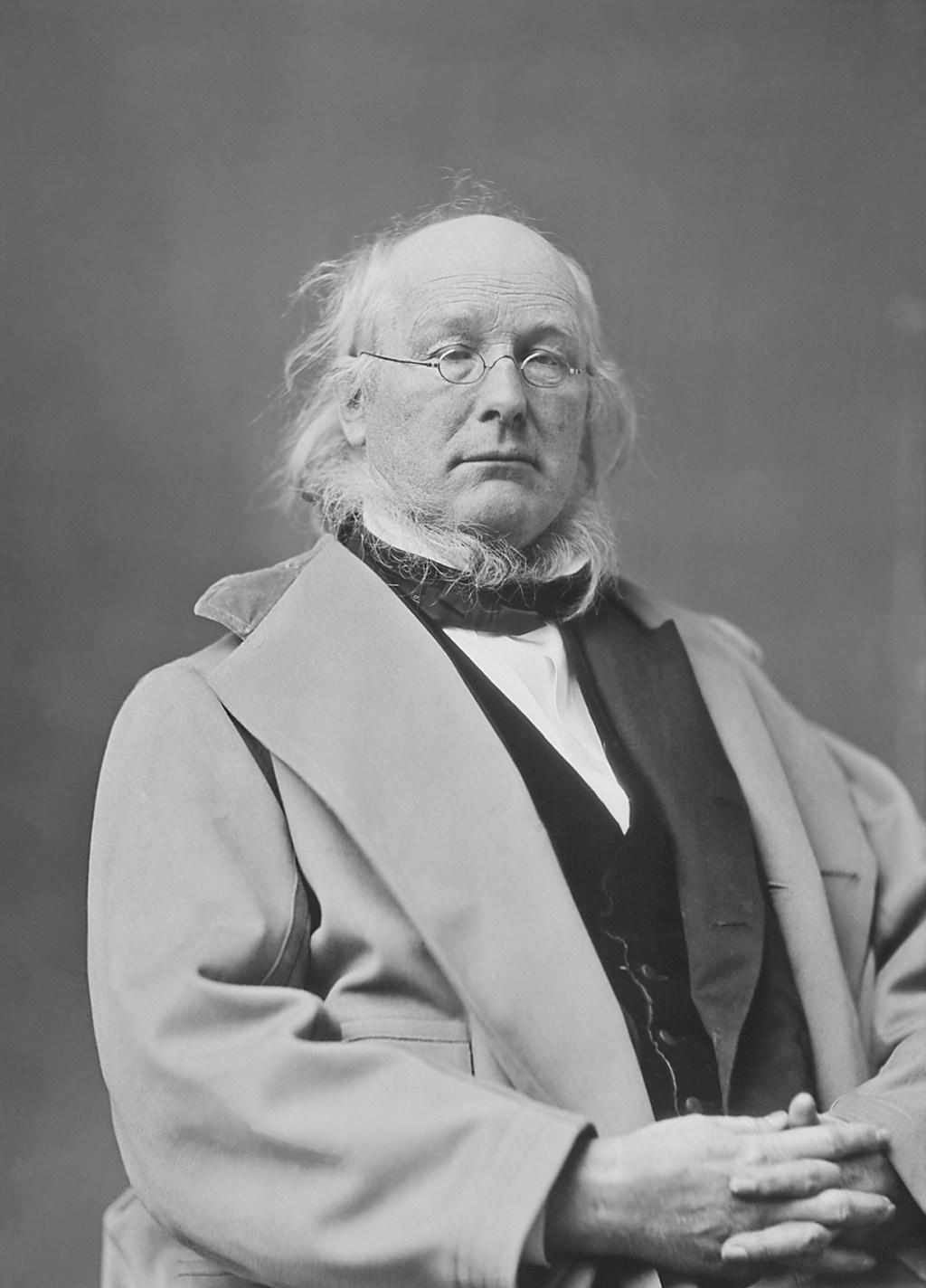
    From the time that Ulysses S. Grant became a household name in America—during the Civil War—and particularly following Lincoln’s assassination, there was no more popular American in the remainder of the Nineteenth Century. The presidential election of 1868 showed the level of support that Grant had: although it was his first election, he won the entirety of the Midwest and New England and even took six of the former Confederate states. He was always going to be a formidable opponent. As the election of 1872 approached, it became clear that Grant, a Republican, would not have to vie for re-election against a candidate with the stature of a fellow former general or even a well-established politician; instead, his challenger would be the founder and editor of a newspaper: Horace Greeley, a Democrat. Although Greeley had one term in the House of Representatives at the end of the 1840s, his following stemmed not from his brief time as a politician but rather the incisive pieces that he wrote and published in his newspaper, the New-York Tribune. As loyal as his readers were, there remained a question whether Greeley’s following could grow to unseat the man who still, seven years after the war, was viewed as bringing peace and prosperity to the country.

    (more…)
  • Crédit Mobilier

    Crédit Mobilier

    Americans’ trust in their government has always ebbed and flowed, and those ebbs and flows have largely depended on whether the government and its officers have acted in ways that earned the trust of its citizens or in ways that led the government to be mired in scandal—therefore sullying its reputation. Some of the largest ebbs in trust have come after officials in the top echelon of government—Senators, Representatives, Presidents and their cabinets—have used their offices for their own benefit. Two months before the election of 1872, news broke of a scandal that would extend well into 1873 and implicate politicians as prominent as the Vice President, and that scandal foreshadowed the ways in which big business and politics would intertwine in not only the Nineteenth Century but the Twentieth and Twenty-First Centuries.

    (more…)
  • The Rise of Wage Labor

    The Rise of Wage Labor

    During the Gilded Age, millions of Americans saw their work lives transform: no longer would it be so common for the working man or woman to survive based on what he or she produced; rather, that worker would receive payment—from an employer or a contractor—for the time worked. That change allowed for the possibility during the Gilded Age for the older generation to reflect on their younger years, before the Civil War, and how they had sold most of what they had grown or made (and how they had then needed a wide variety of skills to not only grow or make those goods but to bring those goods to market and actually sell them). During the Gilded Age, that same generation could have been working the last years of their working lives reporting to a factory for work; work that likely had a significant element of danger and that may have required them to use a fraction of the skills that had served as their saving grace during their younger years. For the generations of Americans that have come after the Gilded Age, the system of wage labor has been no oddity. It became a substantial part of the modern way of life and not only in America. What would have struck and should strike subsequent generations, however, were the mechanics of the American economy in which wage labor was born and how the wage labor system in its rawest form did not extend even some of the most basic protections to workers.

    (more…)
  • The Nineteenth Century Liberal

    The Nineteenth Century Liberal

    The two dominant American political parties of the late 1860s, the Republicans and the Democrats, are the parties that continue to dominate the political landscape into the early Twenty-First Century. Although they are the same parties in name, many of the policies they espouse—and the place on the political spectrum their supporters find themselves—have almost entirely reversed in the intervening century and a half. In modern parlance, a liberal is one that finds himself or herself on the left side of the political spectrum and is more likely to be a member of the Democratic Party. In the late Nineteenth Century, the term had an entirely different meaning. (more…)

  • The Election of 1864

    The Election of 1864

    The summer of 1864 was one of dismay for President Abraham Lincoln and his administration: throughout the Union, the appetite for war had rapidly shrunk; particularly as compared to the heady days of 1860 that ushered Lincoln into the White House. While some voters in the North saw the continued prosecution of the war as nothing more than an attempt to manifest Lincoln’s wish to abolish slavery—and therefore a war not worth fighting—others had naturally, in view of the mounting casualties, developed a fatigue for war and, if they had a choice in the matter, would have opted for a negotiated peace. If Lincoln were to lose the election—so the argument ran—then families could be reunited and the violence could come to an end. For Confederates, northern voter despair was precisely the ingredient that was needed in the giant pot that was political discourse in the Union, but it was not all that was needed: the rebels had dreamt of forcing a negotiated peace, and now, with the election in sight, they had hope that Lincoln would be voted out and the war could be brought to a favorable end. (more…)

  • The Battle of Gettysburg

    The Battle of Gettysburg

    By the spring of 1863, the Union had given the Confederacy every reason to remain defensive: for the duration of the war, federal troops had invaded points throughout the south forcing the rebels to shift to the location of each incision. Allowing this dynamic to continue to play out meant the only way for a Confederate success was a negotiated peace. On May 15, the southern brain trust, including General Robert E. Lee and President Jefferson Davis, convened in Richmond to discuss strategy. Lee proposed that he lead an effort that would remove the threat to Richmond, throw the Yankees on their heels, spell political doom for the Republicans (led by Abraham Lincoln in the White House), open up the possibility of Britain or France recognizing the Confederacy, and, at worst, an armistice that resulted in the Confederate States of America coexisting with the United States.[i] While Postmaster-General John Reagan and other Confederates felt that Lee should have sent troops to protect Vicksburg and the west from the trouble Ulysses S. Grant and his men were causing, Lee did not want to oblige the Confederacy to remain on the defensive but instead introduce the “prospect of an advance” as it would change “the aspect of affairs.”[ii] (more…)