Tag: Rhode Island

  • The Revolution: Thomas Jefferson on the Draft Articles of Confederation (Part II)

    The Autobiography. By: Thomas Jefferson

    July 30, 1776 – August 1, 1776

    How the colonies would get along with each other was always going to be a monumental challenge. And, when the nation was born, there was tension between delegates and their states in setting up the framework for how the colonies would vote. With states such as Massachusetts and Pennsylvania being much larger in size and population, smaller states such as Rhode Island could justifiably fear that confederating with the colonies would bring more harms than benefits. However, to the chagrin of larger states, in the draft Articles of Confederation, at Article XVII, it stated: “In determining questions each colony shall have one vote.”

    (more…)
  • The Battle of the Crater

    The Battle of the Crater

    Although the Battle of Petersburg had ended with the Confederates retaining control of the city, the Union had started its siege; a strategy that had been effective at Vicksburg but required months to succeed. Prolonged trench warfare was virtually certain, and, despite federal efforts to disrupt Confederate General Robert E. Lee’s supply lines, many of the northern troops lacked the energy that they possessed during the early part of the war and were unable to destroy the railroads surrounding Petersburg so completely that the rebels could not repair them. While the beginning of 1864 had shown the Union’s ability to take rebel territory, from June to the end of July, the momentum of the war took on a pendular quality as both sides seemed to come ever closer to victory. (more…)

  • The Darkest Spot on the American Mantle

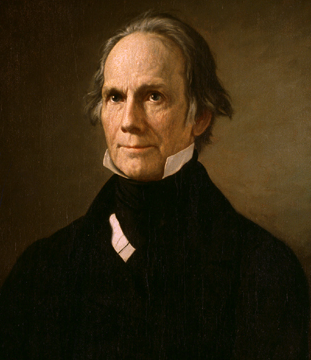
    clay
    Henry Clay. By: Henry F. Darby.

    In 1832, Henry Clay addressed the Senate, expressing his hope that “some day,” America “would be rid of this, the darkest spot on its mantle,” speaking of slavery. Daniel Walker Howe, What Hath God Wrought: Transformation of America, 1815-1848, 586 quoting Life, Correspondence, and Speeches of Henry Clay, ed. Calvin Colton (New York, 1857), I, 189, 191.

    (more…)

  • The Spread of Enfranchisement

    politics-in-an-oyster-house
    Politics in an Oyster House. By: Richard Caton Woodville.

    Following the War of 1812, enfranchisement broadened in American society considerably.

    (more…)

  • The Defense Against Encroachments

    large_bp29
    James Varnum. By: John Nelson Arnold.

    While during the American Revolution, the judiciary was mostly forgotten, in the interest of controlling gubernatorial power by empower legislatures, that began to change during the 1780s.

    (more…)