Tag: Robert Lee

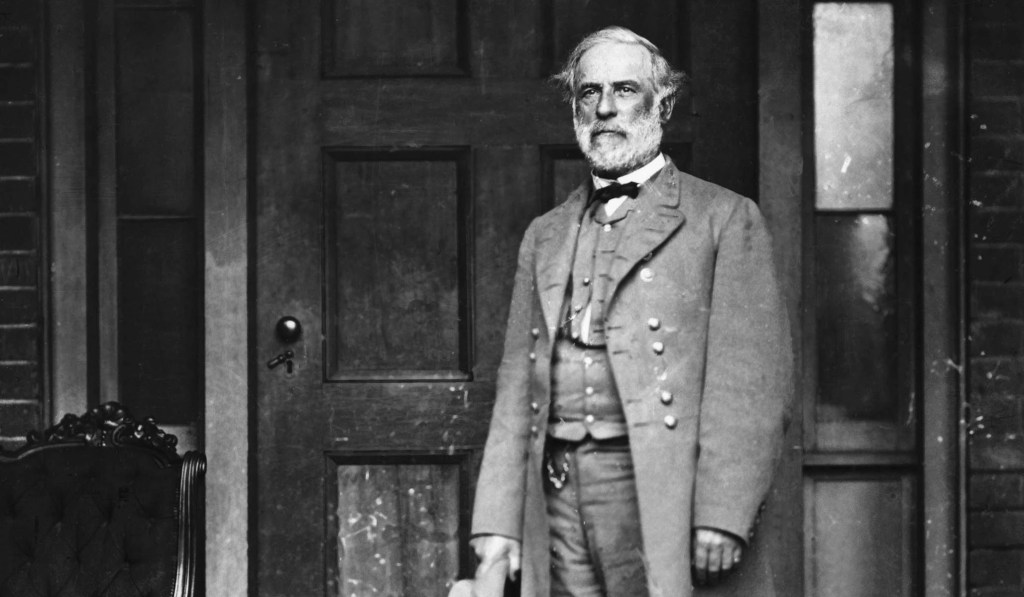
  • The Civil War: Robert E. Lee to George Washington Custis Lee

    The Civil War: Robert E. Lee to George Washington Custis Lee

    January 23, 1861

    While Robert E. Lee was serving as the acting commander of the Department of Texas at Fort Mason, in Texas, he wrote to his son George Washington Custis Lee of the events unfolding in the east—southern states beginning to secede amid antagonism from the north.

    (more…)
  • Ulysses S. Grant: An American Hero

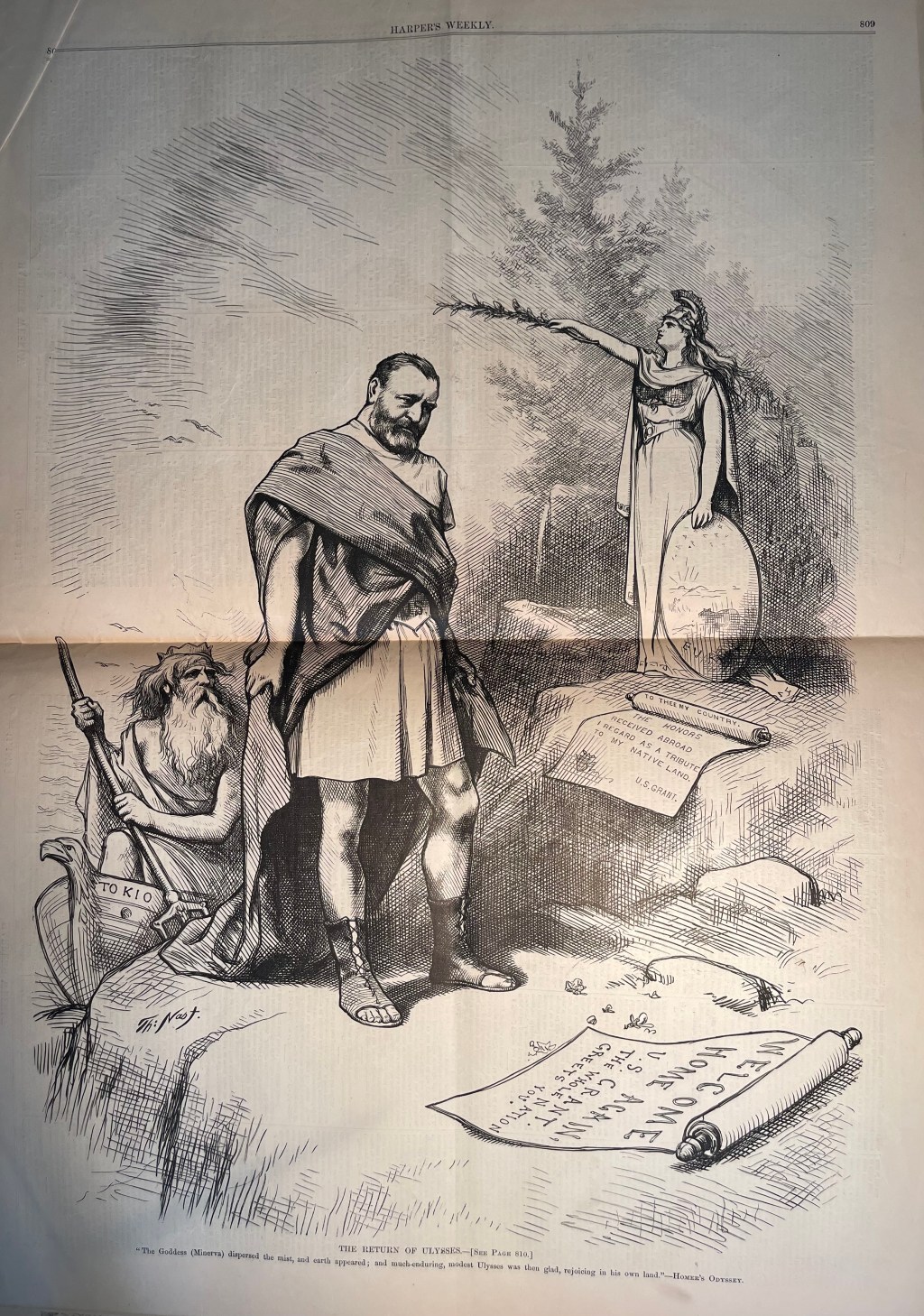
    Ulysses S. Grant: An American Hero


    As time passes and collective morals change, the legacies of prominent figures in American history often evolve. The context in which these individuals earned their place in American memory becomes increasingly difficult to uncover.

    (more…)
  • The Legacy of Robert E. Lee

    The Legacy of Robert E. Lee

    No figures in American history earn universal admiration. As years—and generations—pass, legacies change. As morals, priorities, and political issues evolve, so do understandings of those people in the past who brought change—good, bad, or otherwise—to the country. For some figures, like Abraham Lincoln, whose authentic genius is admired generation after generation, their merit is questioned only by those who unreasonably say the great should have been greater. For others, it becomes much more varied and nuanced, and for Robert E. Lee, his legacy has always differed depending on the part of the country where his legacy is measured and the tenor of the moment. This is because, perhaps more than even Confederate President Jefferson Davis, Lee became a symbol of the Confederacy—with all its ills but also its potential for what might have been.

    (more…)
  • The Second Father

    The Second Father

    In February 1861, Abraham Lincoln traveled to the Western Railroad Depot carrying his trunk tied with a rope and with the inscription, “A. Lincoln, White House, Washington, D.C.” Friends and family prepared him for the train ride from Illinois to Washington which would take twelve days and bring the President-elect into contact with tens of thousands of citizens. Lincoln had been “unusually grave and reflective” as he lamented “parting with this scene of joys and sorrows during the last thirty years and the large circle of old and faithful friends,” and when he went to his law partner for sixteen years, Billy Herndon, he assured him that his election to the presidency merely placed a hold on his partnership role: “If I live I’m coming back some time, and then we’ll go right on practising law as if nothing had ever happened.” As he stood on his private train car and addressed the crowd of well-wishers, the sentiment was no less heartfelt: “My friends—No one, not in my situation, can appreciate my feeling of sadness at this parting. To this place, and the kindness of these people, I owe everything. Here I have lived a quarter of a century, and have passed from a young to an old man. Here my children have been born, and one is buried. I now leave, not knowing when, or whether ever, I may return, with a task before me greater than that which rested upon Washington. . . . I hope in your prayers you will commend me, I bid you an affectionate farewell.” And so, with the crowd moved to tears, Lincoln would leave Springfield for the last time in his life with the train slowly moving “out of the sight of the silent gathering.” Within the train car, furnished with dark furniture, “crimson curtains, and a rich tapestry carpet,” Lincoln “sat alone and depressed” without his usual “hilarious good spirits.” (more…)

  • Appomattox

    Appomattox

    Conceptualizing the Civil War’s end, even during the opening months of 1865, was nearly impossible: who could imagine Confederate General Robert E. Lee surrendering himself and his men to the custody of the Union army? How many members of the Confederate government would be taken prisoner and be tried for treason and any number of other crimes for defying the United States federal government? What would come from an Abraham Lincoln presidency that was not entirely consumed with prosecuting the war? And perhaps the most troubling question of all: how, after all the fratricidal blood shed and destruction wrought against one another, could the Confederate states be readmitted and the country continue to exist? On April 9, 1865, at Appomattox Court House in Virginia, when General Lee surrendered to Union General Ulysses S. Grant, the contours of a post-war America were beginning to be defined—and for the Confederates, it appeared, with Lee’s surrender, that the future would be one of subjugation to the northern states. (more…)

  • Tightening the Cordon

    Tightening the Cordon

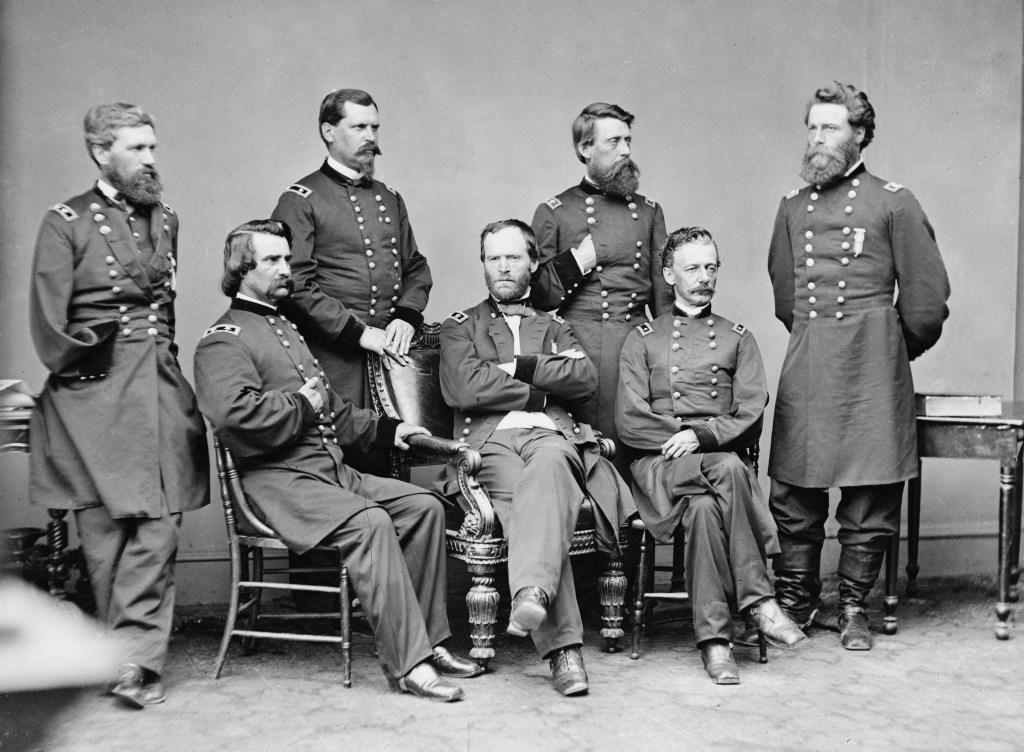
    By the end of 1864—with Union General William Tecumseh Sherman having cut his way through Georgia, Union General Ulysses S. Grant having confined Confederate General Robert E. Lee to a defensive position in Virginia, and President Abraham Lincoln having won his bid for re-election—the Confederacy was desperate for any sign of encouragement. While the rhetoric from Confederate President Jefferson Davis and Vice President Alexander Stephens had remained buoyant, and despite newspaper headlines throughout the South continuing to cheer for the cause, the Confederacy was nowhere near the crest it had enjoyed in 1863. Having lost the chance to put the Union on the defensive that year, the rebels now found their western and southern borders closing in on them. If ever there was going to be a negotiated peace, the chances of it occurring were rapidly diminishing as 1865 dawned. (more…)

  • The Taking of Atlanta

    The Taking of Atlanta

    According to Confederate President Jefferson Davis, the fall of Atlanta into Union hands would “open the way for the Federal Army to the Gulf on the one hand, and to Charleston on the other, and close up those rich granaries from which Lee’s armies are supplied. It would give them control of our network of railways and thus paralyze our efforts.”[i] The strategic location of the city was only one of several reasons for the Confederates to hold it: Atlanta had seen tremendous growth during the war with “foundries, factories, munitions plants, and supply depots” having sprung up on account of the city becoming a railroad hub.[ii] Capturing the city became the primary goal of Union General William Tecumseh Sherman, but, because the rebels had come to see the city as being second only to Richmond as a “symbol of resistance and nationality,” the campaign to Atlanta was almost certain to be easier than taking Atlanta.[iii] (more…)

  • The Battle of the Crater

    The Battle of the Crater

    Although the Battle of Petersburg had ended with the Confederates retaining control of the city, the Union had started its siege; a strategy that had been effective at Vicksburg but required months to succeed. Prolonged trench warfare was virtually certain, and, despite federal efforts to disrupt Confederate General Robert E. Lee’s supply lines, many of the northern troops lacked the energy that they possessed during the early part of the war and were unable to destroy the railroads surrounding Petersburg so completely that the rebels could not repair them. While the beginning of 1864 had shown the Union’s ability to take rebel territory, from June to the end of July, the momentum of the war took on a pendular quality as both sides seemed to come ever closer to victory. (more…)

  • The Atlanta Campaign

    ECWC TOPIC Atlanta Campaign Dalton to Chattahoochee PIC Battle of Kennesaw Mountain
    Battle of Kennesaw Mountain. By: Thure de Thulstrup. Courtesy: U.S. Department of the Interior.

    After over four years of fighting, the North and the South had become increasingly fatigued with the war and anxious for its resolution. Throughout the Confederacy, hope was growing that the Union, rather than continue to tighten its grip at the expense of casualties on both sides, would agree to a negotiated peace. Standing in the way of that result was President Abraham Lincoln who had expected nothing less than a total victory. While the Union generals led by Ulysses S. Grant had achieved progress by taking territory in the west and cutting off resources to the Confederate capital, for each of the past four years, momentum had stalled whenever any general, including Grant, had come within earshot of Richmond. With the election of 1864 approaching, the rebels saw the potential for the northern electorate to oust Lincoln and bring a president to Washington that would negotiate an end to the war. (more…)

  • The Battle of Petersburg

    The Battle of Petersburg

    Consistent with every other battle in Ulysses S. Grant’s career that left him with a discouraging result, he had drawn up a plan to avenge the disaster at Cold Harbor and put the Confederates on their heels. (more…)