
In the 15 years leading up to the Civil War, a wide variety of theories emerged for how the federal government should deal with slavery expanding, or not expanding, into the territories acquired by the United States.
In the 15 years leading up to the Civil War, a wide variety of theories emerged for how the federal government should deal with slavery expanding, or not expanding, into the territories acquired by the United States.

Since the outbreak of the Civil War and continuing to the present day, the role of slavery in splitting America has been hotly debated. One may wonder whether there was merely a correlation between slavery and the Civil War or whether slavery was the cause. Investigating the nuances of the issue of slavery reveals that the Civil War resulted from sectionalism and slavery, which were practically synonymous.

The North and the South had come to develop two distinct cultures by the mid-1800s. One of those fundamental differences was the nature of work.

By 1848, America had numerous sectional differences, and those sectional differences were beginning to take on a different character.

From the inception of America in 1776 to the mid-1800s, there was a balance between regions of the country. That dramatically changed throughout the 1840s and 1850s.

In 1848, when word spread to America that a revolution was breaking out in France, President James Polk wrote: “The great principles of popular sovereignty which were proclaimed in 1776 by the immortal author of our Declaration of Independence, seem now to be in the course of rapid development throughout the world.” James Knox Polk to Richard Rush, April 18, 1848, quoted in Michael Morrison, “American Reactions to European Revolutions, 1848-1852,” Civil War History 49 (June 2003): 117.
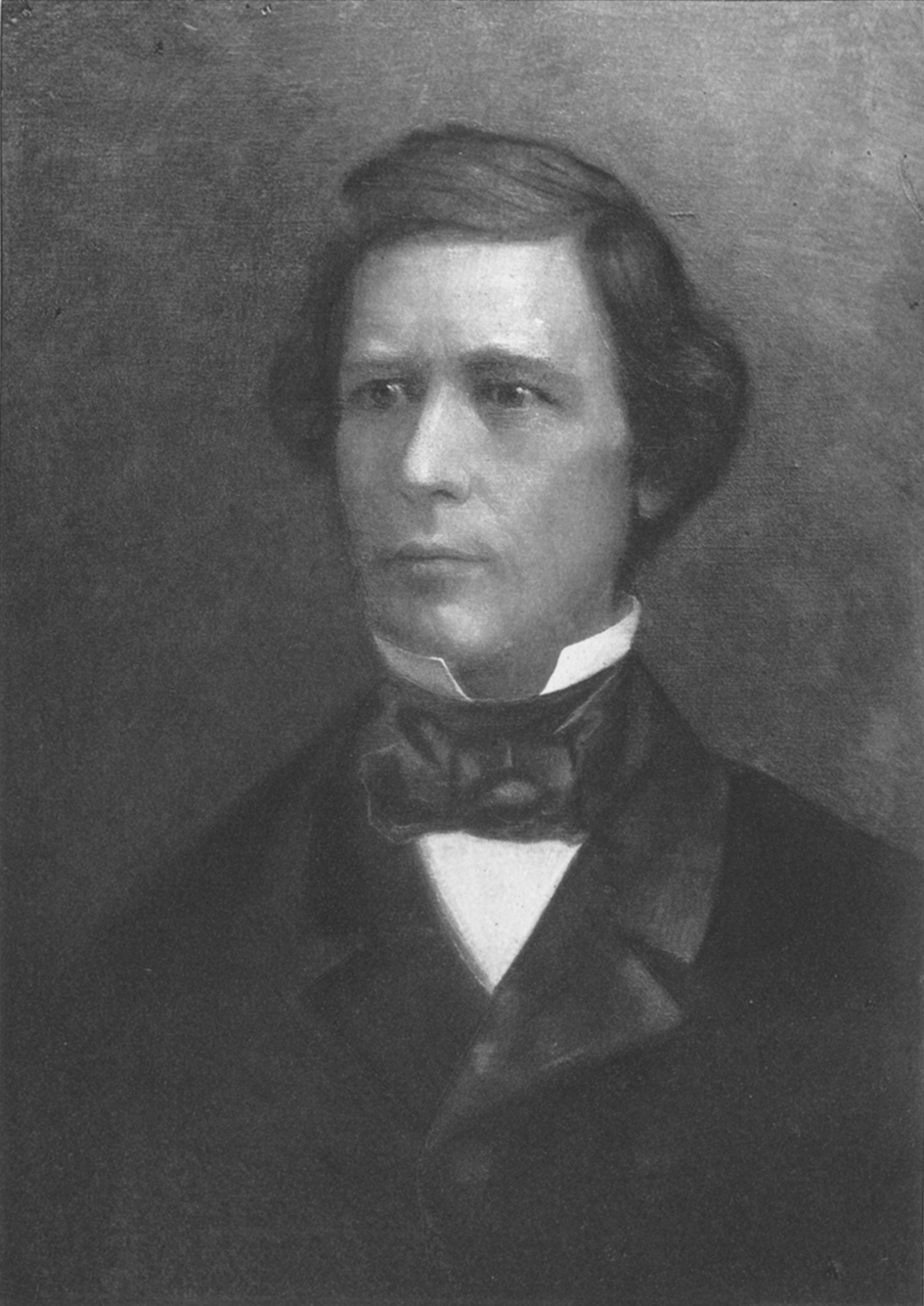
President James Polk, expecting a fast resolution to the Mexican-American War, “requested from Congress in August 1846 a $2 million appropriation for ‘defraying any extraordinary expenses which may be incurred in the intercourse between the United States and foreign nations.’” Daniel Walker Howe, What Hath God Wrought: Transformation of America, 1815-1848, 766 quoting James Polk, Diary, II, 76-77 (Aug. 10, 1846). Shortly after Congress followed this instruction and drafted a bill, David Wilmot of Pennsylvania introduced an amendment to specify that slavery would not be lawful in any territory acquired. See Daniel Walker Howe, What Hath God Wrought: Transformation of America, 1815-1848, 767.

Leading up to President James Polk’s May 13, 1846 announcement of the Mexican-American War, tension arose between President Polk and the Secretary of State, James Buchanan.

President Andrew Jackson had a predisposition toward annexing Texas and making it American territory. See Daniel Walker Howe, What Hath God Wrought: Transformation of America, 1815-1848, 670.

In 1832, Henry Clay addressed the Senate, expressing his hope that “some day,” America “would be rid of this, the darkest spot on its mantle,” speaking of slavery. Daniel Walker Howe, What Hath God Wrought: Transformation of America, 1815-1848, 586 quoting Life, Correspondence, and Speeches of Henry Clay, ed. Calvin Colton (New York, 1857), I, 189, 191.
 Last Best Hope of Earth