Tag: Senate

  • The Civil War: Jefferson Davis: Farewell Address in the U.S. Senate

    January 21, 1861

    United States Senator Jefferson Davis, of Mississippi, rose on the floor of that august chamber the morning of January 21, 1861 to make an announcement. It would not be one pertaining to some Senate bill, or a resolution, but instead an announcement that he was leaving the Senate.

    (more…)
  • The Civil War: Benjamin F. Wade: Remarks in the U.S. Senate

    The Civil War: Benjamin F. Wade: Remarks in the U.S. Senate

    December 17, 1860

    Benjamin Wade, a Republican Senator from Ohio, rose to speak in the Senate. There were murmurs abound of averting the crisis—of stopping states from seceding from the Union. Some talked of forming a committee to explore the potential for a compromise between northern and southern states, even though no one knew what contours such a compromise could take. After all, for decades, Congress had been encapsulating compromises into bills, presidents had been signing those bills into law, and none of the laws resolved the tensions between the states.

    (more…)
  • Constitution Sunday: Nathaniel Barrell, a “Plain Husbandman,” Warns of the Passion for Power, but Favors Ratification

    February 5, 1788

    Massachusetts Ratifying Convention

    The draft Constitution had its parts that inspired and other parts that terrified. Nathaniel Barrell, either as a sign of his modesty or as a way to relate to his fellow residents of Massachusetts, claimed that he would not speak with the eloquence of a Cicero but would articulate his objections to the Constitution.

    (more…)
  • Constitution Sunday: Samuel Nasson’s “Pathetick Apostrophe” to Liberty

    Massachusetts Ratifying Convention

    February 1, 1788

    Changing a system—particularly a system about which one is fond—is difficult. For some, the system that the Articles of Confederation created was an ideal one as it permitted states to maintain a level of autonomy that the proposed Constitution would subsume. For Samuel Nasson, at the Massachusetts Ratifying Convention, this was a travesty given that the country had fought so hard to free its member states from Great Britain and its attempts to “enslave us, by declaring her laws supreme.”

    (more…)
  • Constitution Sunday: Thomas Dawes, Jr. on Legitimate Standing Armies

    Massachusetts Ratifying Convention

    January 24, 1788

    The Constitution empowers Congress to “raise and support Armies” with the limitation that any appropriation of money for raising and supporting armies must be limited to a two-year term (Article I, Section 8, Clause 12). At the Massachusetts Ratifying Convention, there was debate as to whether that authority should exist at all and whether it should be housed with Congress.

    (more…)
  • Constitution Sunday: Major Martin Kingsley on the Excessive Powers of Congress

    Massachusetts Ratifying Convention

    January 21, 1788

    A representative democracy requires that elected officials are servants to the people. There must be accountability, and with two-year terms for members of the House of Representatives, four-year terms for Presidents, and six-year terms for Senators, the Constitution has provided voters with the option to rotate their servants every two years. For Major Martin Kingsley, at the Massachusetts Ratifying Convention, the Constitution was inferior to the Articles of Confederation because there was insufficient checks on public servants.

    (more…)
  • Constitution Sunday: A Sharp Exchange at the Massachusetts Convention

    Massachusetts Ratifying Convention

    January 17, 1788

    For those debating the Constitution’s ratification, no detail of the draft document was forgotten. To detractors, like the Honorable Mr. Turner who rose on January 17, 1788 at the Massachusetts Ratifying Convention, there were hidden dangers throughout the document. One that he raised was that Congress “may alter the place for chusing representatives in the general Congress.” Turner, before the Convention, said to look to abuses of power: if members of Congress wished to help themselves, as people in power often do, then this is one way in which they may do so; they could alter the place to be inaccessible for three-fourths of the population. “The great law of self preservation will prevail,” Turner said, and it didn’t stop there. There were forces at work in the country that were changing the country and its people: “paper money, and the practice of privateering, have produced a gradual decay of morals—introduced pride—ambition—envy—lust of power—produced a decay of patriotism, and the love of commutative justice.” By giving this Constitution and the members of Congress this power, the Convention was creating the chance for abuse, and where that risk can be prevented, it should, so Turner reasoned.

    (more…)
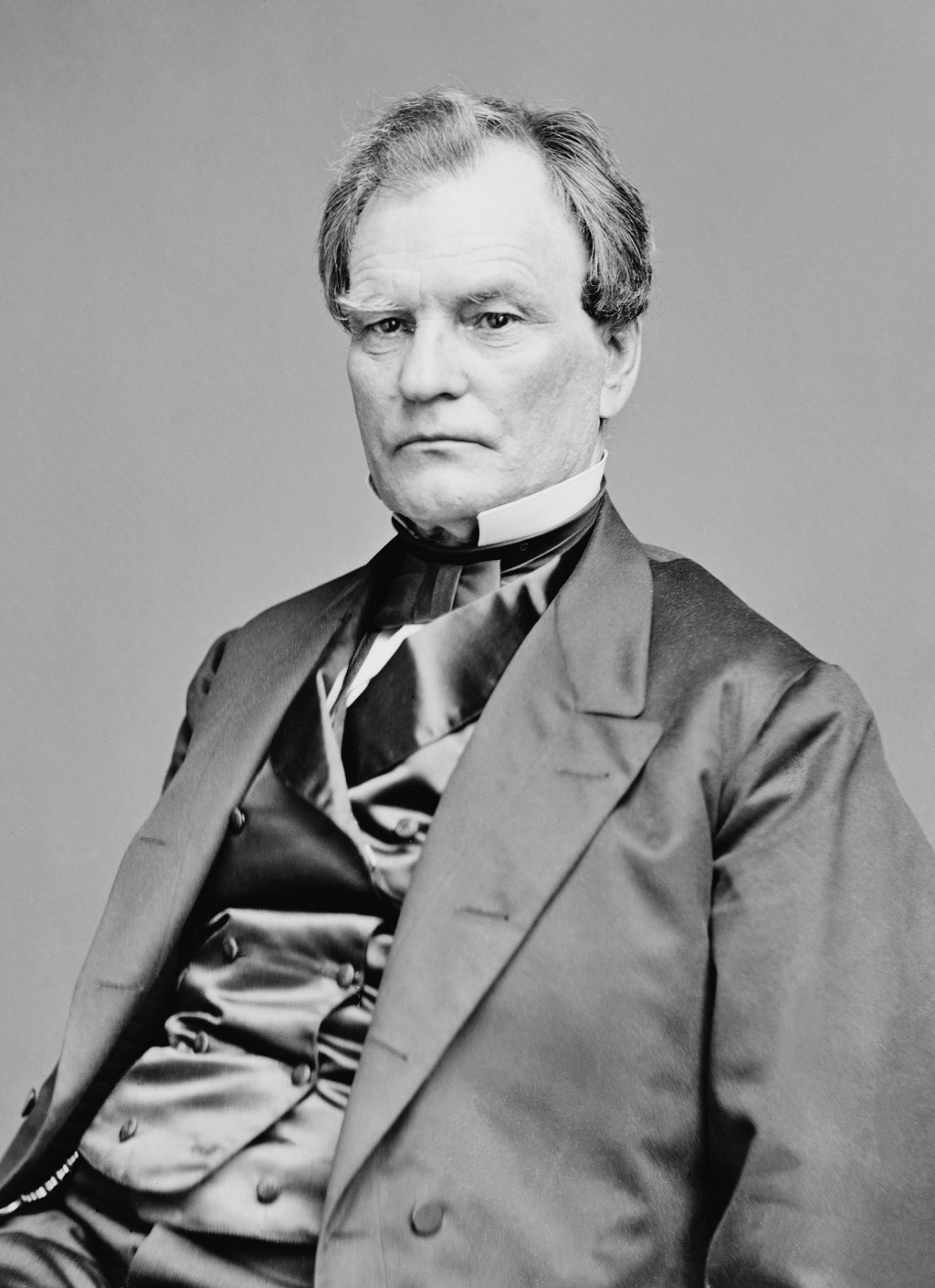
  • Constitution Sunday: James Wilson Replies to William Findley

    Constitution Sunday: James Wilson Replies to William Findley

    Pennsylvania Ratifying Convention.

    December 1, 1787

    James Wilson, one of the most eloquent and artful of his time, spoke at Pennsylvania’s Ratifying Convention on December 1, 1787 about the merits of the draft Constitution. One of the crucial components of the draft was its creation of the legislature as a “restrained” legislature; a legislature that would “give permanency, stability and security” to the new government.

    (more…)
  • Constitution Sunday: Robert Whitehill at the Pennsylvania Convention

    Pennsylvania Ratifying Convention.

    November 30, 1787.

    At the Pennsylvania Convention, Robert Whitehill rose to speak about the proposed Constitution including—and perhaps especially—its biggest flaw. To Whitehill, despite the fact that the country’s learned people devised the Constitution, “the defect is in the system itself,—there lies the evil which. no argument can palliate, no sophistry can disguise.” The Constitution, as it was written, “must eventually annihilate the independent sovereignty of the several states” given the power that the Constitution allotted to the federal government.

    (more…)
  • Reconstruction

    Reconstruction

    The years after the Civil War, until 1877, were replete with novel uncertainties. The country had changed: the qualities that defined antebellum America had vanished; those who had been the most vocal before the war—soon-to-be Confederates—had seen their soapbox taken by the “Radical Republicans,” Republicans who sought to not only end slavery but to bring into effect equality amongst the races. Regardless of political party or geographic location, the country and its citizens had the task of reconstructing the United States, every one of them, and that task began before the Civil War’s end. President Abraham Lincoln spoke of his hope to reconcile the “disorganized and discordant elements” of the country, and he said: “I presented a plan of re-construction (as the phrase goes) which, I promised, if adopted by any State, should be acceptable to, and sustained by, the Executive government of the nation. I distinctly stated that this was not the only plan which might possibly be acceptable.”[i] Lincoln died four days later without fully setting forth his vision for how the nation may reconstruct itself, but events would soon render that vision—broad and ambiguous as it was—antiquated: soon after his death, the same federal government that had grown to enjoy extraordinary power (such as suspending the writ of habeas corpus) would go from having an authentic political genius, Lincoln, at its helm to having Andrew Johnson, a disagreeable at best (belligerent at worst) as executive; and not so long after Johnson took power, roving bands of the Ku Klux Klan acted in concert with state officials throughout the South to subjugate—by any means—those who had been freed.

    (more…)