During 1854, while the Kansas-Nebraska Act was making its way through Congress and to President Franklin Pierce’s desk, there were significant developments throughout the country that would have lessen the manifest destiny fever that had captured the nation’s attention up to that point. One of the hallmarks of American progress was nearing its end. (more…)
Answers to Mason’s “Objections”: “Marcus” [James Iredell] I
Norfolk and Portsmouth Journal (Virginia), February 20, 1788
Following are excerpts from James Iredell’s responses to George Mason’s “Objections” to the Constitution:
“IIId. [George Mason’s] Objection. ‘The Senate have the power of altering all money bills, and of originating appropriations of money, and the salaries of the officers of their own appointment, in conjunction with the President of the United States (more…)
In 1844, Asa Whitney, a merchant in New York, proposed that a transcontinental railroad be built. While he hoped to lead the construction of the railroad and reap the benefits of the ambitious project, that was not to be. However, three components of his plan captured the spirit of Americans toward the construction of the railroad: “There must be a railroad to the Pacific; it must be financed by grants of public lands along the route; and it must be built by private interests which received these grants.” David Potter, The Impending Crisis: America Before the Civil War, 1848-1861, 146. (more…)
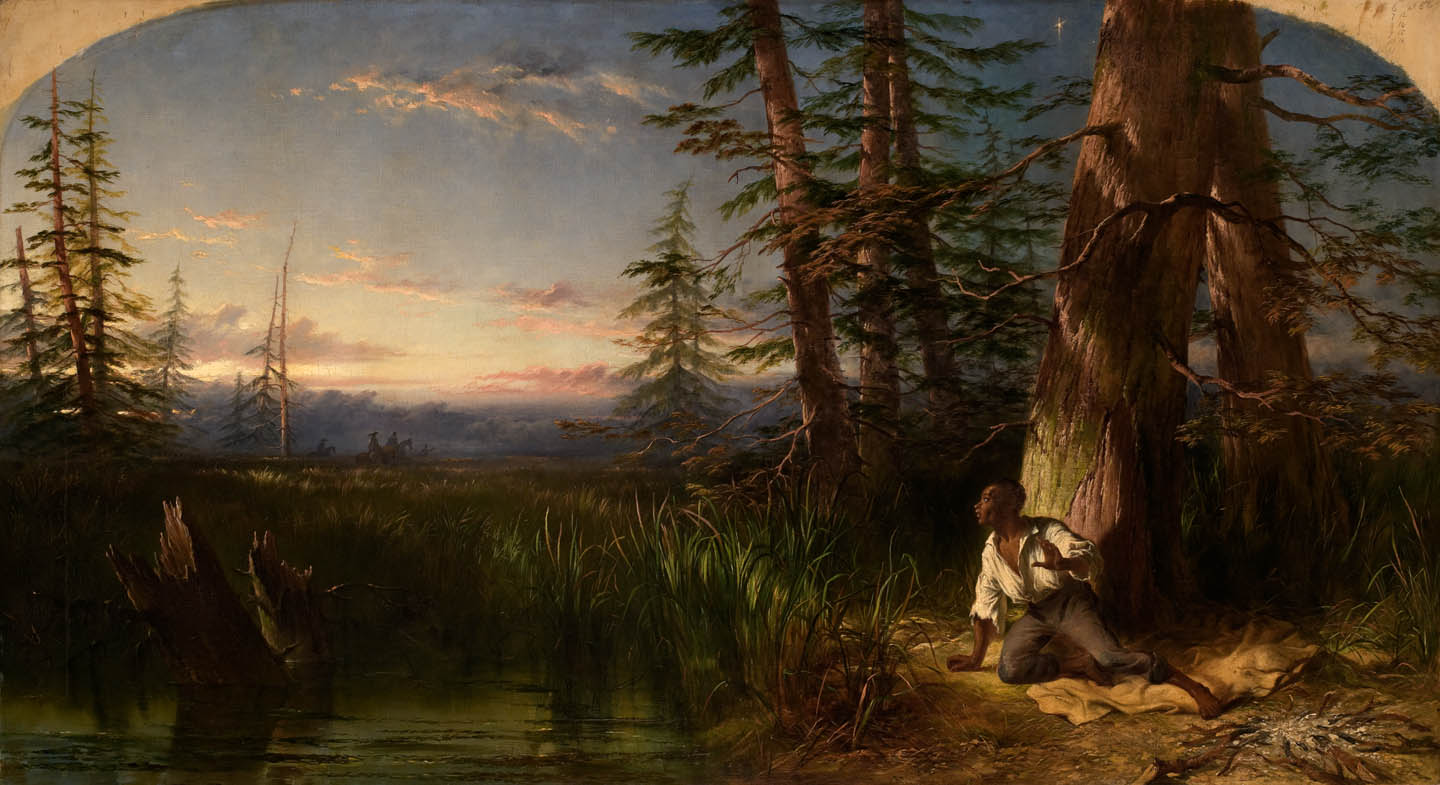
The Fugitive Slave Act, passed as part of the Compromise of 1850, was intended to resolve the tension surrounding the issue of slavery. Its provisions, however, ensured that it would not have such an alleviating effect.¹ The Act “denied the alleged fugitive any right to jury trial, not even guaranteeing it in the jurisdiction from which he had escaped.” David Potter, The Impending Crisis: America Before the Civil War, 1848-1861, 131. It also allowed a court to appoint a commissioner to decide a fugitive slave’s case. See id. That commissioner was entitled to a $10 fee where the “alleged fugitive was delivered to the claimant,” but if the slave was set free, the commissioner would receive only a $5 fee, creating an incentive for returning fugitives to slavery. Id. Finally, the Act gave federal marshals the power “to summon all citizens to aid in enforcement of the Act.” Id. citing Stanley W. Campbell, The Slave Catchers: Enforcement of the Fugitive Slave Law, 1850-1860 (Chapel Hill, 1968). (more…)
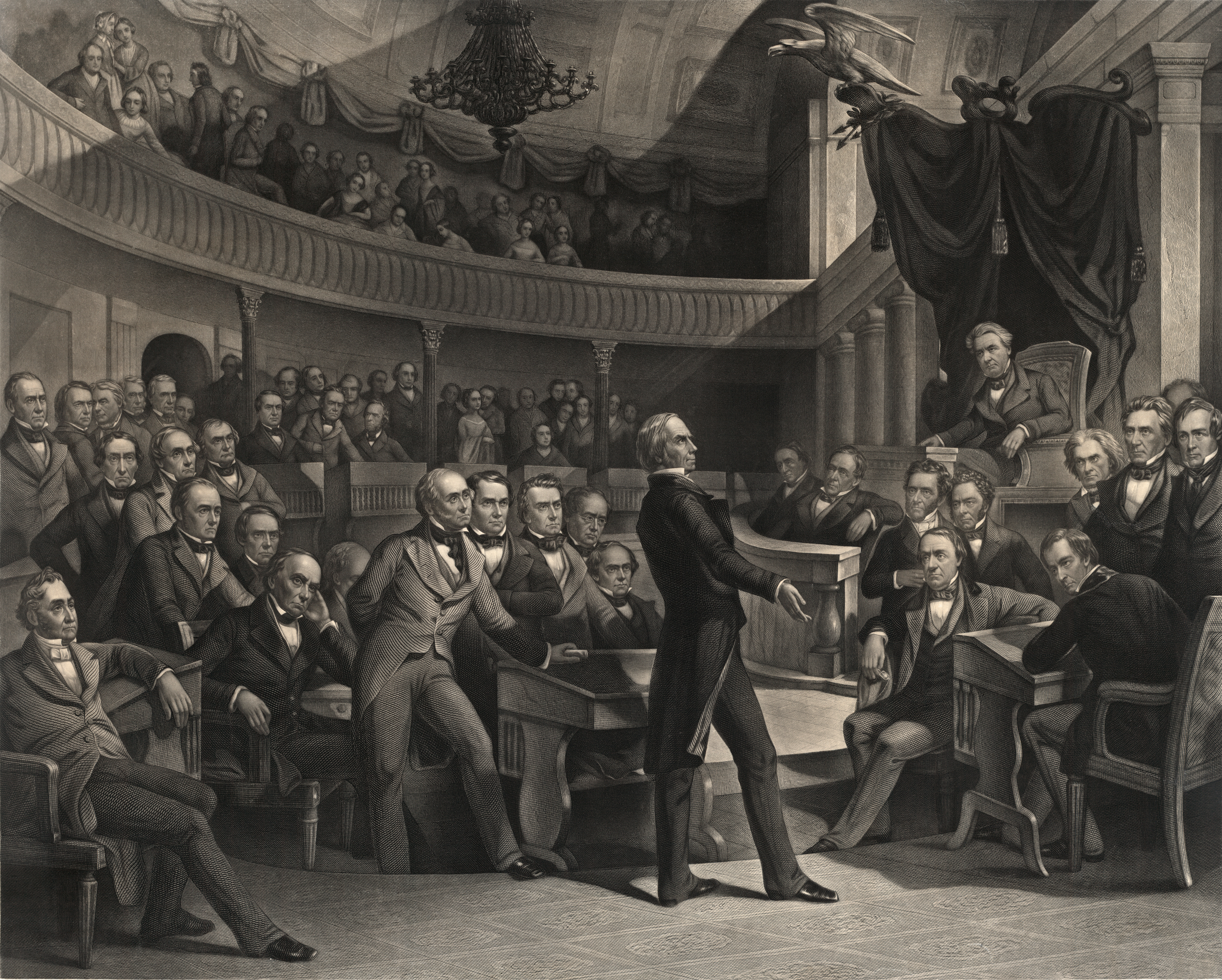
“United States Senate, A.D. 1850.” By: Peter F. Rothermel.
Upon President Zachary Taylor taking office, he sent a message to Congress deploring the sectionalism that was pervading the country. See David Potter, The Impending Crisis: America Before the Civil War, 1848-1861, 91. He looked to George Washington’s warnings against “characterizing parties by geographical discriminations,” which appeared by 1849 to be a prescient warning. Id. citing James D. Richardson, ed., A Compilation of the Messages and Papers of the Presidents (11 vols.; New York, 1907), V, 9-24. President Taylor offered hope for northerners and those Americans who wanted to preserve the Union with his vow: “Whatever dangers may threaten it [the Union] I shall stand by it and maintain it in its integrity.” David Potter, The Impending Crisis: America Before the Civil War, 1848-1861, 91 citing James D. Richardson, ed., A Compilation of the Messages and Papers of the Presidents (11 vols.; New York, 1907), V, 9-24. (more…)
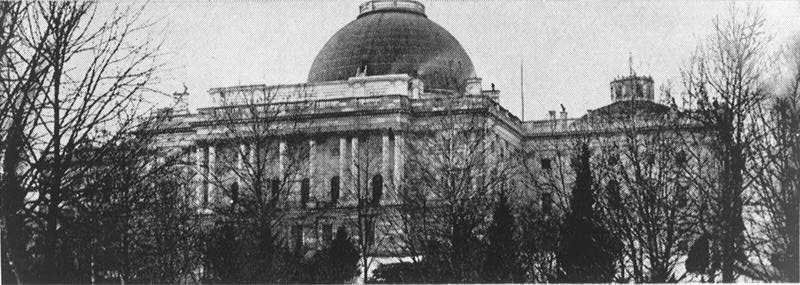
The United States Capitol in 1848. Unknown Photographer, credit Library of Congress.
During President James Polk’s administration, Congress grappled with resolving sectional tension arising out of whether slavery would be extended to newly acquired land from Mexico as well as the Oregon territory. Congress did not resolve that sectional tension but exacerbated it in what may have been one of the most deadlocked and destructive Congresses in American history. (more…)
Trout Fishing in Sullivan County, New York. By: Henry Inman.
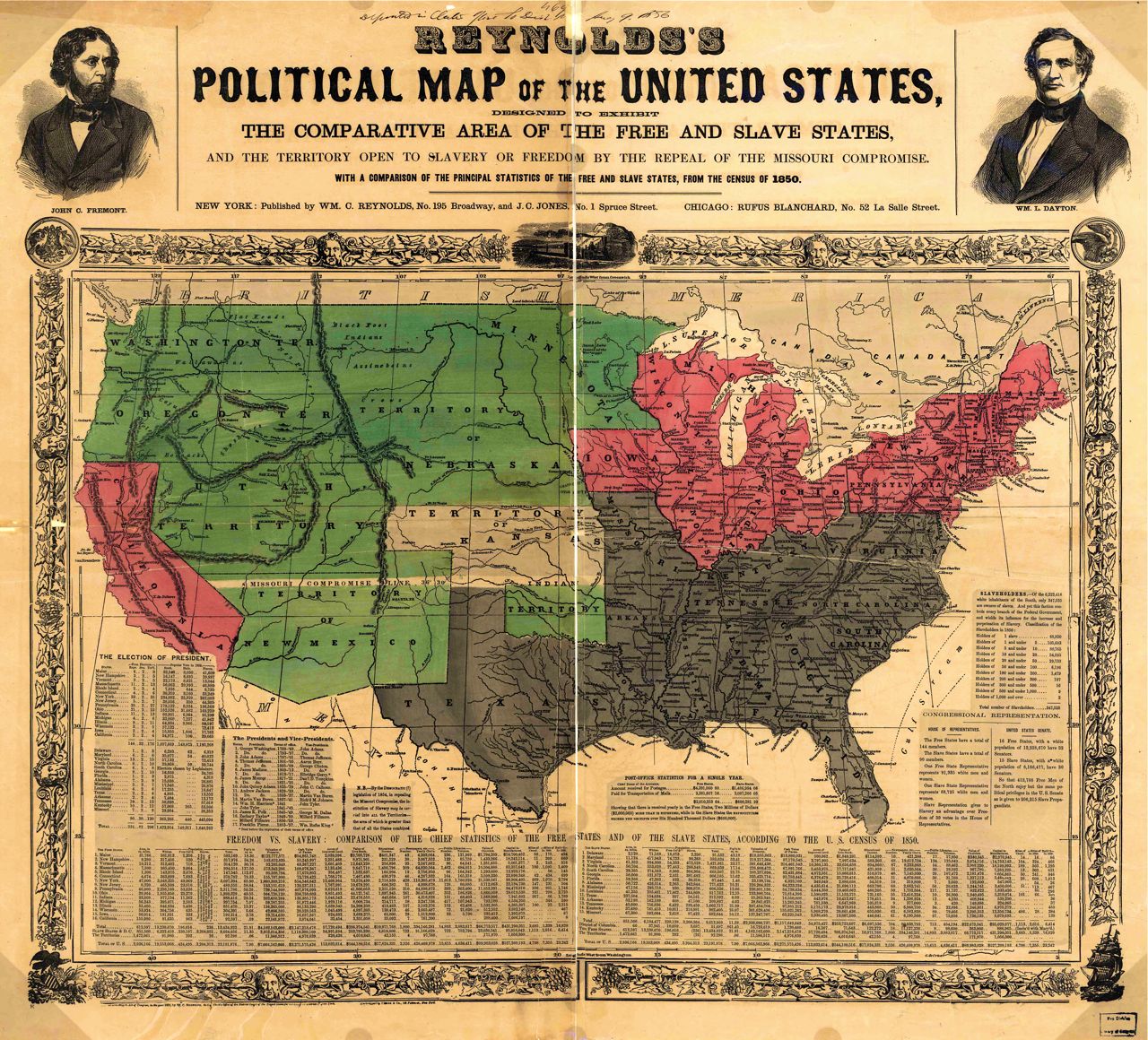
In the 15 years leading up to the Civil War, a wide variety of theories emerged for how the federal government should deal with slavery expanding, or not expanding, into the territories acquired by the United States.
Virginia Independent Chronicle (Richmond), January 30, 1788
Following are excerpts of an article written in response to George Mason’s article listing the objections to the Constitution:
“5th. Had the convention left the executive power indivisible, I am free to own it would have been better, than giving the senate a share in it (more…)
President James Polk, expecting a fast resolution to the Mexican-American War, “requested from Congress in August 1846 a $2 million appropriation for ‘defraying any extraordinary expenses which may be incurred in the intercourse between the United States and foreign nations.’” Daniel Walker Howe, What Hath God Wrought: Transformation of America, 1815-1848, 766 quoting James Polk, Diary, II, 76-77 (Aug. 10, 1846). Shortly after Congress followed this instruction and drafted a bill, David Wilmot of Pennsylvania introduced an amendment to specify that slavery would not be lawful in any territory acquired. See Daniel Walker Howe, What Hath God Wrought: Transformation of America, 1815-1848, 767.
Following the Democrats’ victory in the Election of 1844, President James Polk began negotiating with the British about the Oregon territory, which America had permitted Britain to occupy for several decades. See Daniel Walker Howe, What Hath God Wrought: Transformation of America, 1815-1848, 715.



 Last Best Hope of Earth