Tag: Separation of Powers

  • Constitution Sunday: Governor Samuel Huntington on the Need for Coercive National Power

    Connecticut Ratifying Convention.

    January 9, 1788

    When Connecticut’s Governor, Samuel Huntington, rose to speak at the state’s ratifying convention, he rose to second a motion by General Parsons to “assent to, ratify, and adopt the Constitution,” but in seconding the motion, Governor Huntington provided perspective and context for why he was asking the state’s delegates to ratify. To the Governor, the debate and potential ratification of the Constitution was “a new event in the history of mankind.—Heretofore, most governments have been formed by tyrants, and imposed on mankind by force.” This Constitution was being considered during a “time of peace and tranquility” and, “with calm deliberation,” the representatives were framing a novel system of government that accounted for the pitfalls that other governments had not avoided.

    (more…)
  • Constitution Sunday: Answers to Mason’s “Objections”: “Marcus” [James Iredell] II

    Answers to Mason’s “Objections”: “Marcus” [James Iredell] II

    Norfolk and Portsmouth Journal (Virginia), February 27, 1788

    Following are excerpts from James Iredell’s responses to George Mason’s “Objections” to the Constitution:

    IVth. Objection. The Judiciary of the United States is so constructed and extended, as to absorb and destroy the Judiciaries of the several States (more…)

  • The Two Scales and the Hand that Holds it

    benjamin-lincoln-5
    Benjamin Lincoln. By: John Singer Sargent.

    Benjamin Lincoln wrote a series of articles in the Boston Magazine and Independent Chronicle that would touch on many of the same subjects as John Adams in his Defence of the ConstitutionSee Gordon Wood, The Creation of the American Republic: 1776-1787, 576.

    (more…)

  • Constitution Sunday: Reply to Wilson’s Speech: “A Democratic Federalist”

    Reply to Wilson’s Speech: “A Democratic Federalist”

    Pennsylvania Herald (Philadelphia), October 17, 1787

    Following are excerpts from the article, published in response to James Wilson’s speech: (more…)

  • Division and Balancing of Political Power

    richard_henry_lee_at_nat-_portrait_gallery_img_4471
    Richard Henry Lee. By: Billy Hathorn.

    Because the Federalists outmaneuvered the Antifederalists in presenting the Constitution to the American people, the Antifederalists faced a predicament of what to do. As Richard Henry Lee stated, many who wished to change the federal structure of government realized that they had to accept “this or nothing.” Gordon Wood, The Creation of the American Republic: 1776-1787, 547 quoting Lee to Mason, Oct. 1, 1787, Ballagh, ed., Letters of R. H. Lee, II, 438. The Antifederalists were more or less forced to “attack the federal government in those mechanical Enlightenment terms most agreeable to the thought of the Federalists: the division and balancing of political power,” otherwise known as separation of powers. Gordon Wood, The Creation of the American Republic: 1776-1787, 548.

    (more…)

  • The Defense Against Encroachments

    large_bp29
    James Varnum. By: John Nelson Arnold.

    While during the American Revolution, the judiciary was mostly forgotten, in the interest of controlling gubernatorial power by empower legislatures, that began to change during the 1780s.

    (more…)

  • The Erosion of Separation of Powers

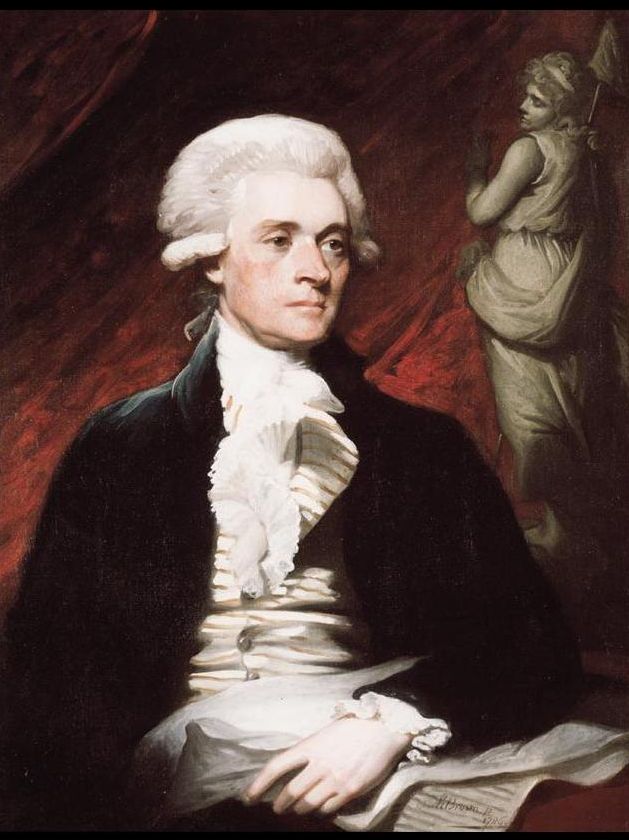
    thomas_jefferson_1786_by_mather_brown
    Thomas Jefferson. By: Mather Brown. 1786.

    In the 1780s, there began to be a distinct erosion of the doctrine of separation of powers.

    (more…)

  • The Conventional Debate

    Dr. William Smith
    William Smith. By: Gilbert Stuart. 1801-02.

    In Pennsylvania, extraordinary events were transpiring that would shape how people expressed their will. William Smith (“Cato”) and a group of individuals, led by James Cannon (“Cassandra”) in 1776, debated the issue of how institutions should reflect the people’s will, given the Radical Political Experiment unfolding in Pennsylvania.

    (more…)

  • A First Principle of Free Government

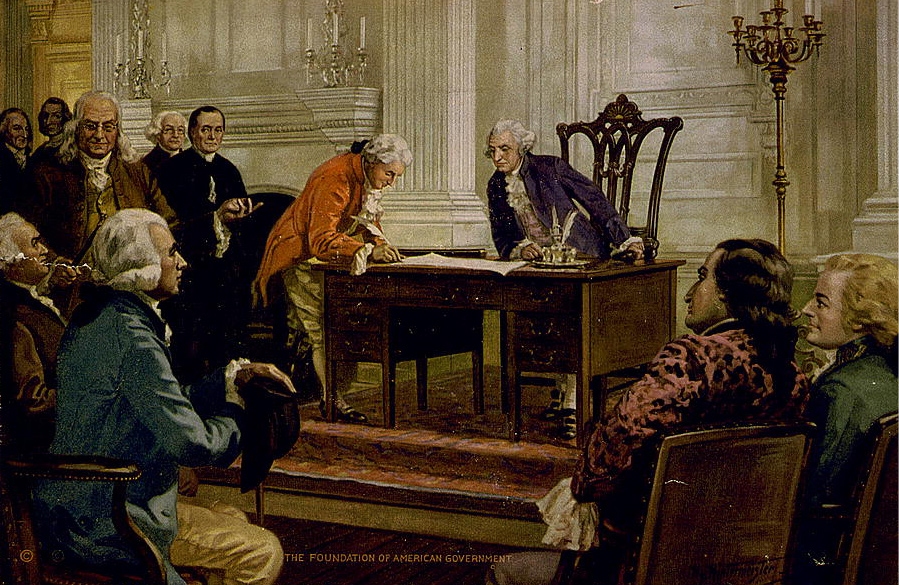
    constitutional_convention_4_630_pxlw
    The Signing of the Constitution of the United States.

    The separation of powers in the government of the United States has “come to define the very character of the American political system.” Gordon Wood, The Creation of the American Republic: 1776-1787, 151. (more…)