By 1815, America was already split between those states that were taking steps to eliminate slavery and those states who were fortifying their support of slavery. As the Founding Fathers had predicted, a chasm was beginning to open in the United States.
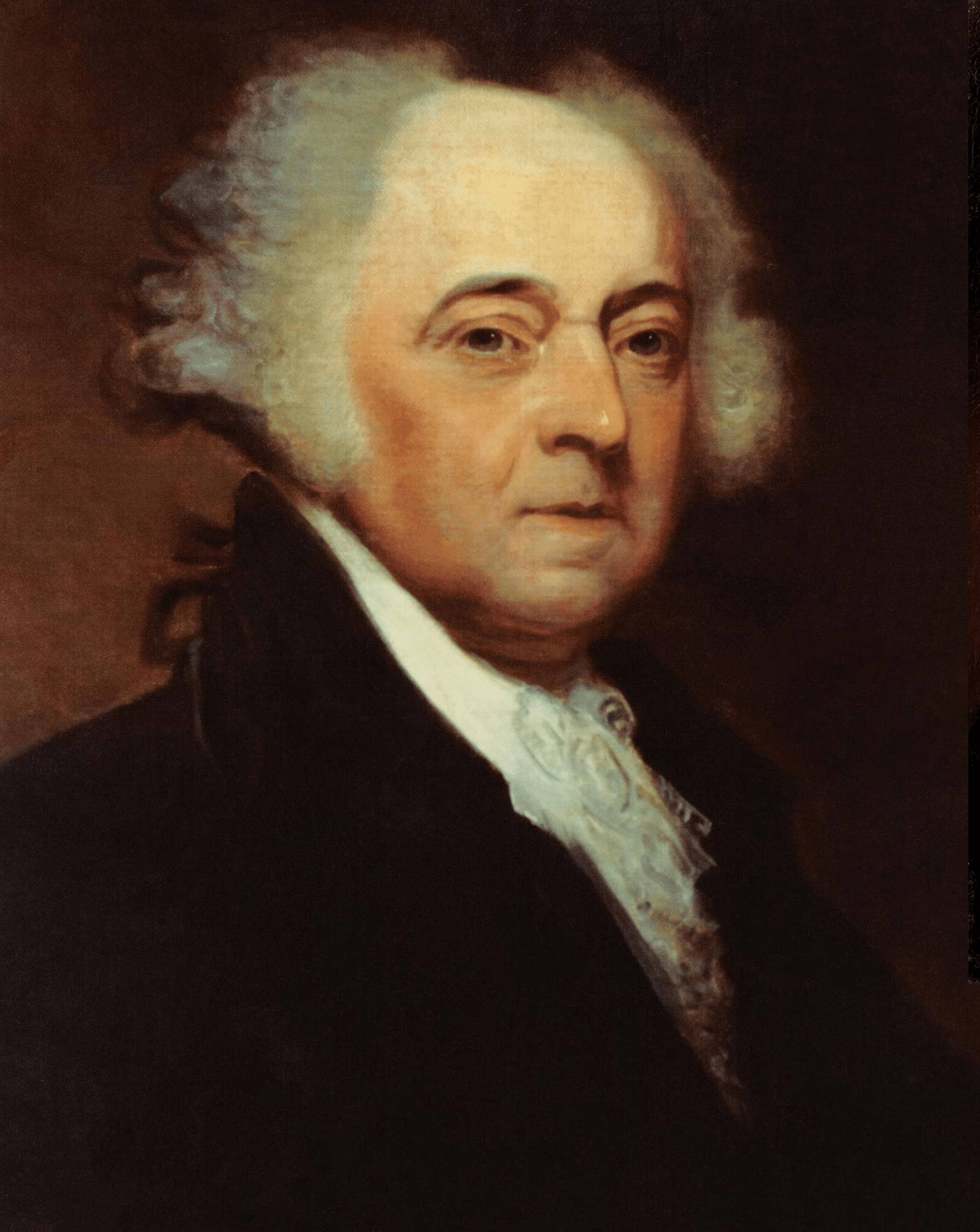
As the 1800s progressed, the era of the Founding Fathers was coming to an end. Thomas Jefferson and John Adams would outlast most of the Founding Fathers, only to die on the same date: July 4, 1826. The Founding Fathers would leave a profoundly different country than the one they created.
Common Americans had created the sense that the United States was “a land of enterprising, optimistic, innovative, and equality-loving” people. Gordon Wood, Empire of Liberty, 733. The entrepreneurial, ambitious American spirit was born and permeating the entire country.
Particularly after the resolution of the War of 1812, manifested in the Treaty of Ghent, Americans began to feel a permanent independence from Europe and a separation from European ideals. Gordon Wood, Empire of Liberty, 735. Americans began to look at themselves as worthy of analysis, introspection, and recognition.
Thomas Jefferson believed that, as of 1823, America would serve “as a light to the world showing that mankind was capable of self-government.” Gordon Wood, Empire of Liberty, 737 citing Thomas Jefferson to Lafayette, 4 Nov. 1823, in Ford, ed., Writings of Jefferson, 10: 280. Jefferson confessed that his ideals for America “may be an Utopian dream, but being innocent, I have thought I might indulge in it till I go to the land of dreams, and sleep there with the dreams of all past and future times.” Id. at 738 citing Thomas Jefferson to J. Correa de Serra, 25 Nov. 1817, in L and B, eds. Writings of Jefferson, 15: 157.
Jefferson’s dream of America may not have been achieved in exactly the way he imagined, but the country was becoming a player on the global stage. Americans had shown that they would not be a British colony, twice, and that Americans would create their own spirit which was loosely based on Europe and the classical civilizations of Greece and Rome.
With the success of America increasing, the specter of slavery began to loom over the country. It presented an ideological divide for the North and South, but it also economically divided the country. In retrospect, the Civil War seemed inevitable, but as the sun was setting on the Founding Fathers’ America, there was hope that a major conflict could be avoided.
Early Americans, both pro-slavery and anti-slavery, explored the potential justifications for slavery in the United States.
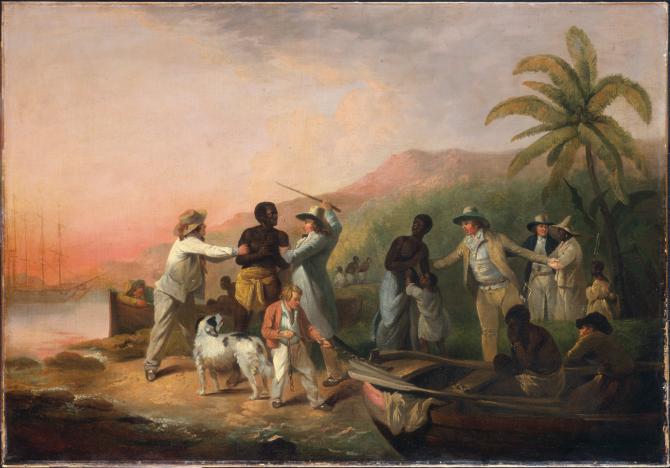
In 1764, James Otis of Massachusetts asked “Can any logical inference in favor of slavery be drawn from a flat nose, a long or short face?” after pondering why only blacks had been enslaved. James Otis, The Rights of the British Colonists Asserted and Proved (1764), in Bernard Bailyn, ed., Pamphlets of the American Revolution, 1750-1776 (Cambridge, MA, 1965), 1: 439.
Some believed that slavery could not stand against the “relentless march of liberty and progress.” Gordon Wood, Empire of Liberty, 519. For example, James Madison believed that making noise on the issue of slavery would only slow down the march of progress within the United States. Id. at 525. Perhaps those who held this view perpetuated slavery, believing that it was bound to end eventually without action.
Others had more profoundly prejudiced and racist views toward slavery. Thomas Jefferson believed that “various characteristics of blacks . . . [such as] their tolerance of heat, their need for less sleep, their sexual ardor, their lack of imagination and artistic ability, and their music talent . . . were inherent and not learned.” Id. at 539. Jefferson believed that “blacks’ deficiencies were innate, because when they mixed their blood with whites’, they improved ‘in body and mind,’ which ‘proves that their inferiority is not the effect merely of their condition of life.’” Id.citing Thomas Jefferson, Notes on the State of Virginia, ed. Peden, 138-43.
Even entire states took action that is hard to fathom in modern times, all with the underlying belief that slavery was justified and must be protected. The state of Kentucky wrote into its 1792 Constitution that “the legislature shall have no power to pass laws for the emancipation of slaves without the consent of their owners.” Robin L. Einhorn, American Taxation, American Slavery (Chicago, 2006), 220, 232, 249, 236; Stanley Elkins and Eric McKitrick, “A New Meaning for Turner’s Frontier: Part II: The Southwest Frontier and New England,” Political Science Quarterly, 69 (1954), 572-76. This language was added to Kentucky’s Constitution despite the fact that only a mere 16% of the state’s population were slaves. Gordon Wood, Empire of Liberty, 531.
All of these varying views affected American policy, both foreign and domestic. Taking foreign policy as an example, while Haiti had a slave revolution in 1803 that both ended slavery and proclaimed racial equality, and the United States typically was the first country to extend diplomatic relations to a new republic, it would not be until the Civil War that the “United States [would] recognize the Haitian republic.” Id. at 537.
As early Americans searched for justifications for slavery, many who were thinking critically would come to the same conclusion as James Otis: that there was no justification. However, those whose livelihoods depended on the existence of slavery were predisposed to never coming to that conclusion. Nonetheless, as is obvious from these varying views on justifications for slavery, hypocrisy was prevalent, ignorance was rampant (even amongst one of the greatest intellectuals, Jefferson), and at the very least, progress was slow.
Regardless of who was right or wrong about the issue of slavery, it is clear that the justifications for slavery ran deep, permeating societal beliefs and policy decisions, foreign and domestic. Not many issues have rivaled the contentious nature of slavery. But analyzing the justifications for slavery shows just how far an issue can reverberate throughout the country, touching even the very threads that hold society together.
George Washington (L.) and Thomas Jefferson (R.) on Mount Rushmore.
Early Americans had varying views on slavery, which would set the course for slavery to become a main point of contention for Americans by the time the Civil War erupted.
For example, in the late 1700s, many Chesapeake farmers hired out their slaves to other farmers. Gordon Wood, Empire of Liberty, 511. This development led some to believe that slavery would eventually be replaced by wage labor. Sarah S. Hughes, “Slaves for Hire: The Allocation of Black Labor in Elizabeth City County, Virginia, 1782 to 1810,” WMQ, 35 (1978), 260-86. Consequently, some Americans believed that slavery was but a passing trend that would evolve and no confrontation would emerge on the issue.
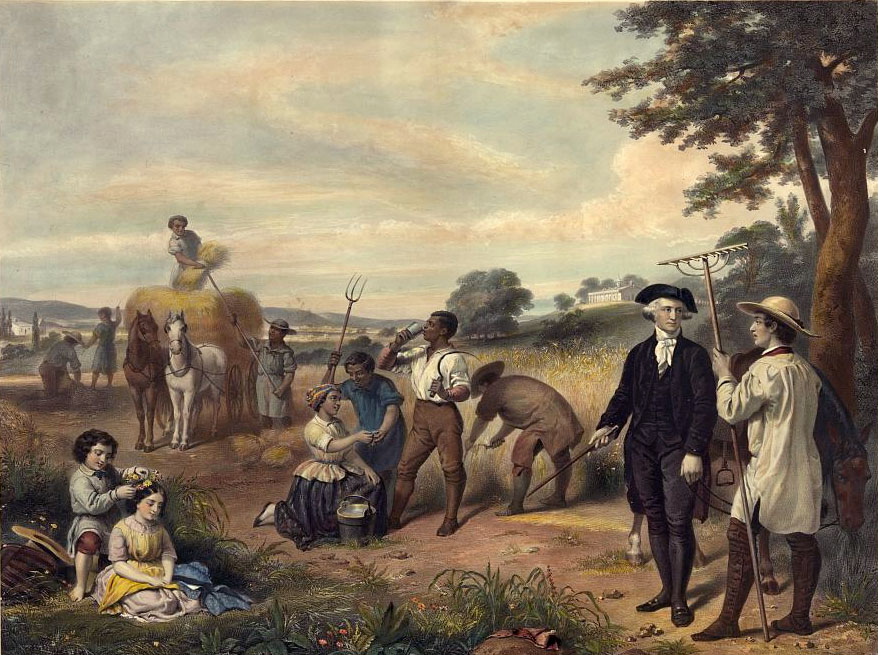
Both George Washington and Thomas Jefferson were slave owners, but each had their own view on the subject. George Washington saw that slaves “had no incentive to work hard and develop ‘a good name’ for themselves,” which he saw as slavery’s biggest flaw. Gordon Wood, Empire of Liberty, 513. This led to the question of what slaves could accomplish had they had opportunities for advancement in both reputation and respect, which was a subject Washington pondered. Robert F. Dalzell Jr. and Lee Baldwin Dalzell, George Washington’s Mount Vernon: At Home in Revolutionary America (New York, 1998), 129, 212-13. Jefferson, meanwhile, owned one of the largest plantations in Virginia at the time, holding around 200 slaves at any given time. While he infamously condemned slavery and yet maintained a plantation with slaves, he was known as a compassionate owner, comparatively speaking. He would prescribe lighter work for women, children, the elderly, and the sick. Gordon Wood, Empire of Liberty, 515. Nonetheless, his slaves would inevitably receive lashings for misbehavior. The fact that Jefferson could be viewed as a compassionate owner speaks volumes about the severity of slavery, where the most inhumane and cruelest treatment was viewed as normal.
Finally, there were those who opposed slavery and spread an egalitarian message hoping to abolish slavery. Gordon Wood in Empire of Liberty theorizes that the spread of this message essentially forced slave owners who wished to preserve their livelihood to “fall back on the alleged racial deficiencies of blacks as a justification for an institution that hiterto they had taken for granted and had never before needed to justify.” Id. at 508. Thus, Wood concluded, “[t]he anti-slavery movement that arose out of the Revolution inadvertently produced racism in America.” Id.
As we now know, the early Americans’ views would ultimately collide and culminate in the Civil War some decades later. Retrospectively, it seems that it would have been naive to expect slave owners like Jefferson and Washington to truly advocate for the cause of abolishing slavery. While they were part of the group of Americans who realized that slavery was ultimately a wrong that must be righted, their personal observations about and actions toward their own slaves seem to show their mentality being akin to “This is hindering the country and its people, but someone else in the future is going to have to solve it.” And so it happened that way. But it deserves mention that the early Republic was replete with significant, fundamental issues that would shape the future of the country, many of which have been minimized or forgotten compared to the issue of slavery. Thus, to squarely blame Jefferson and Washington for not ending slavery would be unfair.
As to Wood’s conclusion that the anti-slavery movement ultimately created racism, this deserves a great deal of consideration and analysis. The first and most obvious question is: Wouldn’t racism always have been the slave owners’ justification? Whether it was the anti-slavery movement or some other external pressure, such as economic inefficiency of slavery, slave owners would have been forced to one day justify the existence of slavery. For the slave owners, it seems that the quickest defense would have been race. While Wood may not have intentionally implied that the anti-slavery movement was solely at fault for creating racism, most would take issue with that conclusion.
Regardless, the massive issue of slavery, with its lengthy, disturbing history, was set on a new course in the earliest days of the Republic. While this course would result in the Civil War, it also would result in the abolishment of slavery. That is the result Jefferson wanted, the result Washington wanted, and the result that helped America to move forward.
By 1776, indentured servitude had become a widespread and prominent part of English life. By the 1810s, however, indentured servitude was seen by most Americans as inherently at conflict with the “natural rights of man.” Gordon Wood, Empire of Liberty, 346. Some Americans concluded that servitude as a whole was “highly anti-republican.” Id.
However, as indentured servitude became less prominent, black slavery took its place. The servants who continued to work were quick to differentiate themselves from the black slaves, often times not admitting that they were servants but instead classifying themselves as merely “help,” who was “staying in the house.” Id.
It is plausible to hypothesize that the decline of indentured servitude led to the increase in using slaves. As repulsive and disgusting as it may seem now, early Americans did not view the slaves as individuals, instead classifying them as property. Servants had a different role altogether, sometimes sitting at the table with their “bosses.” Notably, slaves did not use the word “boss,” but instead used the word “master” typically.
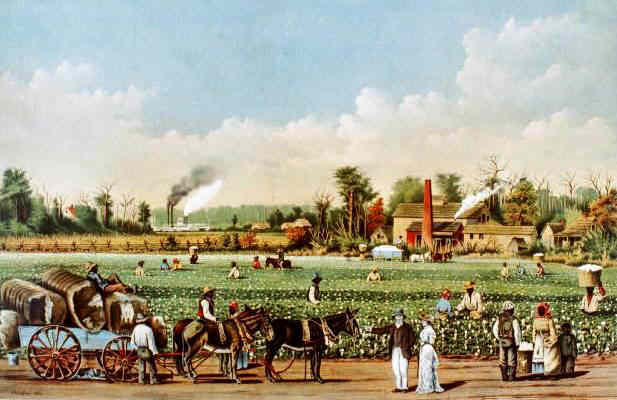
While this issue gets to a broader piece of American history rife with controversy and hypocrisy, it also reflects perhaps a reason that slavery grew to become such a staple of American life in the decades leading up to the Civil War. With the increase of “human rights” came a decrease in the use of servants in Americans’ lives, which ultimately appears to have led, at least partially, to an increase in the use of slaves.
This development in American history is troubling, as it shows the profound misplacement of belief that the early Americans had in what human rights meant. While some were opposed to the idea of slavery altogether in the earliest years of the Republic, many tolerated it, despite also proclaiming to be Republicans concerned with the rights of all humans.
Fortunately, as the decades wore on, it became increasingly clear to Americans that human rights inherently must include slaves. One wonders what would have been had the indentured servants not so readily been replaced by slaves, and if widespread slavery could have been prevented altogether before it came to dominate the Southern economy.

 Last Best Hope of Earth