Tag: Supreme Court

  • Constitution Sunday: “Brutus” XI

    New York Journal

    January 31, 1788

    The Constitution’s creation of the Supreme Court raised many questions about how such a court would operate. But an anonymous author, Brutus, laid out what was likely to come from the Court, and this author described—much of it with remarkable precision—what would indeed happen to the Court in the coming decades and centuries.

    (more…)
  • The Outbreak of the Civil War

    The Outbreak of the Civil War

    Within a matter of weeks of Abraham Lincoln’s presidency beginning, the gravest crisis of perhaps any president confronted him and the nation: civil war. (more…)

  • The Lincoln-Douglas Debates of 1858

    l_lincoln-douglas_1200x675
    Depiction of the Lincoln-Douglas Debates.

    Senator Stephen Douglas had come into the political spotlight through his work in the Compromise of 1850 and the Kansas-Nebraska Act, which had temporarily held the country together but perpetuated the institution of slavery. Douglas, a Democrat, was a force to be reckoned with for keeping a seat in the United States Senate despite the growing strength of the Republican Party throughout the North and in his home state of Illinois. Throughout 1858, a time when the state legislatures elected senators to the United States Senate, Douglas would have to win the support of the people of Illinois, and the Illinois legislature, by debating the issue of slavery, and the future of the country, with the Republican candidate for the Senate, Abraham Lincoln. See David Potter, The Impending Crisis: America Before the Civil War, 1848-1861, 330-31. (more…)

  • A Supreme Court Tragedy: Dred Scott v. Sandford

    05_e
    The Taney Supreme Court.

    In 1857, the United States Supreme Court decided one of the most controversial cases in the history of the country. Just days after James Buchanan began his term as president, Chief Justice Roger Taney wrote the opinion for the Court, ruling that neither slaves nor freedmen could be citizens of the United States. The implications of this decision, and its reasoning, have been analyzed, dissected, and discussed since 1857. While many have concluded it is one of the Supreme Court’s worst decisions, its impact on Antebellum America should not be overlooked.

    (more…)

  • The Genesis of the Underground Railroad

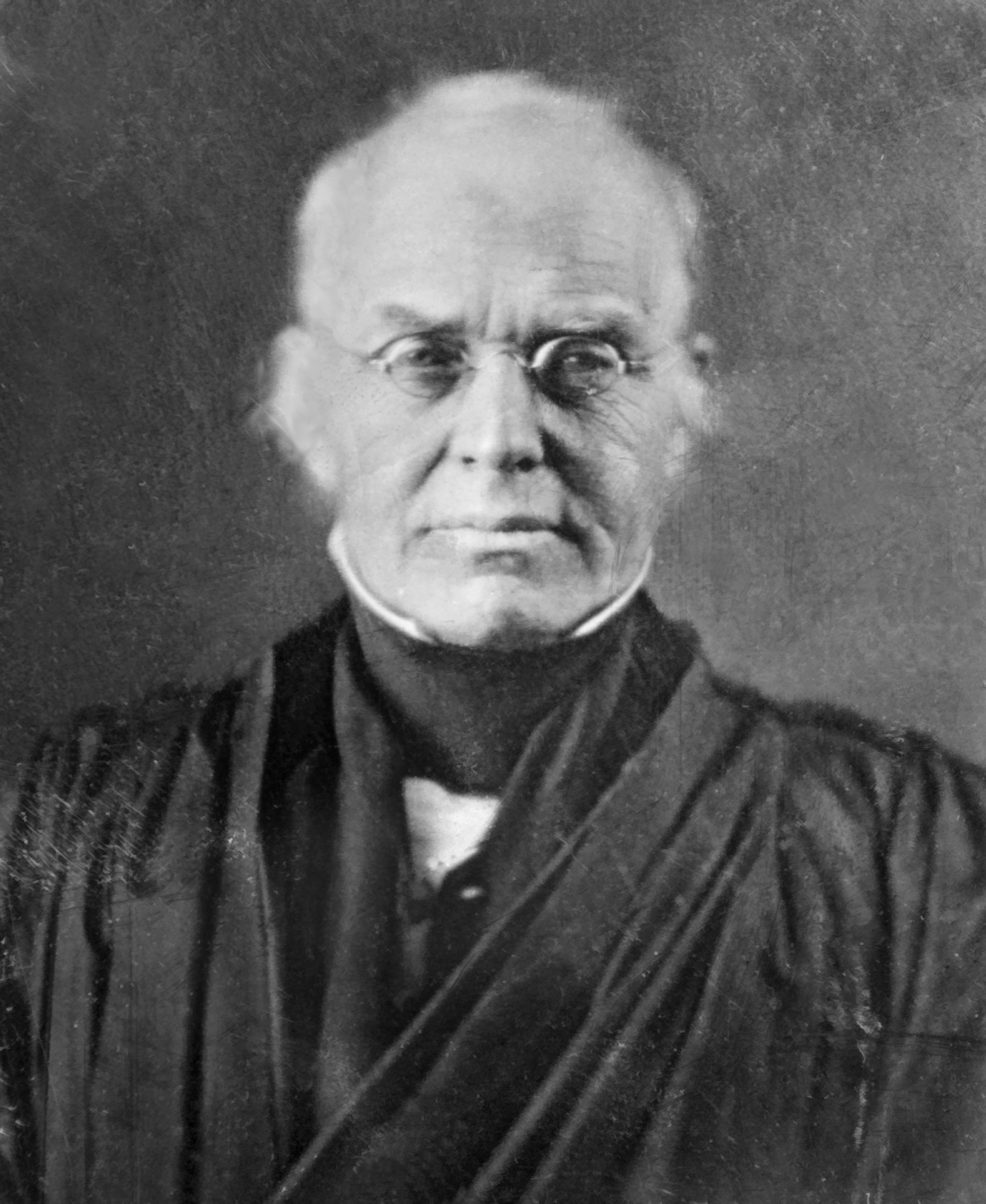
    daguerreotype_of_joseph_story_1844_edit
    Justice Joseph Story.

    Justice Joseph Story wrote a decision in Prigg v. Pennsylvania that would put the United States Supreme Court in a possession of relieving northern state officials of responsibility “for returning fugitive slaves, and increasingly northern state legislatures instructed them to do so.” Daniel Walker Howe, What Hath God Wrought: Transformation of America, 1815-1848, 654.

    (more…)

  • Jackson’s Farewell

    78yo_andrew_jackson
    Andrew Jackson.

    President Andrew Jackson, with his term coming to an end, commissioned the Chief Justice of the Supreme Court, Roger Taney, to write his farewell address. This was his imitation of George Washington, who had started the tradition of the farewell address. See Daniel Walker Howe, What Hath God Wrought: Transformation of America, 1815-1848, 500.

    (more…)

  • The Supreme Court Under Jackson

    roger_b-_taney_-_brady-handy
    Roger B. Taney. Photograph by: Mathew Brady.

    John Marshall, perhaps the greatest Chief Justice of the Supreme Court of the United States, died on July 6, 1835. As his life was coming to a close, he wrote Joseph Story, “I yield slowly and reluctantly to the conviction that our constitution cannot last.” Daniel Walker Howe, What Hath God Wrought: Transformation of America, 1815-1848, 439 quoting John Marshall to Joseph Story, Sept. 22, 1832, quoted in Kent Newmyer, John Marshall and the Heroic Age of the Supreme Court (Baton Rouge, 2001), 386.

    (more…)

  • The Responsiveness of the Courts

    baltimore
    Map of Baltimore, showing construction and location of Barron’s wharf.

    The Nullification Crisis had an impact on the jurisprudence of American law, changing the interaction of the federal government with the states.

    (more…)

  • The Jurisprudence of the Removal of Native Americans

    william-wirt-2-e1451418942611-825x510-1451419281
    William Wirt. By: Henry Inman.

    In the face of the removal of Native Americans, the Cherokees turned to the federal courts for help.

    (more…)

  • The Transportation Revolution

    BF9078F5-155D-451F-6702CDB371CB71CD
    Depiction of the Building of the National Road.

    Following the end of the War of 1812, the United States underwent a transportation revolution. This transportation revolution came about as a result of Americans moving westward but also as more Americans moved into cities to engage in industrial work. Daniel Walker Howe, What Hath God Wrought: Transformation of America, 1815-1848, 212. (more…)