Tag: Tennessee

  • The Civil War: William G. Brownlow to R.H. Appleton

    November 29, 1860

    Knoxville, Tennessee

    When the United States faced the prospect of disunion, in the fall of 1860, there was virtually no precedent to which Americans could look. This wasn’t a matter of policy differences: states were debating whether to leave the Union. And many felt that it was inherently wrong and tried to articulate why this situation was different from the American Revolution—why the North was not tyrannical toward the South in the same way that England had been tyrannical toward the colonies—and thus why secession was not warranted. William G. Brownlow, of eastern Tennessee, was one who was against secession and sent a letter to R.H. Appleton, a friend and former subscriber of Brownlow’s newspaper, unpacking the ways in which those states were wrong to secede.

    (more…)
  • A Nation Reborn

    A Nation Reborn

    In the same way that the Second World War would reshape the globe in the Twentieth Century, the Civil War reshaped America for the remainder of the Nineteenth Century. Veterans of both wars came to define their respective generations and rise to positions of power: just as Union General Ulysses S. Grant’s meteoric rise culminated in him becoming President three years after the war, General Dwight D. Eisenhower would find himself being elected President seven years after the war of his generation. Lesser generals also worked their way into office—some of those offices being elected and others being executive offices of companies in the emerging industries following the wars—but that would occur over the course of decades: the last Civil War veteran to reach the presidency, William McKinley, occupied the White House as the Nineteenth Century faded into the Twentieth. As ever, those who held power determined the direction of the country’s future. In the weeks and months following the end of the Civil War, and President Abraham Lincoln’s assassination, people in power would be sketching out the contours of a post-war America; and it was then, at that nascent stage of the newly reborn nation’s life, that new factions emerged—factions that would vie for weeks, months, and even years to cast the die of America in their own image and either keep, or make, the nation they wished to have.

    (more…)
  • Tightening the Cordon

    Tightening the Cordon

    By the end of 1864—with Union General William Tecumseh Sherman having cut his way through Georgia, Union General Ulysses S. Grant having confined Confederate General Robert E. Lee to a defensive position in Virginia, and President Abraham Lincoln having won his bid for re-election—the Confederacy was desperate for any sign of encouragement. While the rhetoric from Confederate President Jefferson Davis and Vice President Alexander Stephens had remained buoyant, and despite newspaper headlines throughout the South continuing to cheer for the cause, the Confederacy was nowhere near the crest it had enjoyed in 1863. Having lost the chance to put the Union on the defensive that year, the rebels now found their western and southern borders closing in on them. If ever there was going to be a negotiated peace, the chances of it occurring were rapidly diminishing as 1865 dawned. (more…)

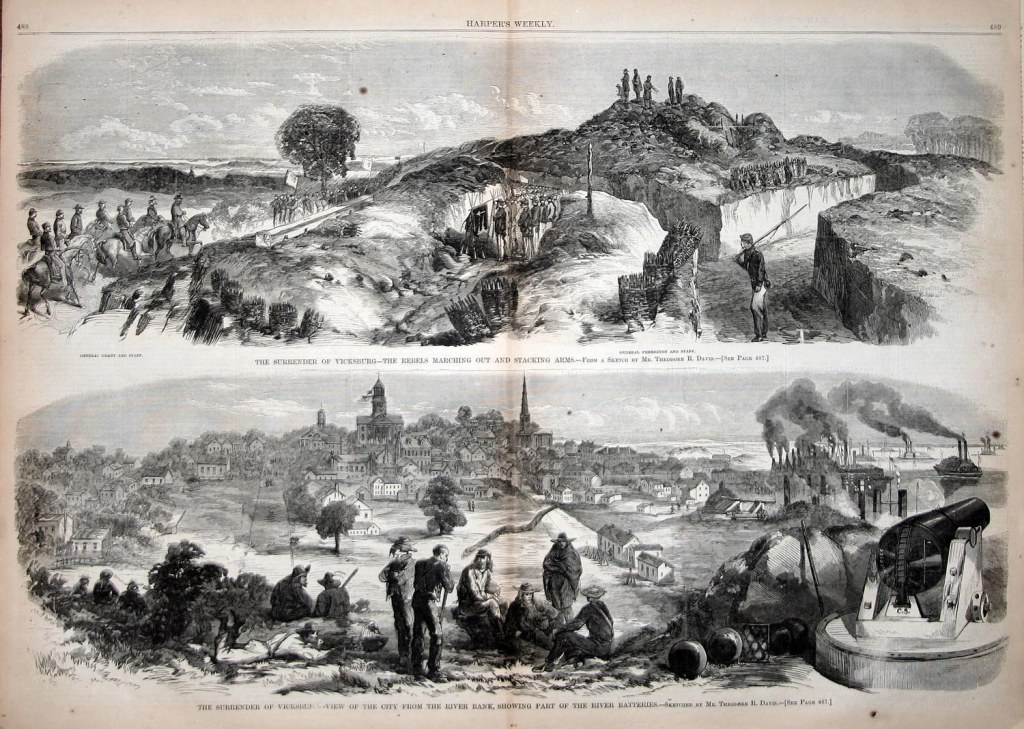
  • The Siege of Vicksburg

    The Siege of Vicksburg

    In the western theater of war, Ulysses S. Grant had set his sights on a goal early in his campaigning: Vicksburg, a town hugging the Mississippi River on the border of Louisiana and Mississippi. Taking the city would not only secure the Mississippi River; taking it would give the Union a lasso around the Confederacy. Just as spring of 1863 was getting underway, Grant had drawn up a plan to take the town and tighten the Union grip on the Confederacy. (more…)

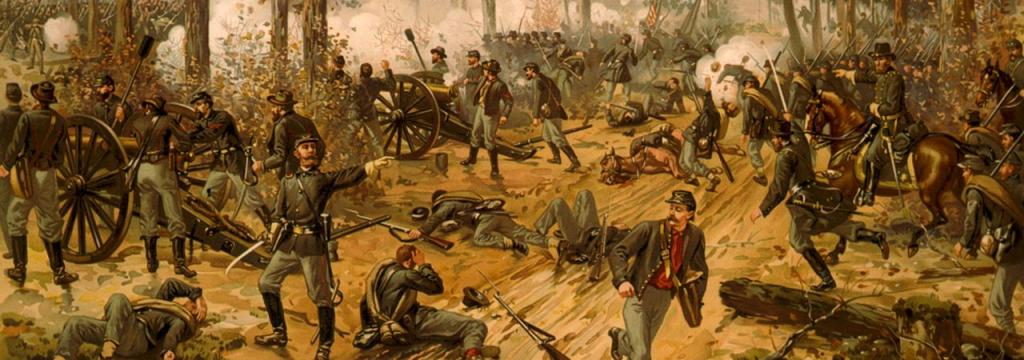
  • The Battle of Shiloh

    The Battle of Shiloh

    Two of the greatest Confederate generals in early 1862, Albert Sidney Johnston and P.G.T. Beauregard, rendezvoused in Corinth, Mississippi with a combined 42,000 men.[i] The city not only could serve as an origin point of a campaign into nearby Tennessee; it also was the meeting point for the Confederacy’s “main north-south and east-west railroads.”[ii] Given Corinth’s importance, Henry Halleck ordered Ulysses S. Grant to march his men to Pittsburg Landing, wait for his fellow general Don Carlos Buell to arrive with his army, and then move on Corinth as a combined force numbering approximately 75,000.[iii]

    (more…)

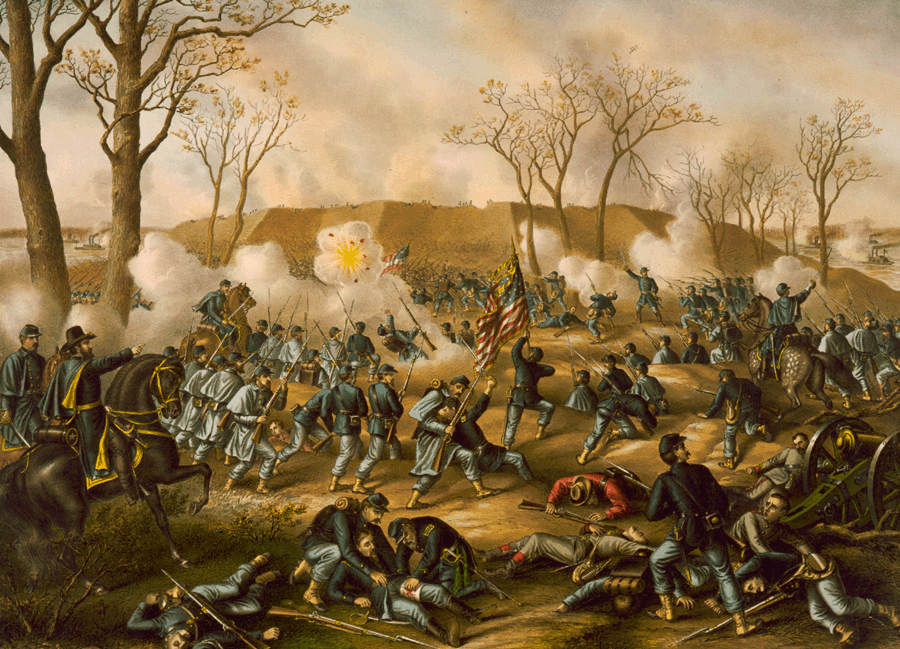
  • The Battle of Fort Donelson

    The Battle of Fort Donelson

    Sited on the banks of the Cumberland River and only a matter of miles from Fort Henry, Fort Donelson was slated for Union assault even before General Ulysses S. Grant’s taking of Fort Henry. The close proximity between the two forts ensured that the Confederates would not be taken by surprise when Grant went onto Fort Donelson, but both sides knew that the ceding of Donelson would be a swift second defeat in a matter of days and inspire the Union to make further advances into Tennessee and Kentucky.

    (more…)

  • Grant’s Taking of Fort Henry

    In early 1862, heartened by his troops’ performance at the Battle of Belmont, Brigadier General Ulysses S. Grant had determined that he was capable of making inroads into the Confederacy. Securing the network of rivers feeding into the Mississippi River as well as the Mississippi itself would hinder the Confederacy’s mobility and economy, and accomplishing this objective would bring him into two states that did not officially join the Confederacy but parts of which were Confederate-controlled: Kentucky and Tennessee. Bordering those states, on the banks of the Tennessee River, Grant saw a Confederate fort ripe for the plucking: Fort Henry. (more…)

  • On to Richmond

    On to Richmond

    Although the Confederacy had awakened the North’s spirit by initiating hostilities at Fort Sumter, both sides could have still hoped for reconciliation. While some advocated for immediate peace, others wished for a full prosecution of war against the South, viewing its expanding secession as nothing short of treason. By the end of spring 1861, there was a decisive answer to the question of whether there would soon be peace. (more…)

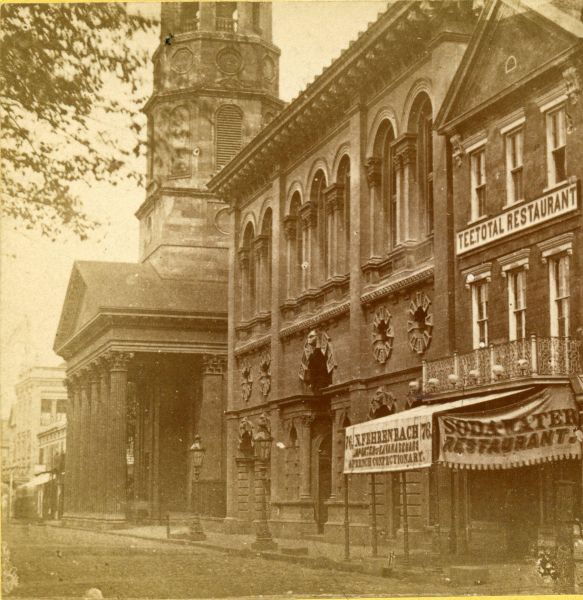
  • The Secession of the Deep South

    secession-hall-583x600
    Secession Hall in Charleston, South Carolina. Credit: The Civil War Trust.

    In the wake of the disconcerting result of the Election of 1860, the nature of southern secessionism suggested the imminent secession of at least some southern states from the Union. The timing and execution of states actually seceding from the Union was unclear, but the Deep South was prepared to act first. (more…)

  • The Precursor to the Winter of Secession

    168095
    Washington in 1860. Photographer Unknown.

    Abraham Lincoln’s victory in the Election of 1860 was disconcerting news for the South. It was the most recent event in a string of events that seemingly endangered the southern way of life and the future of the country. At a time when many northerners suspected southern threats of secession were but a bluff, there was evidence that the country had already split and the formalities were soon to follow. (more…)