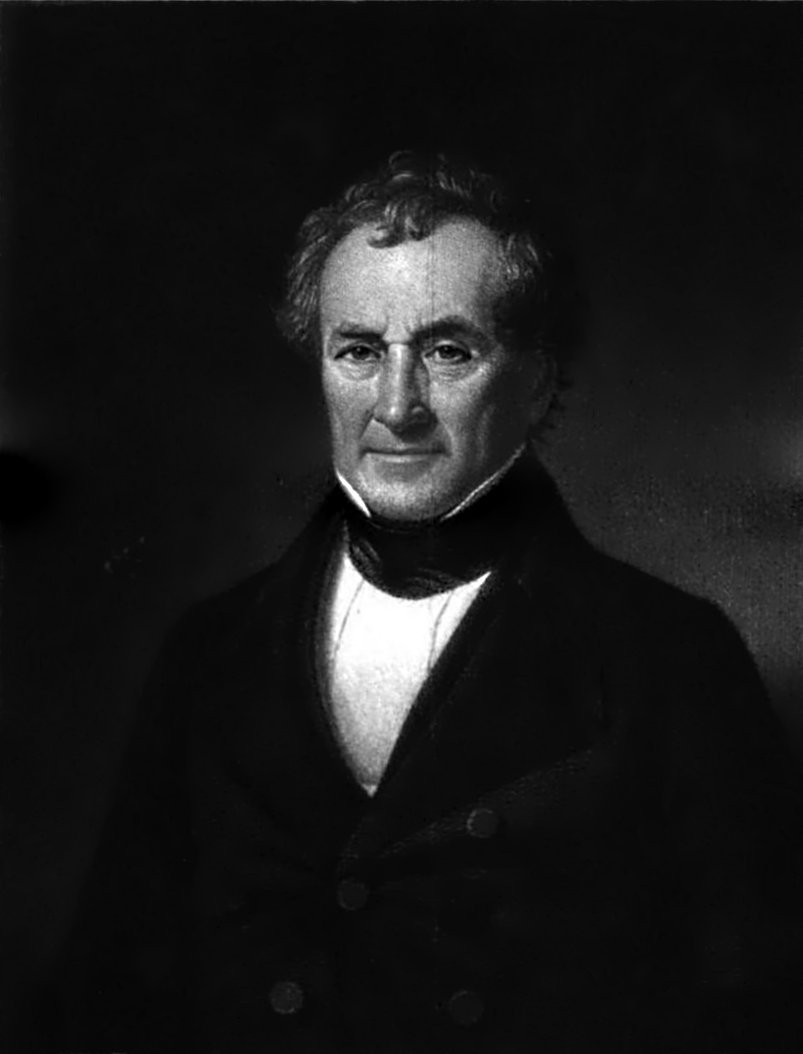
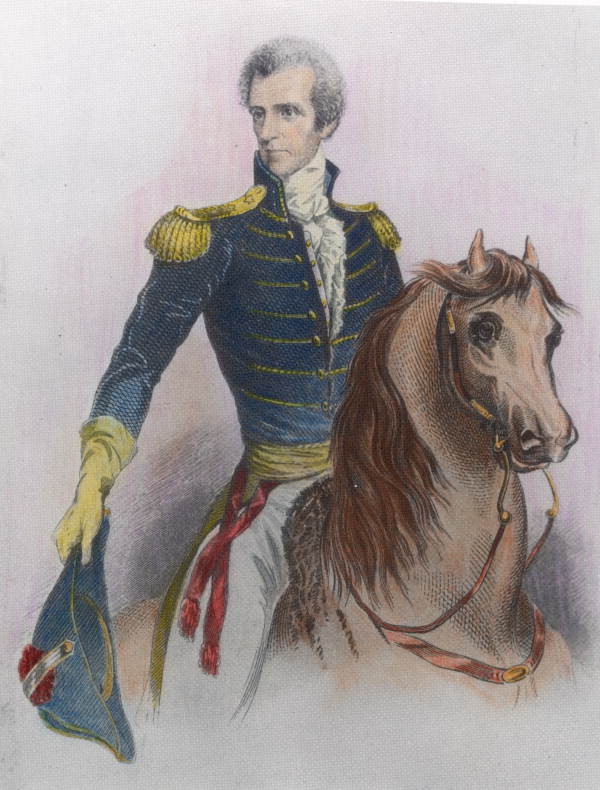
Tag: Thomas Jefferson

  • Constitution Sunday: Letter from James Madison to Thomas Jefferson

    Letter from James Madison to Thomas Jefferson

    New York, October 24, 1787

    Following are excerpts from James Madison’s letter to Thomas Jefferson, dated October 24, 1787:

    “It remains then to be enquired whether a majority having any common interest, or feeling any common passion, will find sufficient motives to restrain them from oppressing the minority. (more…)

  • Jackson’s Removal of Native Americans

    chief-joseph
    Depiction of the Removal of Native Americans.

    In the first year of Andrew Jackson’s presidency, the removal of Native Americans from their lands became a top priority.

    (more…)

  • Taking the Wolf by the Ears

    paul_cuffee
    Paul Cuffe. By: Chester Harding.

    Paul Cuffe, by 1816, began making voyages across the Atlantic Ocean to Africa, transporting African-Americans who wished to make a new home in Africa. Daniel Walker Howe, What Hath God Wrought: Transformation of America, 1815-1848, 260.

    (more…)

  • The Heir to the Founders

    john-quincy-adams-picture
    John Quincy Adams.

    On July 4, 1826, during America’s Golden Jubilee, celebrating the 50th anniversary of the Declaration of Independence, Thomas Jefferson and John Adams died. Daniel Walker Howe, What Hath God Wrought: Transformation of America, 1815-1848, 243. The two political rivals were two of the last three surviving signers of the Declaration of Independence, leaving only Charles Carroll of Maryland alive. Id. President John Quincy Adams, learning of his father’s death and Jefferson’s death, remarked that it was a “‘visible and palpable mark of Divine favor,’ to the nation, and most of his countrymen agreed.” Id. quoting James Morton Smith, The Republic of Letters (New York, 1995), II, 1973-74.

    (more…)

  • The Election of 1824

    m-9636
    William Harris Crawford.

    Not long after the election of 1820, an essentially uncontested election seeing the re-election of President James Monroe, the campaigning for the election of 1824 began. President Monroe had indicated that he would not seek an unprecedented third term as president, but that did not stop others from posturing for the election. As a journalist observed in the spring of 1822, “electioneering begins to wax hot.” Daniel Walker Howe, What Hath God Wrought: Transformation of America, 1815-1848, 203 quoting James F. Hopkins, “Election of 1824,” in History of American Presidential Elections, ed. Arthur M. Schlesinger Jr. (New York, 1985), 363.

    (more…)

  • The Second Missouri Compromise

    mtiwnja4njmznzcynja2otg4
    Henry Clay.

    With the creation of the Missouri Compromise came a second controversy for Missouri. Some northerners threatened “not to consent to the Missouri constitution when it came back to Congress for final approval.” Daniel Walker Howe, What Hath God Wrought: Transformation of America, 1815-1848, 156. Henry Clay, then-Speaker of the House of Representatives, led the effort to solving this second controversy.

    (more…)

  • The Missouri Compromise

    james_tallmadge_portrait
    James Tallmadge.

    By 1819, the area west of the Mississippi River, known as the Missouri Territory, had obtained a population qualifying it to be admitted to the Union. Daniel Walker Howe, What Hath God Wrought: Transformation of America, 1819-1848, 147. The only requirement to be admitted was that an enabling act be presented to Congress “authorizing Missouri voters to elect a convention to draft a state constitution.” Id. That bill was proposed, but Representative James Tallmadge proposed an amendment prohibiting further “importation of slavery” and “all children of slaves born after Missouri’s admission to the Union should become free at the age of twenty-five.” Id. This provoked great “consternation in the House of Representatives.” Id. citing Annals of Congress, 15th Cong., 2nd sess., 1170.

    (more…)

  • The Most Magnificent Achievement of Humanity

    erie-canal-john-wm-hill-painting-1829
    Erie Canal in 1829. By: John Hill.

    As nationalism was growing in the years following the War of 1812, achievements became more common and innovation was running rampant. In this environment, the Erie Canal was born.

    (more…)

  • The Transcontinental Treaty of Washington

    gilbert_stuart_-_john_quincy_adams_-_google_art_project
    John Quincy Adams in 1818. By: Gilbert Stuart.

    John Quincy Adams, Secretary of State from 1817 to 1825, was a principled, “tough negotiator.” Daniel Walker Howe, What Hath God Wrought: Transformation of America, 1815-1848, 107.

    (more…)

  • The Conquest of the Floridas

    gv52100
    Engraving of Andrew Jackson.

    East and West Florida, property of the Spanish Empire, had become coveted land for America in the early 1800s. It could lend a strategic stronghold for America and open up the Pearl, Perdido, and Apalachicola Rivers to commercial trade. Daniel Walker Howe, What Hath God Wrought: Transformation of America, 1815-1848, 97.

    (more…)