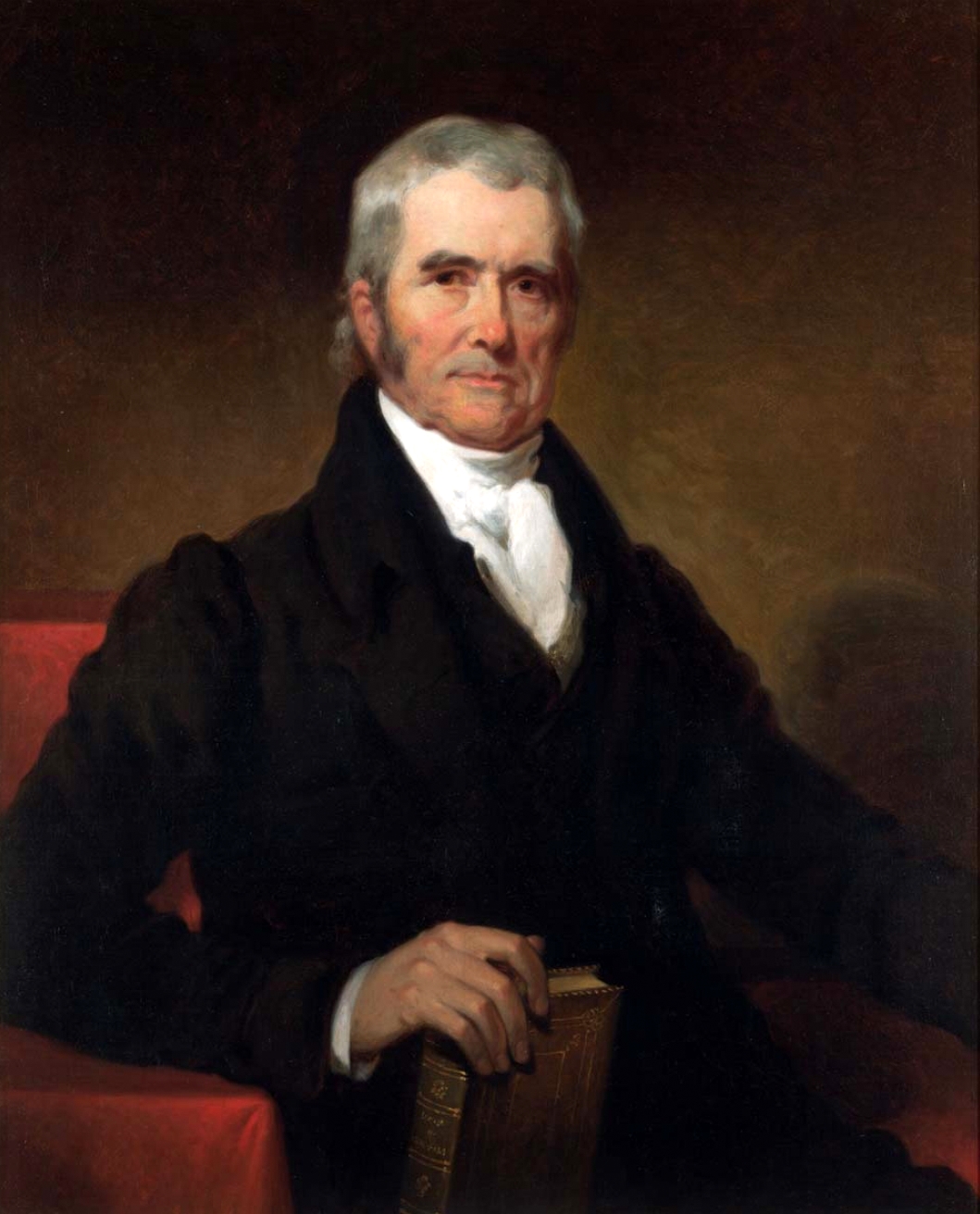
John Marshall, the fourth Chief Justice of the United States Supreme Court. By: Henry Inman.
In the first years of the American Republic, there were drastic changes in the law. The importance and organization of laws were coming into place. At the top were constitutional rights, which, as James Cannon explained “must be protected and defended ‘as the apple of your eye’ from danger ‘or they will be lost forever.’” Gordon Wood, The Creation of the American Republic: 1776-1787, 293 quoting James Cannon, “Cassandra,” Apr. 1776, Force, ed., American Archives, 4th Ser., V, 1094, quoting from Hulme, Historical Essay, 143-44. Cannon continued, stating that constitutional rights must be set “on a foundation never more to be shaken,” meaning that constitutional rights “must be specified and written down in immutable documents. Id.
Independence Hall in Philadelphia, Pennsylvania. By: Ferdinand Richardt.
As the constitutions of the states were implemented and executed during the Revolutionary years, the population began holding conventions for amendment of those constitutions, believing that “Legislatures were incompetent” to do so. Gordon Wood, The Creation of the American Republic: 1776-1787, 306 quoting Farrand, ed., Records of the Federal Convention, II, 91-93. In fact, James Madison believed that “it would be a novel and dangerous doctrine that a Legislature could change the constitution under which it held its existence.” Id.
By 1776, the states were debating their respective constitutions and the Declaration of Independence was becoming a reality, all of which was fostering an environment of great debate. One part of that debate was what the role of governor should be for each state, and many of the conclusions and decisions made during that debate carry forth to modern America.
Involvement in government is crucial to the success of government as a whole. During the American Revolution, it was clear that participation in the political process would continue to be valued. Since those years, much has changed.
At the birth of the Republic, the contrast with the European monarchies became clear. The ideals of the Republic represented a fundamental shift in the role of government in individuals’ lives.
Signing of the Constitution. By: Louis S. Glanzman.
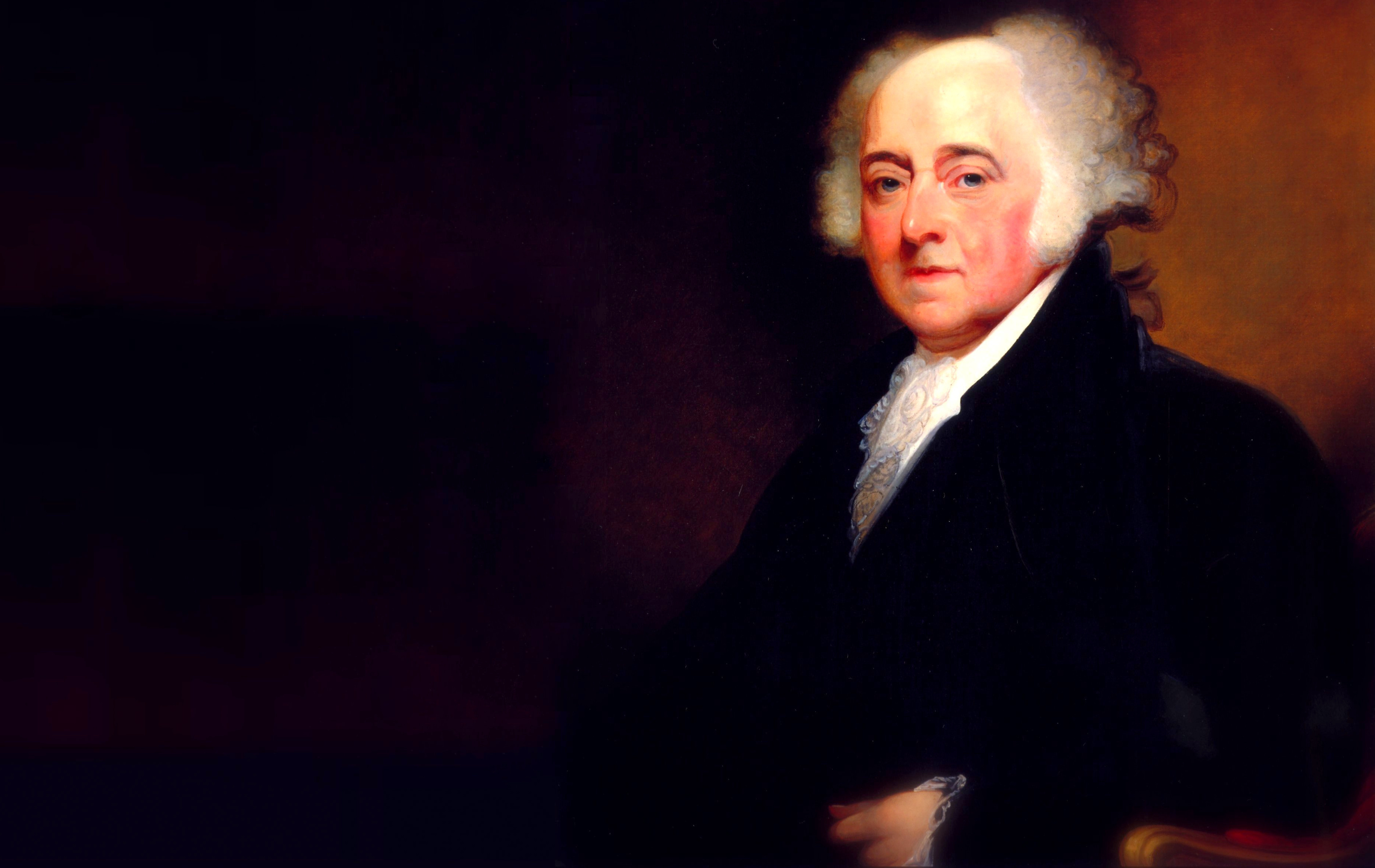
John Adams had strong opinions about federalism. He believed that the government should be structured similarly to the British Empire, given the British Empire’s extraordinary success.
At the time of the signing of the Constitution, Adams firmly believed that the Constitution had secured a national government, as opposed to a government dividing its sovereignty into states and a federal government. Gordon Wood, Revolutionary Characters: What Made the Founders Different, 191. (more…)
John Adams was amongst the most hopeful about America’s prospects for the future. At the time of the Declaration of Independence and the years of the American Revolution, he believed America could avoid the pitfalls of the European nations.
But just ten years later, Adams was of a different mind. In 1787, he wrote his Defenceof the Constitutions, where he concluded that “his countrymen were as corrupt as any nation in the world.” Gordon Wood, Revolutionary Characters: What Made the Founders Different, 181. (more…)
The effects of the American Revolution throughout the world were not immediately clear, but Thomas Jefferson opined that it would be “a movement on behalf of the rights of man.” Gordon Wood, Revolutionary Characters: What Made the Founders Different, 110. (more…)
John Trumbull’s Depiction of the Drafting Committee of the Declaration of Independent Presenting the Draft to Congress.
The Founding Fathers have a complicated legacy, and that legacy is constantly undergoing change. While the reverence of the Founding Fathers fluctuates generation-by-generation, certain questions emerge about the Founding Fathers’ effectiveness in setting the foundation for the United States.
Gordon Wood, in Revolutionary Characters: What Made the Founders Different, presented the Founding Fathers’ legacy as: “If it was the intense commitment of this generation of founders to new enlightened values that separates it from other generations, why, it might be asked, and indeed, as it has been asked by recent critical historians, did these so-called enlightened and liberally educated gentlemen not do more to reform their society? Why did they fail to enhance the status of women? Eliminate slavery entirely? Treat the Indians in a more humane manner?” Gordon Wood, Revolutionary Characters: What Made the Founders Different, 26.
It has become popular, glamorous even, to question the principles and integrity of the Founding Fathers in recent years, for their lack of ridding the country of its most foul traits. The Founding Fathers lived in a much different world than contemporary Americans.
To be fair to the Founding Fathers, accomplishing any of the goals similar to abolishing slavery, ensuring equality of men and women, and treating Indians in a humane manner, must have come after ensuring the creation of a government that would last ages. As Thomas Jefferson drafted the Declaration of Independence and James Madison drafted the Constitution, and the Founding Fathers came to sign and approve those documents, their priority was creating an environment and a country that would facilitate future successes and ensure equality in for future generations.
The Founding Fathers were not in a position to contemplate every injustice and inequality, amidst the Revolutionary War, the tumultuous years of the early Republic, and the rapid growth of the country.
To expect them to have addressed and resolved every issue that was perhaps foreseeable at the time of the Revolution is to ignore their extraordinary accomplishments. The Founding Fathers collectively deliberated what the best form of government should be. They created the most extraordinary government that has thrived for over two centuries and has been a model for successful government.
While it is popular to question the Founding Fathers’ accomplishments, the context of their work must be remembered. We remember each American icon for their accomplishments, given the circumstances that existed during their respective times. The Founding Fathers’ time was perhaps the most tumultuous and contentious in American history, and yet they devised a system that has allowed one of the most free and just societies known to the world.
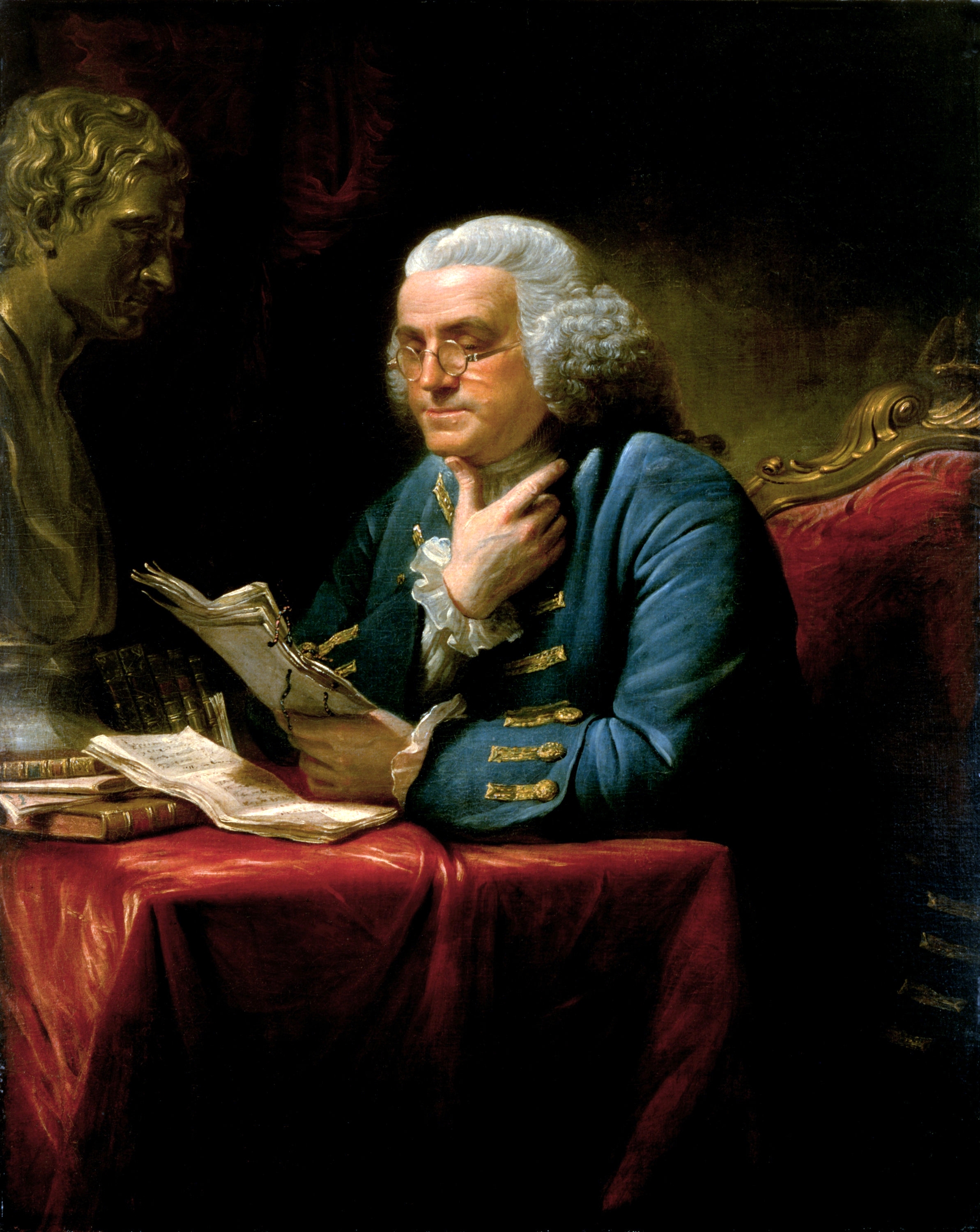
Benjamin Franklin, depicted in London in 1767. By: David Martin.
Benjamin Franklin, one of the most well-known and most revered Founding Fathers, had a more controversial history than most modern Americans realize.
In the late 1750s and early 1760s, Franklin was a “complete Anglophile.” Gordon Wood, Revolutionary Characters: What Made the Founders Different, 79. He made “disparaging comments about the provinciality and vulgarity of America in contrast with the sophistication and worthiness of England.” Id. He also believed that America, not England, was “corrupt and luxury-loving.” Id.
While living in England, Franklin was becoming more influential and had become a deputy postmaster. Id. at 84. In 1772, Franklin came into possession of some damning letters that would change his life. In the late 1760s, Thomas Hutchinson, the then-lieutenant governor of Massachusetts, had written letters to an Englishman advocating taking away liberties from the colonists so as to “maintain the colonies’ dependency on Great Britain.” Id. at 83. Franklin sent these letters to Massachusetts, prompting a crisis that would result in Franklin being terminated as deputy postmaster. Id.
In March 1775, he came back to America a changed man: a passionate patriot. Some of this passion was feigned, so as to show his fellow colonists that he was not an Englishman masquerading as a revolutionary. Id. at 84. He would become one of the most popular and widely respected Americans in the world, with only George Washington outshining him.
By the time of his death in 1790, Benjamin Franklin had created a legacy that lasts to this day. In the early Republic, that legacy was predicated on him showing that being self-made in America was not only possible, it was downright glamorous. Often forgotten or lost after those years of the early Republic, however, is that Franklin was not the same as the other Founding Fathers.
While Alexander Hamilton was not a full-blooded American and Thomas Jefferson spent a significant amount of time in Europe, Franklin so fully affiliated himself with England that it is difficult to draw a parallel to a contemporary American figure. In modern times, such an affiliation would certainly spell doom to a legacy.
Nonetheless, Franklin is remembered for his genius, his relatable nature, and his embodiment of the most American of ideals. Modern Americans’ forgiveness is likely warranted, but some may wonder: What if Franklin had not sent those letters? What would his legacy be then?






 Last Best Hope of Earth