
In the 15 years leading up to the Civil War, a wide variety of theories emerged for how the federal government should deal with slavery expanding, or not expanding, into the territories acquired by the United States.
In the 15 years leading up to the Civil War, a wide variety of theories emerged for how the federal government should deal with slavery expanding, or not expanding, into the territories acquired by the United States.

In the early 1800s, America was expanding in many ways. Part of that expansion was the education of Americans both in the classroom and otherwise.
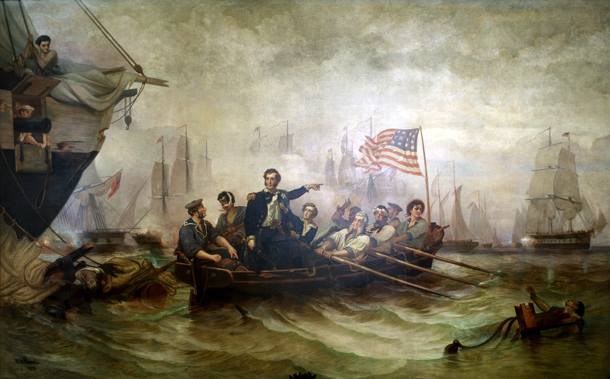
As news arrived in America on February 13, 1815 that the Treaty of Ghent was finalized and that peace between America and Britain was complete, Americans had a complete change of mind. Rather than dwell on the burning of Washington, D.C. or the humiliation of Britain’s invasion, Americans relished the victory of General Andrew Jackson in the Battle of New Orleans and the peace. See Daniel Walker Howe, What Hath God Wrought: The Transformation of America, 1815-1848, 71.

By the end of the War of 1812, President James Madison had weathered what is likely one of the tumultuous years that any president has had to endure. The British had landed a force, marched on Washington, D.C., and burned the White House. President Madison had trusted his Secretary of War John Armstrong when he doubted the possibility of a British invasion, only to be caught off guard when a scouting party, led by Secretary of State James Monroe, located just how close the British were to Washington. See Daniel Walker Howe, What Hath God Wrought: The Transformation of America, 1815-1848, 63-64.
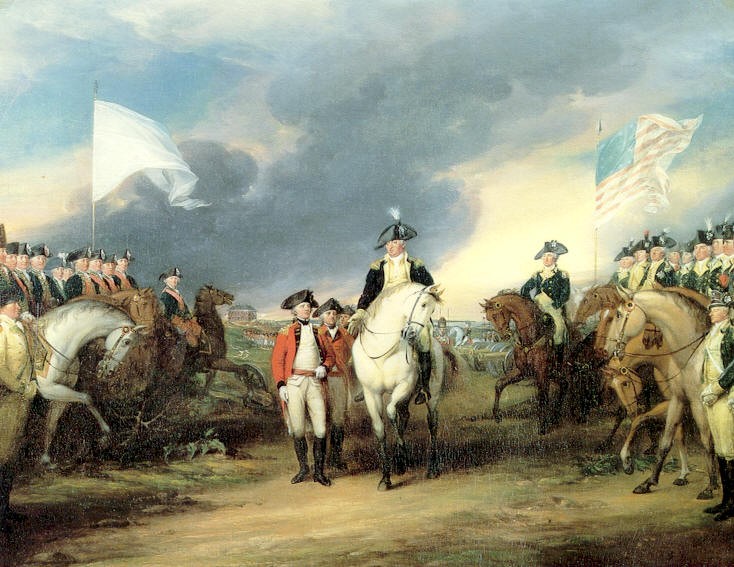
To fully understand the magnitude and impact of the American Revolution, context is crucial. While the Enlightenment was the process of society learning “the sources of a flourishing society and human happiness,” the Revolution was the process of finding the best form of government perhaps the world has ever known. See Gordon Wood, The Idea of America: Reflections on the Birth of the United States, 59.

The War of 1812 is often a forgotten war in modern times. It was a war that tested the Americans’ resolve in staying an independent nation and ultimately a war that brought together Americans in a way that no previous event had. Gordon Wood, Empire of Liberty, 699.
It was also a war that brought about seemingly unusual events, particularly in retrospect. For example, the Americans, led by William Hull, planned and attempted a three-pronged attack on Canada. Id. at 677. Then, perhaps even stranger, the governor of Massachusetts entered into negotiations “with the British, offering part of Maine in return for an end to the war.” Id. at 693.
Ultimately, the British invaded the United States and made an unexpected march directly on Washington, burning much of it to the ground. That was the extent of damage in America, however, and both countries entered into negotiations of a peace treaty. President James Madison led the way in negotiating a treaty with Britain, the Treaty of Ghent, which would peacefully end the war. Id. at 697.
President Madison, a Jeffersonian Republican, conducted himself with the logic that it was better “to allow the country to be invaded and the capital burned than to build up state power in a European monarchical manner.” Id. at 698. Madison’s skillful handling of the war would result in 57 “towns and counties throughout the United States” being named after him, “more than any other president.” Id. at 699 citing Forrest Church, So Help Me God: The Founding Fathers and the First Great Battle Over Church and State (New York, 2007), 350. John Adams told Thomas Jefferson in 1817 that Madison had “acquired more glory, and established more Union than all his three Predecessors, Washington, Adams, Jefferson, put together.” Gordon Wood, Empire of Liberty, 699 quoting John Adams to Thomas Jefferson, 2 Feb. 1817, in Lester J. Cappon, ed., The Adams-Jefferson Letters: The Complete Correspondence Between Thomas Jefferson and Abigail and John Adams (Chapel Hill, 1959), 2: 508.
Thomas Jefferson concluded in 1818 that “[o]ur government is now so firmly put on its republican tack that it will not be easily monarchised by forms.” Thomas Jefferson to Lafayette, 23 Nov. 1818, in Gilbert Chinard, ed., The Letters of Lafayette and Jefferson (Baltimore, 1929), 396.
The War of 1812 has many quirks, as discussed above but perhaps most notably was the Battle of New Orleans, which took place after the Treaty of Ghent was signed but before word had reached the whole country. The Battle of New Orleans, led on the American side by Andrew Jackson, inflicted massive casualties to the British. Gordon Wood, Empire of Liberty, 698.
Of course, the Star Spangled Banner was also a byproduct of the War of 1812 as well.
As forgotten as the War of 1812 may be, it had significant consequences for the future of the country. America became a unified country, with the collective hardship of fighting the British twice creating a bond between Americans that would be strong, even if short-lived. It also was a war that illustrated the Republican principles of Madison and Jefferson could be successful. This set the stage for Republican dominance in politics, which was already underway by the time the War of 1812 began.
While the Civil War would eventually come to define the 19th Century for America, with its horrific nature and result of keeping the country united, the War of 1812 ensured that there was an America worth fighting for. Had the War of 1812 not occurred, perhaps the Civil War would have been waged differently and perhaps the course of American history would have had a noticeable absence of patriotism. While it is impossible to predict, the wise decisions of American leaders in those tumultuous years and those who fought for their young country give modern Americans much to be thankful for.
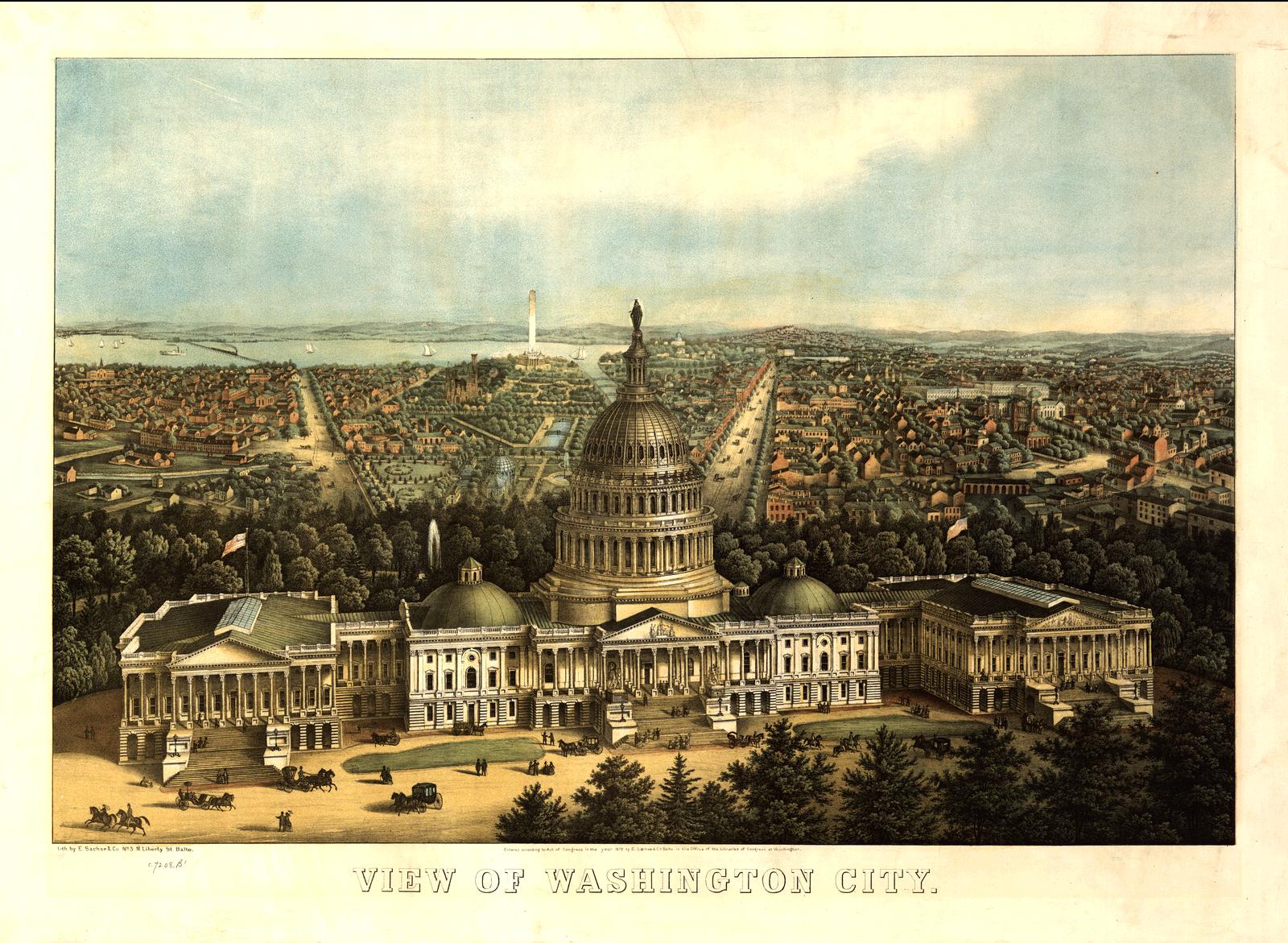
In the late 1790s, Constantin Francois Volney published Ruins; or, Meditations on the Revolution of Empires, one of the most popular publications of its day. This publication not only attacked monarchical tyranny, but it reinforced amongst Americans ideals familiar to Americans then and now: that nations are fragile and seem to inevitably decay and decline. Gordon Wood, Empire of Liberty, 552.
This keen awareness to the “mortality of all states” reinforced Americans’ “desire to build in stone and marble and to create depositories in order to leave to the future durable monuments of America’s cultivation and refinement.” Id.
Further, Comte de Volney’s book hinted that “an uncorrupted republican government might evade the decline and decay that had beset all other governments.” Id. citing Constantin Francois Volney, A New Translation of Volney’s Ruins; or, Meditations on the Revolution of Empires (Paris, 1802).
There are two points of analysis from the popularity of Comte de Volney’s book in the years of the early Republic.
First, this book and underlying American beliefs combined to form the nearly uniform desire for America to not just be a powerful country in the modern world but to perpetuate itself and to be in the annals of the world as one of the most extraordinary countries to have existed. From the beginning, Americans have been keen on memorializing its most important buildings to stand the test of time. This is most obviously evidenced in the government buildings both on the federal and state levels. Washington DC itself is testament to America’s desire to build a legacy to last.
Second, Comte de Volney’s book reinforces the notion that nearly all Americans share: that somehow, the United States can avoid inevitable decline. In support of that hope, many look to the fact that in the history of the world, there has never been such a democracy on the scale of the United States with the emphasis on rights and values that characterize America. On the other side of the argument, many would argue that success breeds complacency which breeds inefficiency, leading to decline.
The truth about decline is probably somewhere in between the two positions. Neither success nor decline is inevitable, particularly in light of the fact that America’s model has never been tested before.
The words of George Washington could not be truer: “The establishment of our new Government seemed to be the last great experiment for promoting human happiness.” George Washington, January 9, 1790. That experiment is ongoing and hopefully will be for many centuries to come.
 Last Best Hope of Earth