
The Democratic Party was in turmoil. Its candidates were not winning, and many of its ideas had fallen out of favor. It was a long way from the days of the Party’s founding: Andrew Jackson and his disciple, Martin Van Buren, held power for the twelve years spanning 1829 to 1841 and—into the 1840s and 1850s—James Polk, Franklin Pierce, and James Buchanan continued to lead the Party into the White House albeit against candidates from the newly-formed and then soon-to-be-disbanded Whig Party. Then, following the emergence of the Republican Party—an emergence which culminated in its candidate, Abraham Lincoln, prevailing in the elections of 1860 and 1864—Andrew Johnson, Lincoln’s Vice President and then successor as President, oversaw a one-term presidency which came to an end in 1869. Johnson, partly because he was serving between two titans of the century (Lincoln and Civil War hero Ulysses S. Grant), was always going to struggle to earn admiration but, unlike Lincoln and Grant, Johnson was technically a Democrat, and perhaps because he was so thoroughly shamed for his actions as President, the Party would scarcely recognize him as a member. Whether a result of Johnson’s malfeasance or not, following Johnson’s presidency came an era of Republican dominance: Republican Grant won two consecutive terms, Republican Rutherford B. Hayes secured a succeeding term, Republican James Garfield then was victorious, and following his assassination, Republican Chester Arthur served out the remainder of that term. That brought the parties and the country to 1884. As the election of 1884 approached, it had been decades since a strong, effective Democrat—a Democrat who embodied the Party’s principles and would be a standard bearer for the Party, unlike the postbellum Democratic President, Johnson, or the last antebellum one, Buchanan—held office, and for Democrats to win this election, it would take someone special; someone who would be transformative even if only in a way that was possible at the time. As fortune would have it, it could not be a wartime presidency or a presidency that birthed fundamental change in American government, but that was because the circumstances of the era did not call for such a President; it could, however, be a presidency that tackled one of the biggest issues of the time: corruption.
(more…)Tag: Whigs
-
The Election of 1860

The United States Capitol in 1860. Courtesy: Library of Congress Every presidential election is consequential, but the Election of 1860 would play a significant role in whether the United States would remain one nation. The division of the North and South on the issue of slavery threatened to cause a secession of the South. The result of the election would determine whether that threat would materialize and cause a Second American Revolution. (more…)
-
The Obstinacy of the North and South
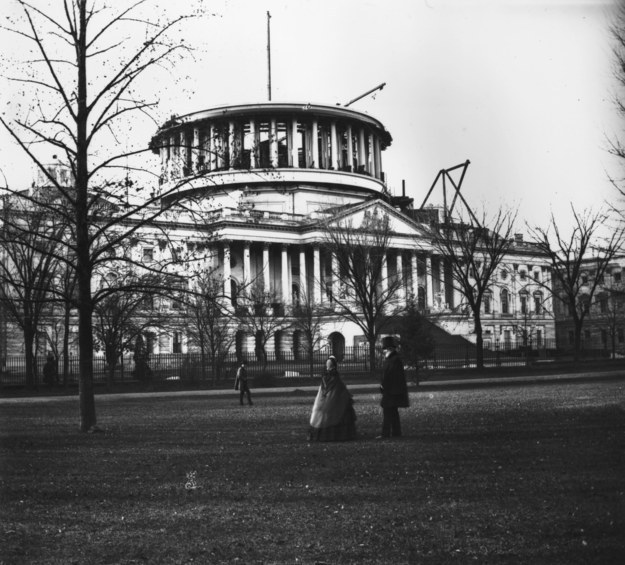
Construction on the Capitol in 1859. Courtesy: William England, Getty Images. By 1859, the northern and southern sections of America had developed different economic systems, cultural norms, and approaches to permitting slavery. Congress and the political parties had been able to overlook those differences for the sake of self-preservation and advancement of the collective agenda. As 1859 concluded and 1860 sprang, Americans understood that the status quo of compromise was not to continue much longer. (more…)
-
The Lincoln-Douglas Debates of 1858

Depiction of the Lincoln-Douglas Debates. Senator Stephen Douglas had come into the political spotlight through his work in the Compromise of 1850 and the Kansas-Nebraska Act, which had temporarily held the country together but perpetuated the institution of slavery. Douglas, a Democrat, was a force to be reckoned with for keeping a seat in the United States Senate despite the growing strength of the Republican Party throughout the North and in his home state of Illinois. Throughout 1858, a time when the state legislatures elected senators to the United States Senate, Douglas would have to win the support of the people of Illinois, and the Illinois legislature, by debating the issue of slavery, and the future of the country, with the Republican candidate for the Senate, Abraham Lincoln. See David Potter, The Impending Crisis: America Before the Civil War, 1848-1861, 330-31. (more…)
-
The Evolving Political Parties of the 1850s
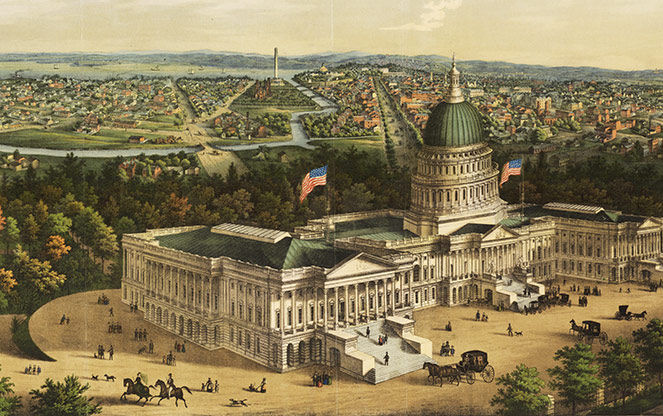
Panoramic View of Washington, DC in 1856. Courtesy: E. Sachse & Co. The Democratic Party and Whig Party were the dominant political parties from the early 1830s up until the mid-1850s. Both were institutions in national politics despite not having a coherent national organization by cobbling together a diverse group of states to win elections. While the Democrats had a more populist agenda, the Whigs were more focused on pursuing industrialization and development of the country. See David Potter, The Impending Crisis: America Before the Civil War, 1848-1861, 226. While the Democratic Party would survive to the present day, the Whig Party would not survive the mid-1850s, not as a result of its own ineptness but because of the changing political landscape of that era. (more…)
-
Halting Manifest Destiny
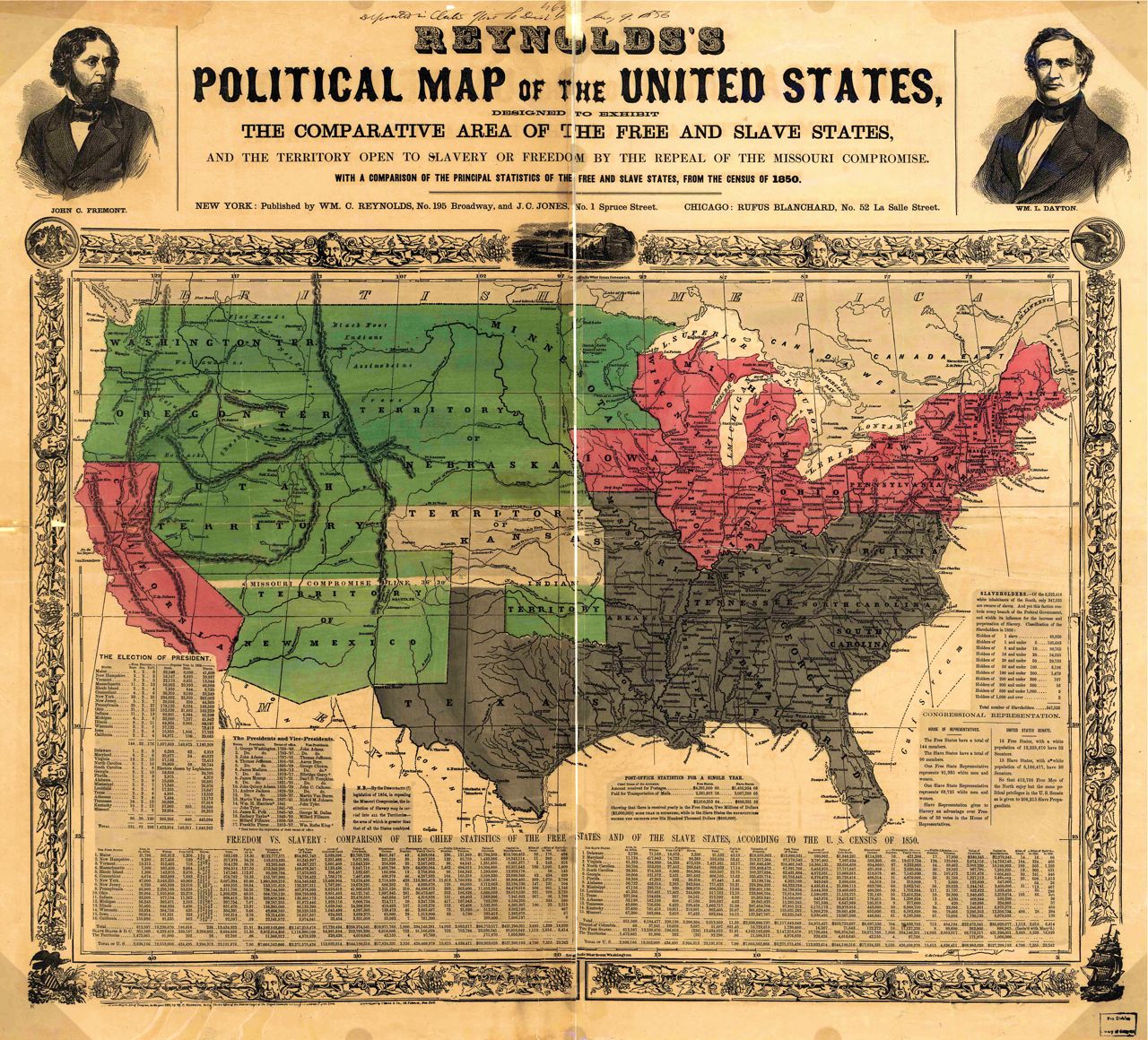
Map of America in 1850. During 1854, while the Kansas-Nebraska Act was making its way through Congress and to President Franklin Pierce’s desk, there were significant developments throughout the country that would have lessen the manifest destiny fever that had captured the nation’s attention up to that point. One of the hallmarks of American progress was nearing its end. (more…)
-
The Election of 1852

President Franklin Pierce. By: George P.A. Healy. With the first term of Millard Fillmore’s presidency winding down in 1852, the Democrats felt a sense of momentum that they could reclaim the White House. In the midterm elections of 1850, the Democrats secured 140 of the 233 seats in the House of Representatives, eclipsing the Whig Party. See David Potter, The Impending Crisis: America Before the Civil War, 1848-1861, 141.
-
A Deadlocked and Destructive Congress

The United States Capitol in 1848. Unknown Photographer, credit Library of Congress. During President James Polk’s administration, Congress grappled with resolving sectional tension arising out of whether slavery would be extended to newly acquired land from Mexico as well as the Oregon territory. Congress did not resolve that sectional tension but exacerbated it in what may have been one of the most deadlocked and destructive Congresses in American history. (more…)
-
Election of 1848: Whig Victory
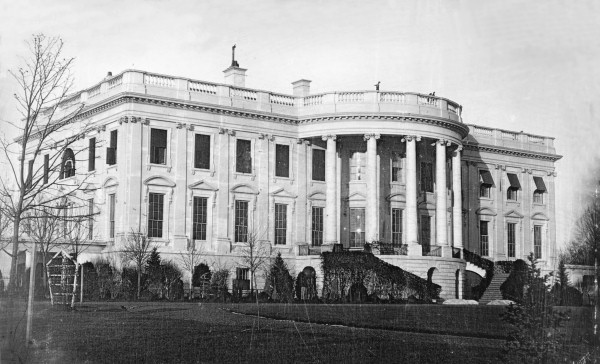
The White House in 1848. Credit: Library of Congress. On November 7, 1848, Americans went to the polls to choose between Martin Van Buren, Zachary Taylor, and Lewis Cass.
-
Election of 1848: The Barnburners

A Political Cartoon Regarding the Barnburners. Approaching the Election of 1848, President James Polk did not have unanimous support amongst Democrats. In fact, quite the opposite.
 Last Best Hope of Earth