Tag: Whigs

  • The Prioritization of Education

    edward_everett
    Edward Everett.

    Education was not always such a prominent issue in every state and every American community in the way that modern Americans experience. Horace Mann, who was secretary of the Massachusetts State Board of Education in 1837, ensured that all schools would have in common: “tuition-free, tax-supported, meeting statewide standards of curriculum, textbooks, and facilities, staffed with teachers who had been trained in state normal schools, modeled on the French école normale.” Daniel Walker Howe, What Hath God Wrought: Transformation of America, 1815-1848, 453.

    (more…)

  • The Aftermath of Jackson’s Bank Policies

    secondbank
    Illustration of the Second Bank of the United States.

    In the aftermath of President Andrew Jackson’s destroying the Second Bank of the United States, there were ramifications throughout the country, from top to bottom.

    (more…)

  • Constitution Sunday: “An Old Whig” [George Bryan et al.] I

    “An Old Whig” [George Bryan et al.] I

    Independent Gazetteer (Philadelphia), October 12, 1787

    Following is a series of excerpts from George Bryan’s article in the Independent Gazetteer:

    “And after the constitution is once ratified, it must remain fixed until two thirds of both the houses of Congress shall deem it necessary to propose amendments; (more…)

  • The Election of 1824

    m-9636
    William Harris Crawford.

    Not long after the election of 1820, an essentially uncontested election seeing the re-election of President James Monroe, the campaigning for the election of 1824 began. President Monroe had indicated that he would not seek an unprecedented third term as president, but that did not stop others from posturing for the election. As a journalist observed in the spring of 1822, “electioneering begins to wax hot.” Daniel Walker Howe, What Hath God Wrought: Transformation of America, 1815-1848, 203 quoting James F. Hopkins, “Election of 1824,” in History of American Presidential Elections, ed. Arthur M. Schlesinger Jr. (New York, 1985), 363.

    (more…)

  • The New Republican Nationalism

    tsp-0064-cfa-08-06-09-resizejpg-25ab31ced2e9ad6e_large
    Chief Justice John Marshall of the Supreme Court of the United States. By: Cephas Thompson.

    John Marshall would serve as Chief Justice of the United States Supreme Court from 1801 to 1835 and had a lasting impact on the institution. More broadly, he shaped the development of policy in America.

    (more…)

  • Retention of the Supreme Power

    1-2-2d4-25-explorepahistory-a0n0y8-a_349
    James Wilson, as Associate Justice of the Supreme Court. By: Robert S. Susan, after Leopold G. Seyffert, after Max Rosenthal.

    Capturing the spirit of the Declaration of Independence, the Constitution was expressing “the inherent and unalienable right of the people” to determine their system of government. Gordon Wood, The Creation of the American Republic: 1776-1787, 535 quoting Wilson, in McMaster and Stone, eds., Pennsylvania and the Federal Constitution, 317.

    (more…)

  • The Conventional Debate

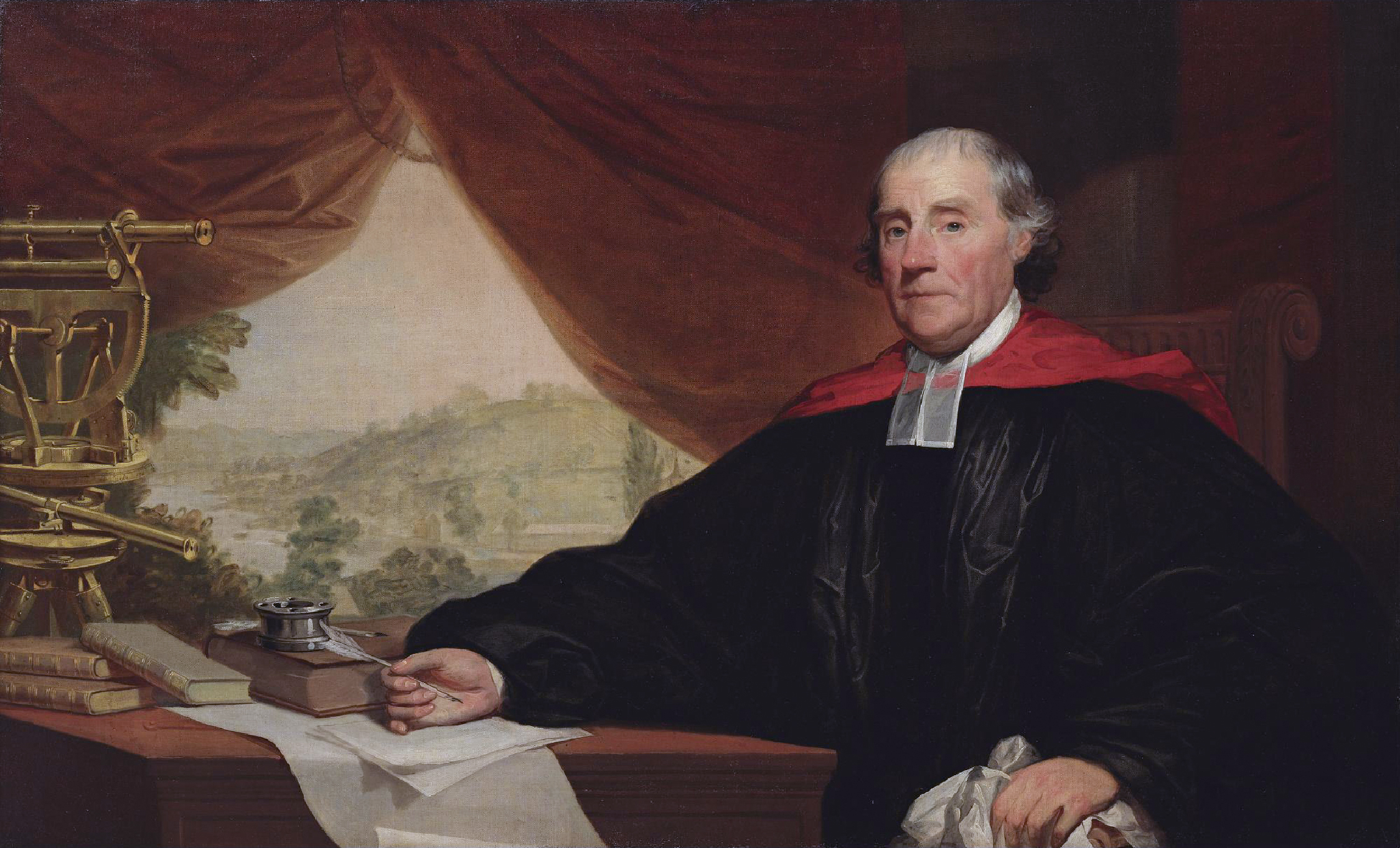
    Dr. William Smith
    William Smith. By: Gilbert Stuart. 1801-02.

    In Pennsylvania, extraordinary events were transpiring that would shape how people expressed their will. William Smith (“Cato”) and a group of individuals, led by James Cannon (“Cassandra”) in 1776, debated the issue of how institutions should reflect the people’s will, given the Radical Political Experiment unfolding in Pennsylvania.

    (more…)

  • A Check on Dangerous Usurpations

    1545_1115
    Samuel Chase. By: John Beale Bordley.

    While an upper house of state legislatures was desirable to some, as explained in The Birth of the Senate, it also had its detractors. Those detractors argued that it was a mere redundancy, wholly irrelevant to the founding of a stable government. In taking that position, the detractors ignored many of the benefits of having a second house in the legislature.

    (more…)

  • The Emergence of American Principles and Tempers

    thomas_paine_cc_img
    Thomas Paine. By: Laurent Dabos.

    As the American Revolution approached “most Americans had become convinced that they were ‘aptly circumstanced to form the best republicks, upon the best terms that ever came to the lot of any people before us.’” Gordon Wood, The Creation of the American Republic: 1776-1787, 98 quoting Phila. Pa. Packet, Feb. 12, 1776; Purdie’s Wmsbg. Va. Gazette, May 17, 1776.

    (more…)

  • Building the Momentum of the Revolution

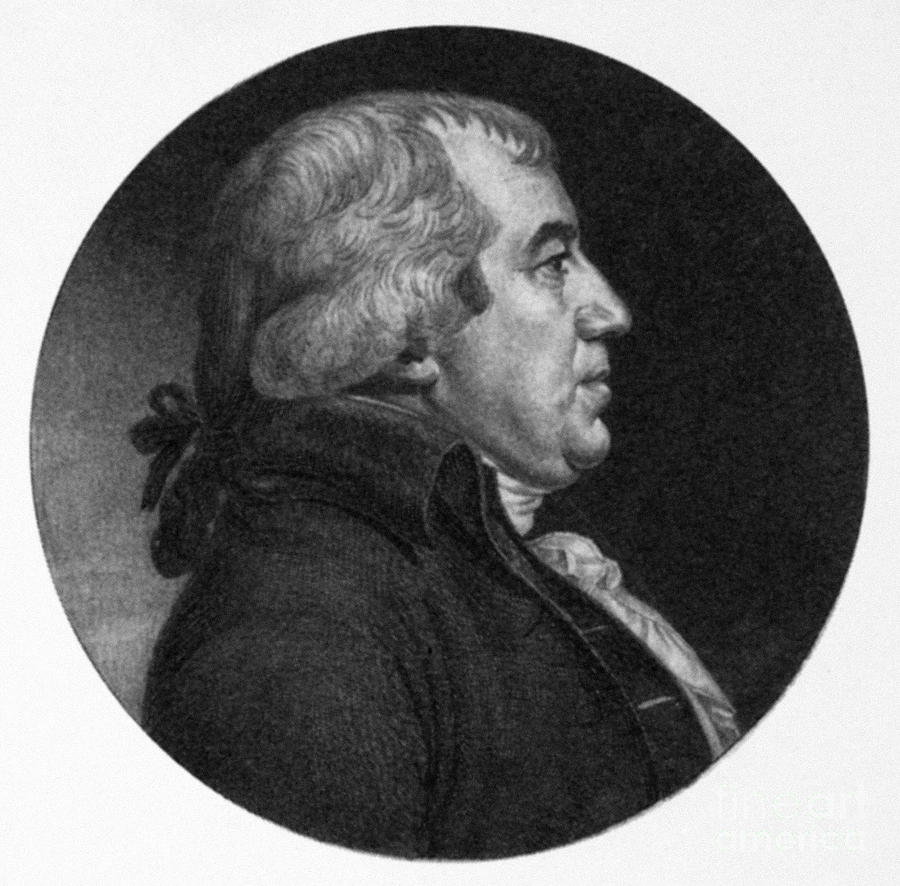
    james-iredell-1751-1799-granger
    James Iredell. By: Charles Balthazar Julien Fevret de Saint-Memin.

    For a revolution, and particularly a bloodless revolution, to occur, the momentum must build so that the population’s outrage culminates in a change of power and a change of government. How the people sparking the flame that leads to the roaring fire of revolution is a subject worth studying, as revolutions are an inevitable fact of life in the world.

    (more…)