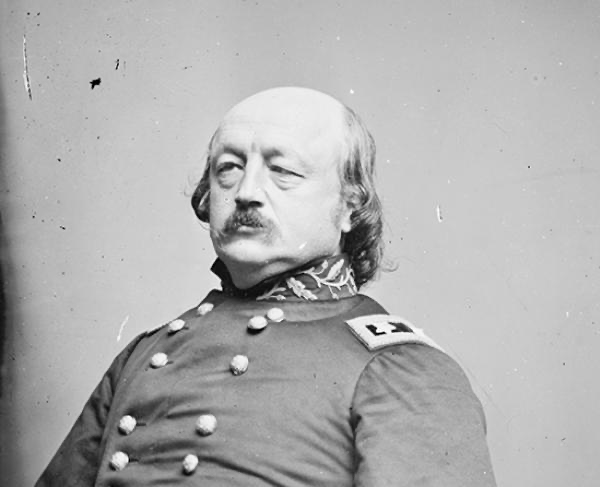
One night in late May 1861, “three negroes”—who said they were field hands, slaves—delivered themselves to the picket line at Fort Monroe in Virginia. Fort Monroe, sat on the peninsula between the York River and James River, had at its helm Brigadier General Benjamin F. Butler. The fugitive slaves had come to the fort to not only escape but to join the Union effort—to offer their skills and services to Butler and his soldiers. With no military policy in place for what to do with such fugitive slaves, it was a situation that raised difficult questions for Butler and the Union—of if, and how, to receive them—and the Confederacy—of how to stop their property and manpower from joining the enemy.
(more…)Tag: Winfield Scott
-
The Civil War: Memorandum Regarding Abraham Lincoln
December 22, 1860
Two days prior, South Carolina had decided to secede from the Union with a 169-0 vote. The day after that vote, the New York Times reported that President James Buchanan had ordered Major Robert Anderson to surrender Fort Moultrie in Charleston harbor, if attacked. The report was not entirely correct, however: Buchanan’s Secretary of War, John Floyd, had instructed Anderson to “exercise a sound military discretion” if attacked and to avoid “a vain and useless sacrifice” of life “upon a mere point of honor.”
(more…) -

The Legend of Winfield Scott Hancock
War heroes earn respect through their service. The Civil War brought out more heroes than perhaps any other war in American history. They were men who served their country at its inflection point, and they could be assured that their time on the battlefield could translate to time in public office. General Winfield Scott Hancock was but one example. He was “a patriotic hero, a stainless gentleman, and an honest man.”[i] He became one of the greatest Generals in the war: one that the soldiers, officers, and citizens were glad to have. He got out from under a famous name and created his own legacy, becoming a regular name in the wartime newspapers. But there was still a question of whether his post-war career would be as glamorous as his time during the war. Although he had a reputation for “honest heroism and personal character,” he was a Democrat; and at a time when Democrats simply could not expect to win the Presidency.[ii]
(more…) -

The Rise of James Garfield
It was a time of oratory and a time when Ohioans became President. James Garfield was a product of the time. He was born into “a poor family” and “an intellectual in love with books.”[i] He attended the Western Reserve Eclectic Institute as a student and janitor, and by the following year, he became an assistant professor.[ii] Garfield was a man who treasured intellect. When William Dean Howells came to Garfield’s home in Hiram, Ohio in 1870, he sat on the porch and told a story about New England’s poets; Garfield “stopped him, ran out into his yard, and hallooed the neighbors sitting on their porches: ‘He’s telling about Holmes, and Longfellow, and Lowell, and Whittier.’”[iii] At a time when the Midwest fostered “a strong tradition of vernacular intellectualism” that manifested itself in “crowds for the touring lectures, the lyceums, and later the Chautauquas,” the neighbors gathered and listened “to Howells while the whippoorwills flew and sang in the evening air.”[iv]
(more…) -
Grant’s Taking of Fort Henry
In early 1862, heartened by his troops’ performance at the Battle of Belmont, Brigadier General Ulysses S. Grant had determined that he was capable of making inroads into the Confederacy. Securing the network of rivers feeding into the Mississippi River as well as the Mississippi itself would hinder the Confederacy’s mobility and economy, and accomplishing this objective would bring him into two states that did not officially join the Confederacy but parts of which were Confederate-controlled: Kentucky and Tennessee. Bordering those states, on the banks of the Tennessee River, Grant saw a Confederate fort ripe for the plucking: Fort Henry. (more…)
-

The Anaconda Plan
Although George McClellan succeeded Winfield Scott as general in chief of the Union army in late 1861, Scott had already set a plan in motion that would, in one form or another, last the duration of the war. It was a plan that would be a factor in constricting the Confederate economy, choking the Confederacy into a defensive posture from which it would be impossible to escape. (more…)
-

The Battle of Ball’s Bluff
By the end of 1861, the Union changed its commander but also suffered its third major defeat; this one northwest of Washington at Ball’s Bluff on the banks of the Potomac River. (more…)
-

The Outbreak of the Civil War
Within a matter of weeks of Abraham Lincoln’s presidency beginning, the gravest crisis of perhaps any president confronted him and the nation: civil war. (more…)
-
The North’s Attempt at Salvation

Aerial Perspective of Washington DC in 1861. The Deep South’s animating of a Second American Revolution, by seceding from the Union and laying the foundation for an operational Confederate government, forced the North to either suppress the South’s uprising or craft a resolution. The likelihood of war would deter any widespread northern suppression, leaving the question: What compromise could the North propose that appeased the South and put both sections of the country on a path of coexistence? While variations of this question had been posed in the years leading up to 1860, at no prior point were states seceding from the Union en masse to form a rival government. (more…)
-
The Election of 1860

The United States Capitol in 1860. Courtesy: Library of Congress Every presidential election is consequential, but the Election of 1860 would play a significant role in whether the United States would remain one nation. The division of the North and South on the issue of slavery threatened to cause a secession of the South. The result of the election would determine whether that threat would materialize and cause a Second American Revolution. (more…)
 Last Best Hope of Earth