In early 1862, heartened by his troops’ performance at the Battle of Belmont, Brigadier General Ulysses S. Grant had determined that he was capable of making inroads into the Confederacy. Securing the network of rivers feeding into the Mississippi River as well as the Mississippi itself would hinder the Confederacy’s mobility and economy, and accomplishing this objective would bring him into two states that did not officially join the Confederacy but parts of which were Confederate-controlled: Kentucky and Tennessee. Bordering those states, on the banks of the Tennessee River, Grant saw a Confederate fort ripe for the plucking: Fort Henry. (more…)
Tag: Zachary Taylor
-
The Election of 1860
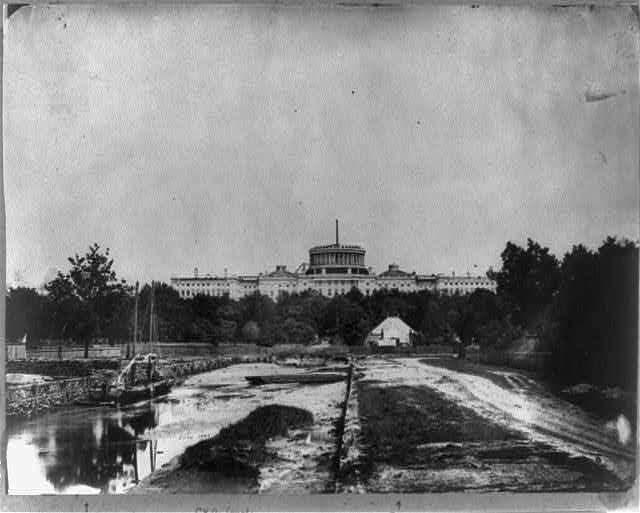
The United States Capitol in 1860. Courtesy: Library of Congress Every presidential election is consequential, but the Election of 1860 would play a significant role in whether the United States would remain one nation. The division of the North and South on the issue of slavery threatened to cause a secession of the South. The result of the election would determine whether that threat would materialize and cause a Second American Revolution. (more…)
-
The Election of 1852
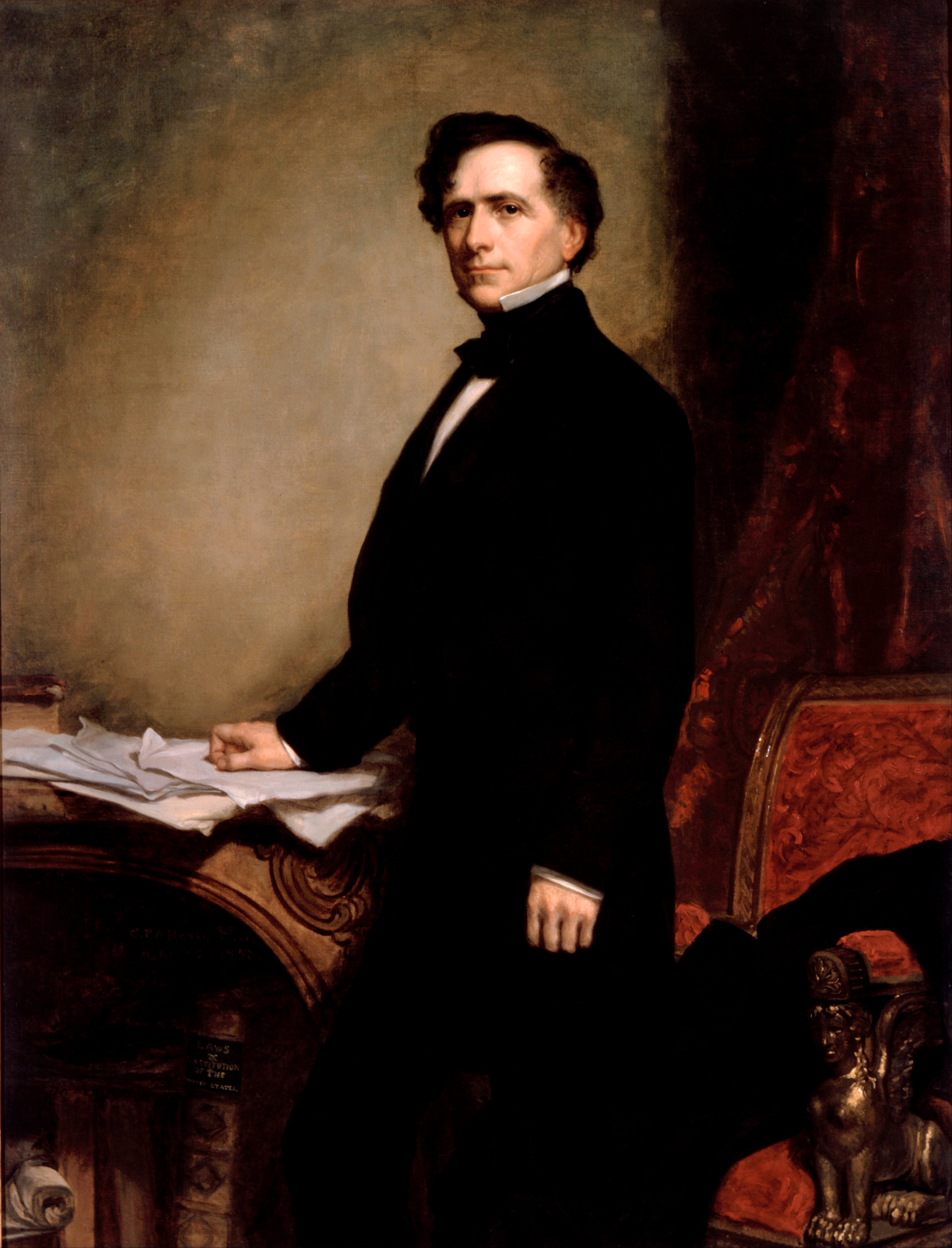
President Franklin Pierce. By: George P.A. Healy. With the first term of Millard Fillmore’s presidency winding down in 1852, the Democrats felt a sense of momentum that they could reclaim the White House. In the midterm elections of 1850, the Democrats secured 140 of the 233 seats in the House of Representatives, eclipsing the Whig Party. See David Potter, The Impending Crisis: America Before the Civil War, 1848-1861, 141.
-
The Compromise of 1850
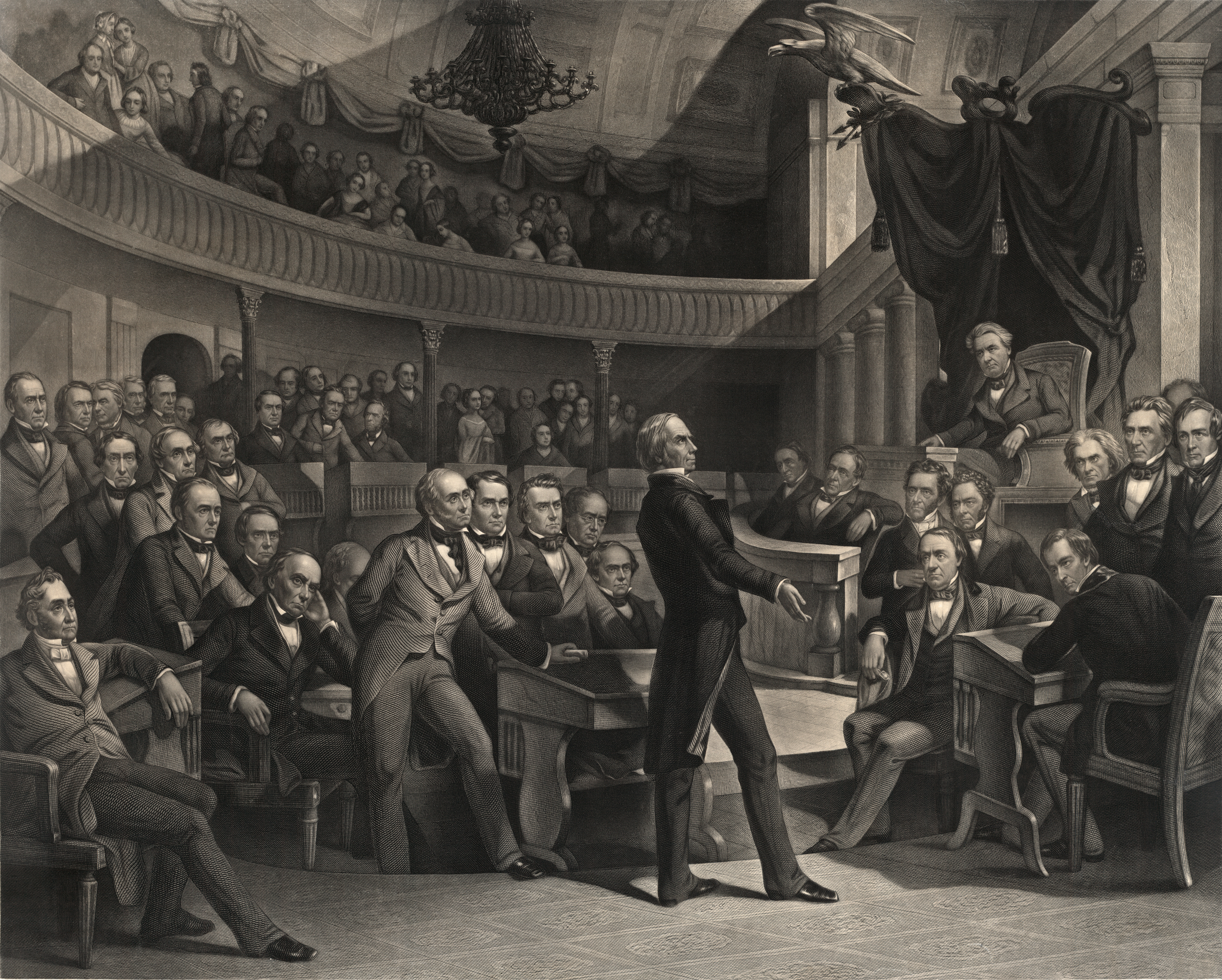
“United States Senate, A.D. 1850.” By: Peter F. Rothermel. Upon President Zachary Taylor taking office, he sent a message to Congress deploring the sectionalism that was pervading the country. See David Potter, The Impending Crisis: America Before the Civil War, 1848-1861, 91. He looked to George Washington’s warnings against “characterizing parties by geographical discriminations,” which appeared by 1849 to be a prescient warning. Id. citing James D. Richardson, ed., A Compilation of the Messages and Papers of the Presidents (11 vols.; New York, 1907), V, 9-24. President Taylor offered hope for northerners and those Americans who wanted to preserve the Union with his vow: “Whatever dangers may threaten it [the Union] I shall stand by it and maintain it in its integrity.” David Potter, The Impending Crisis: America Before the Civil War, 1848-1861, 91 citing James D. Richardson, ed., A Compilation of the Messages and Papers of the Presidents (11 vols.; New York, 1907), V, 9-24. (more…)
-
A Deadlocked and Destructive Congress
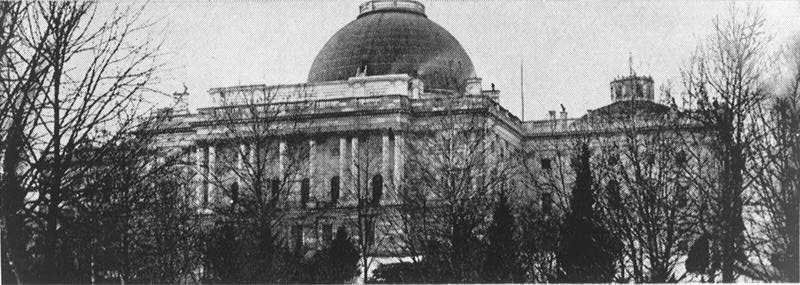
The United States Capitol in 1848. Unknown Photographer, credit Library of Congress. During President James Polk’s administration, Congress grappled with resolving sectional tension arising out of whether slavery would be extended to newly acquired land from Mexico as well as the Oregon territory. Congress did not resolve that sectional tension but exacerbated it in what may have been one of the most deadlocked and destructive Congresses in American history. (more…)
-
Election of 1848: Whig Victory
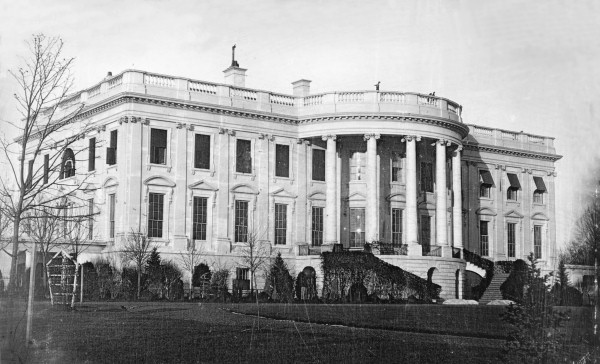
The White House in 1848. Credit: Library of Congress. On November 7, 1848, Americans went to the polls to choose between Martin Van Buren, Zachary Taylor, and Lewis Cass.
-
Election of 1848: The Candidates
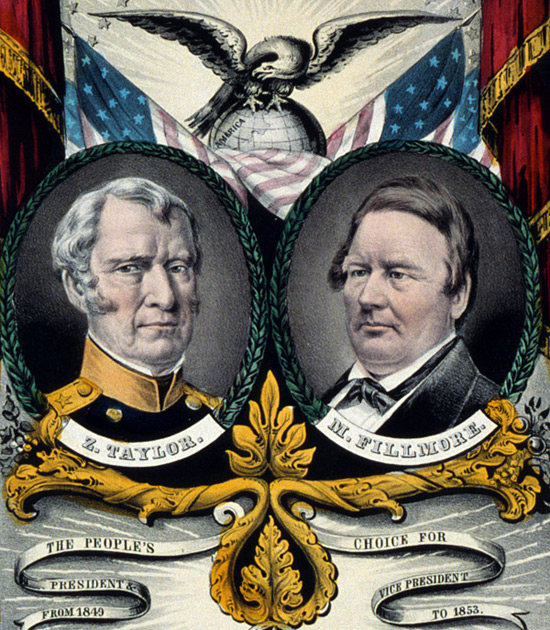
The Whig Ticket for President, Zachary Taylor, and Vice President, Millard Fillmore. The Election of 1848 was bound to be unique, as President James Polk had made clear that he would serve only one term as president. With that, the Whigs and the Democrats had to put forth candidates that could meet the parties’ respective goals of reversing President Polk’s policies (the Whigs) and expanding on President Polk’s policies (the Democrats).
-
Lincoln’s Spot Resolutions

Political Cartoon Depicting Abraham Lincoln. At the end of the Mexican-American War, President James Polk proposed taking as much as Mexico’s land as possible. However, he proposed this plan to a majority Whig House of Representatives.
-
The Reception of the Mexican-American War

Garrett Davis. By: Mathew Brady. Following President James Polk’s announcement of war with Mexico, and Congress’ declaration of war, those in the Whig Party and those around the country had significantly different views of the war.
-
The Start of the Mexican-American War

War News From Mexico. By: Richard Caton Woodville. On the evening of April 24, 1846, Captain Seth Thornton and 68 American dragoons “went to confirm intelligence that a Mexican military force had crossed the Rio Grande” just miles away from where Brigadier General Zachary Taylor was camped. Daniel Walker Howe, What Hath God Wrought: Transformation of America, 1815-1848, 731.
 Last Best Hope of Earth