-
Constitution Sunday: “Publius,” The Federalist LI [James Madison]
Independent Journal (New York) February 6, 1788 “But what is government itself but the greatest of all reflections of human nature?” This rhetorical question, which James Madison posed, is one that governments throughout the world—throughout history—have answered by showing that even the best-intentioned government fails where it does not take human nature into account.
-
The Civil War: Jefferson Davis: Message to the Confederate Congress
April 29, 1861 With only a few weeks at the helm of the Confederate government, president Jefferson Davis and the Confederate Congress had cause for concern—but also cause for inspiration. The whole of the South (and the whole of the North) was animated: men and women were mobilizing; making their preparations to contribute to the…
-
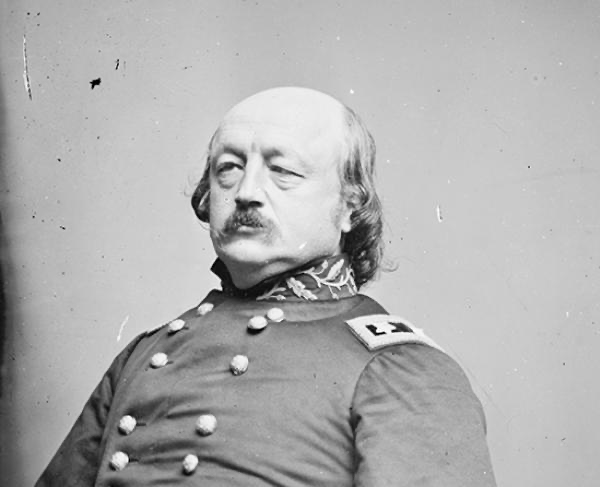
The Civil War: Benjamin F. Butler to Winfield Scott
One night in late May 1861, “three negroes”—who said they were field hands, slaves—delivered themselves to the picket line at Fort Monroe in Virginia. Fort Monroe, sat on the peninsula between the York River and James River, had at its helm Brigadier General Benjamin F. Butler. The fugitive slaves had come to the fort to…


-
The Civil War: William Howard Russell: from My Diary North and South
April 17, 1861 In the weeks and months leading up to the fall of Fort Sumter, the South had been brimming with excitement for the future. Charleston, South Carolina—with newly taken Fort Sumter in its harbor—was leading the South into that future both through its rhetoric and through its actions. Enthusiasm was abound for what…
-
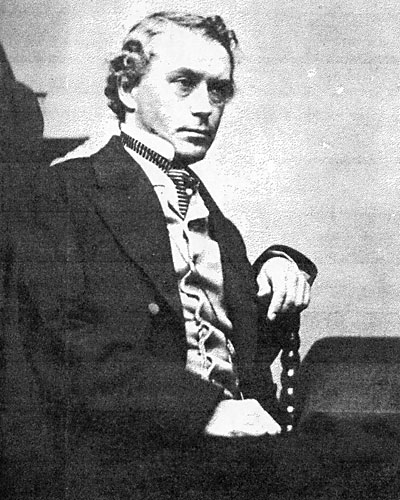
The Civil War: George Templeton Strong: Diary, April 13-16, 1861
Throughout the months leading up to the firing on Fort Sumter, there was widespread wonder about how the country would react to such a provocation; it was bound to be a cleave dividing the country and also its communities. Generations later—with the accordion of events neatly folded and the result of the war known—it would…
-
Constitution Sunday: “A Landholder” [Oliver Ellsworth] III
“A Landholder” [Oliver Ellsworth] III Connecticut Courant (Hartford), November 19, 1787 Following are excerpts from Oliver Ellsworth’s article in the Connecticut Courant: “A government capable of controling the whole, and bringing its force to a point is one of the prerequisites for national liberty.
-
Rehearsal for the Civil War
Some historians have classified the Mexican-American War as a rehearsal for the Civil War, which would erupt approximately 15 years later.
-
Dissent Between Two Presidents
Leading up to President James Polk’s May 13, 1846 announcement of the Mexican-American War, tension arose between President Polk and the Secretary of State, James Buchanan.
-
The Reception of the Mexican-American War
Following President James Polk’s announcement of war with Mexico, and Congress’ declaration of war, those in the Whig Party and those around the country had significantly different views of the war.
-
The Start of the Mexican-American War
On the evening of April 24, 1846, Captain Seth Thornton and 68 American dragoons “went to confirm intelligence that a Mexican military force had crossed the Rio Grande” just miles away from where Brigadier General Zachary Taylor was camped. Daniel Walker Howe, What Hath God Wrought: Transformation of America, 1815-1848, 731.

