-
Constitution Sunday: “Publius,” The Federalist LI [James Madison]
Independent Journal (New York) February 6, 1788 “But what is government itself but the greatest of all reflections of human nature?” This rhetorical question, which James Madison posed, is one that governments throughout the world—throughout history—have answered by showing that even the best-intentioned government fails where it does not take human nature into account.
-
The Civil War: Jefferson Davis: Message to the Confederate Congress
April 29, 1861 With only a few weeks at the helm of the Confederate government, president Jefferson Davis and the Confederate Congress had cause for concern—but also cause for inspiration. The whole of the South (and the whole of the North) was animated: men and women were mobilizing; making their preparations to contribute to the…
-
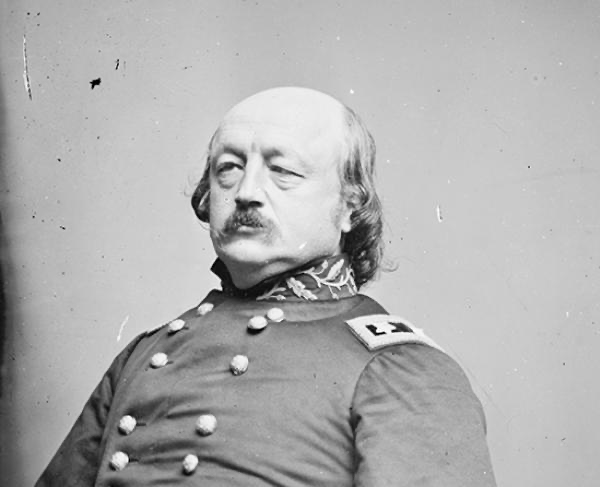
The Civil War: Benjamin F. Butler to Winfield Scott
One night in late May 1861, “three negroes”—who said they were field hands, slaves—delivered themselves to the picket line at Fort Monroe in Virginia. Fort Monroe, sat on the peninsula between the York River and James River, had at its helm Brigadier General Benjamin F. Butler. The fugitive slaves had come to the fort to…


-
The Civil War: William Howard Russell: from My Diary North and South
April 17, 1861 In the weeks and months leading up to the fall of Fort Sumter, the South had been brimming with excitement for the future. Charleston, South Carolina—with newly taken Fort Sumter in its harbor—was leading the South into that future both through its rhetoric and through its actions. Enthusiasm was abound for what…
-
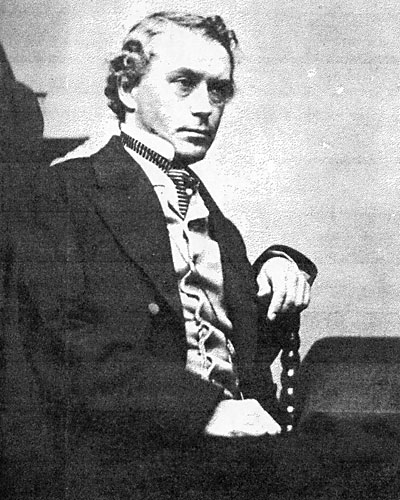
The Civil War: George Templeton Strong: Diary, April 13-16, 1861
Throughout the months leading up to the firing on Fort Sumter, there was widespread wonder about how the country would react to such a provocation; it was bound to be a cleave dividing the country and also its communities. Generations later—with the accordion of events neatly folded and the result of the war known—it would…
-
A Supreme Sovereign Power
Despite the fact that the Articles of Confederation loosely held the states together, there was still a remarkable union achieved. There were privileges and immunities granted, “reciprocity of extradition and judicial proceedings among the states,” no “travel and discriminatory trade restrictions between states, and the substantial grant of powers to the Congress in Article 9…
-
Coalescing All the States
Americans had a keen understanding of the idea, popularized by Montesquieu, that “only a small homogeneous society whose interests were essentially similar could properly sustain a republican government.” Gordon Wood, The Creation of the American Republic: 1776-1787, 356. This idea created a fundamental problem for America: it was not a small homogeneous society, and it was rapidly…
-
The Greatest Question Ever Yet Agitated
In the early 1770s, the colonists and Britain began to debate “the greatest Question ever yet agitated.” John Adams, entry, Mar. 4, 1773, Butterfield, ed., Diary of Adams, II, 77. That question was focused on sovereignty and John Adams expressed the view that it was necessary and “should some where be lodged a supreme power over…
-
Virtue as a Principle and Foundation
At the time of the Revolution, republicanism was permeating political discourse and political theory. John Adams asked in 1776 that “[i]f there is a form of government, then, whose principle and foundation is virtue, will not every sober man acknowledge it better calculated to promote the general happiness than any other form?” He continued by…
-
Preserving the Health of the Constitution
Corruption was rife in England in the decades leading up to the American Revolution, and Americans were keenly aware of that fact. For many individuals, the English Constitution was viewed as a hollow document, as the crown had taken the power away from all other sources. See Gordon Wood, The Creation of the American Republic: 1776-1787, 34-35. Americans…
-
A Tradition of Extra-Legislative Action
As touched on in Unalterable Constitutions, Americans began resorting to conventions for amending their state constitutions, and this was only one example of Americans looking to advance their causes outside of the bounds of government. See Gordon Wood, The Creation of the American Republic: 1776-1787, 310. This was not a novel approach, however, and it was not the…

