-
Constitution Sunday: “Publius,” The Federalist LI [James Madison]
Independent Journal (New York) February 6, 1788 “But what is government itself but the greatest of all reflections of human nature?” This rhetorical question, which James Madison posed, is one that governments throughout the world—throughout history—have answered by showing that even the best-intentioned government fails where it does not take human nature into account.
-
The Civil War: Jefferson Davis: Message to the Confederate Congress
April 29, 1861 With only a few weeks at the helm of the Confederate government, president Jefferson Davis and the Confederate Congress had cause for concern—but also cause for inspiration. The whole of the South (and the whole of the North) was animated: men and women were mobilizing; making their preparations to contribute to the…
-
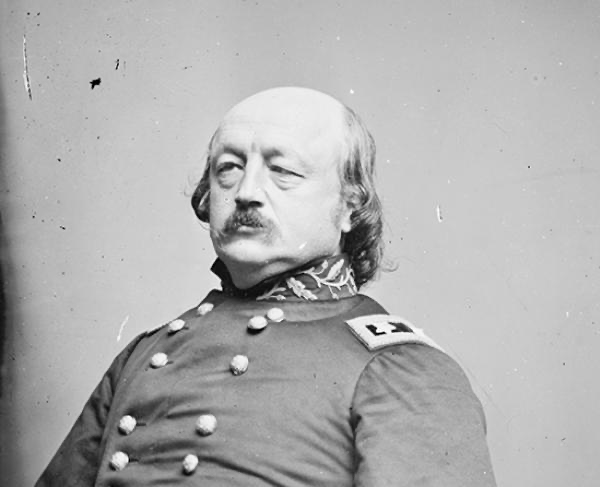
The Civil War: Benjamin F. Butler to Winfield Scott
One night in late May 1861, “three negroes”—who said they were field hands, slaves—delivered themselves to the picket line at Fort Monroe in Virginia. Fort Monroe, sat on the peninsula between the York River and James River, had at its helm Brigadier General Benjamin F. Butler. The fugitive slaves had come to the fort to…


-
The Civil War: William Howard Russell: from My Diary North and South
April 17, 1861 In the weeks and months leading up to the fall of Fort Sumter, the South had been brimming with excitement for the future. Charleston, South Carolina—with newly taken Fort Sumter in its harbor—was leading the South into that future both through its rhetoric and through its actions. Enthusiasm was abound for what…
-
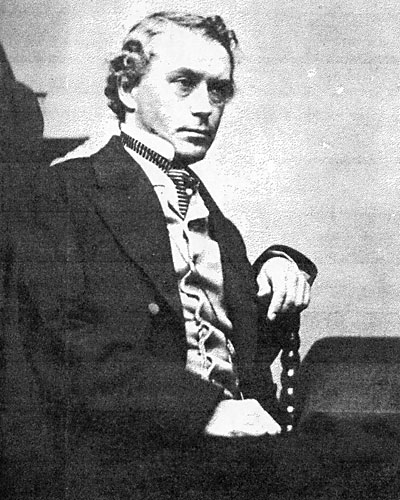
The Civil War: George Templeton Strong: Diary, April 13-16, 1861
Throughout the months leading up to the firing on Fort Sumter, there was widespread wonder about how the country would react to such a provocation; it was bound to be a cleave dividing the country and also its communities. Generations later—with the accordion of events neatly folded and the result of the war known—it would…
-
Hamilton’s Ideal Politician
It is no secret that Aaron Burr and Alexander Hamilton disliked each other. That rivalry culminated in the infamous duel in 1804, leaving Hamilton to die just days later. However, prior to that, Hamilton’s dislike of Burr led Hamilton to pontificate on which individuals would make the best politicians in America. See Gordon Wood, Revolutionary Characters: What Made…
-
The Nobility of the Founding Fathers
Much of the progress that America experienced during the Revolution happened as a result of the Founding Fathers’ contradictory actions. The Founding Fathers, predominantly privileged, in some ways paid the price of the Revolution in the most noble way.
-
Setting an Unshakeable Foundation
In the first years of the American Republic, there were drastic changes in the law. The importance and organization of laws were coming into place. At the top were constitutional rights, which, as James Cannon explained “must be protected and defended ‘as the apple of your eye’ from danger ‘or they will be lost forever.’”…
-
Unalterable Constitutions
As the constitutions of the states were implemented and executed during the Revolutionary years, the population began holding conventions for amendment of those constitutions, believing that “Legislatures were incompetent” to do so. Gordon Wood, The Creation of the American Republic: 1776-1787, 306 quoting Farrand, ed., Records of the Federal Convention, II, 91-93. In fact, James Madison believed that “it…
-
The First Doomsayers
Many expected that the American Revolution would lead to some “bloody noses” as “almost all revolutions are founded in blood.” Samuel A. Otis to Theodore Sedgwick, July 30, 1782, Theodore Sedgwick Papers, A. 55, Massachusetts Historical Society, Boston. The British had made predictions that separating from Britain would lead to quarrels and the Americans splitting…
-
The Constitution’s Superiority
By the time of the Revolution, the states had begun to take steps toward sustaining themselves after independence from Britain was effectuated. One of those steps was the drafting of constitutions. Constitutions, while understood generally in Britain and elsewhere, had a unique meaning for Americans.

