-
Constitution Sunday: “Publius,” The Federalist LI [James Madison]
Independent Journal (New York) February 6, 1788 “But what is government itself but the greatest of all reflections of human nature?” This rhetorical question, which James Madison posed, is one that governments throughout the world—throughout history—have answered by showing that even the best-intentioned government fails where it does not take human nature into account.
-
The Civil War: Jefferson Davis: Message to the Confederate Congress
April 29, 1861 With only a few weeks at the helm of the Confederate government, president Jefferson Davis and the Confederate Congress had cause for concern—but also cause for inspiration. The whole of the South (and the whole of the North) was animated: men and women were mobilizing; making their preparations to contribute to the…
-
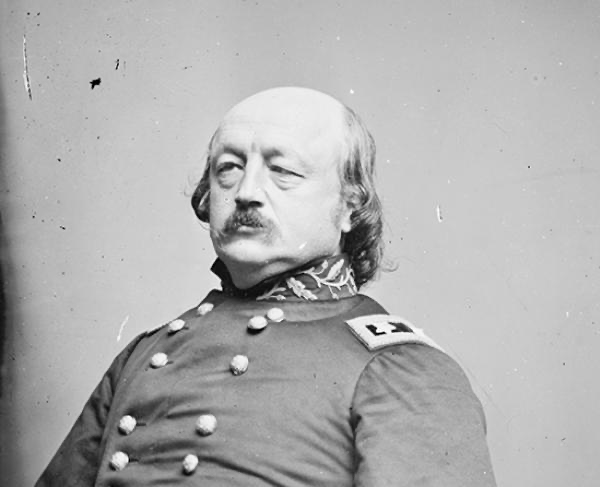
The Civil War: Benjamin F. Butler to Winfield Scott
One night in late May 1861, “three negroes”—who said they were field hands, slaves—delivered themselves to the picket line at Fort Monroe in Virginia. Fort Monroe, sat on the peninsula between the York River and James River, had at its helm Brigadier General Benjamin F. Butler. The fugitive slaves had come to the fort to…


-
The Civil War: William Howard Russell: from My Diary North and South
April 17, 1861 In the weeks and months leading up to the fall of Fort Sumter, the South had been brimming with excitement for the future. Charleston, South Carolina—with newly taken Fort Sumter in its harbor—was leading the South into that future both through its rhetoric and through its actions. Enthusiasm was abound for what…
-
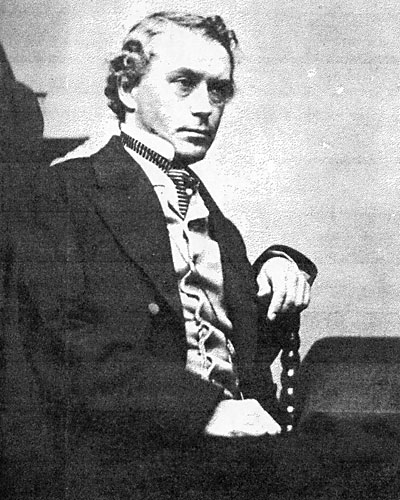
The Civil War: George Templeton Strong: Diary, April 13-16, 1861
Throughout the months leading up to the firing on Fort Sumter, there was widespread wonder about how the country would react to such a provocation; it was bound to be a cleave dividing the country and also its communities. Generations later—with the accordion of events neatly folded and the result of the war known—it would…
-
The Roman Principle
At the birth of the Republic, the contrast with the European monarchies became clear. The ideals of the Republic represented a fundamental shift in the role of government in individuals’ lives.
-
Laboratories of Democracy
In the months leading up to the Declaration of Independence, the states began the process of adopting their own constitutions. These constitutions, being drafted in 1776, approximately 13 years before the United States Constitution would be ratified, had to confront many of the same issues as the United States Constitution, with various approaches being taken.
-
The Embodiment of the American Dream
There are myriad examples of individuals coming to the United States to enjoy extraordinary success. Some have come to call that the “American Dream.” Perhaps nobody better embodies the American Dream than Thomas Paine, the famous pamphleteer of the late 1700s.
-
The Real Revolution
The American Revolution is a topic that has been dissected, analyzed, and retold by every generation of Americans. The political theory of the American Revolution is conventionally believed to be centered on the revolutionaries’ genius.
-
The Perfect Commonwealth
The success or failure of countries, and politicians for that matter, are an often studied subject. Studies have been ongoing for centuries. James Burgh, an English Whig, wrote: “Almost all political establishments have been the creates of chance rather than of wisdom. Therefore it is impossible to say what would be the effect of a…
-
Divided Sovereignty
John Adams had strong opinions about federalism. He believed that the government should be structured similarly to the British Empire, given the British Empire’s extraordinary success. At the time of the signing of the Constitution, Adams firmly believed that the Constitution had secured a national government, as opposed to a government dividing its sovereignty into…

