-
Constitution Sunday: “Publius,” The Federalist LI [James Madison]
Independent Journal (New York) February 6, 1788 “But what is government itself but the greatest of all reflections of human nature?” This rhetorical question, which James Madison posed, is one that governments throughout the world—throughout history—have answered by showing that even the best-intentioned government fails where it does not take human nature into account.
-
The Civil War: Jefferson Davis: Message to the Confederate Congress
April 29, 1861 With only a few weeks at the helm of the Confederate government, president Jefferson Davis and the Confederate Congress had cause for concern—but also cause for inspiration. The whole of the South (and the whole of the North) was animated: men and women were mobilizing; making their preparations to contribute to the…
-
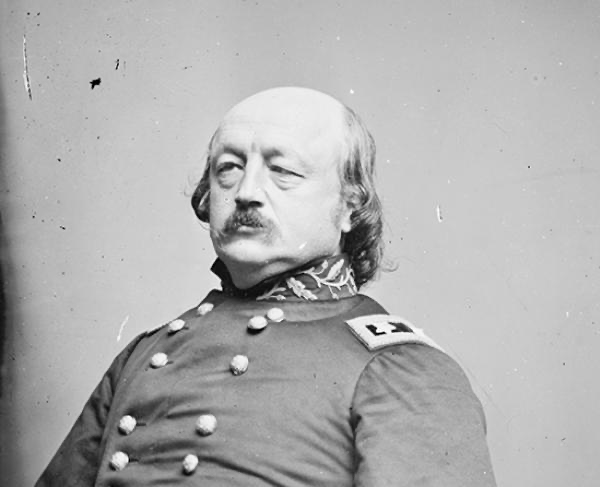
The Civil War: Benjamin F. Butler to Winfield Scott
One night in late May 1861, “three negroes”—who said they were field hands, slaves—delivered themselves to the picket line at Fort Monroe in Virginia. Fort Monroe, sat on the peninsula between the York River and James River, had at its helm Brigadier General Benjamin F. Butler. The fugitive slaves had come to the fort to…


-
The Civil War: William Howard Russell: from My Diary North and South
April 17, 1861 In the weeks and months leading up to the fall of Fort Sumter, the South had been brimming with excitement for the future. Charleston, South Carolina—with newly taken Fort Sumter in its harbor—was leading the South into that future both through its rhetoric and through its actions. Enthusiasm was abound for what…
-
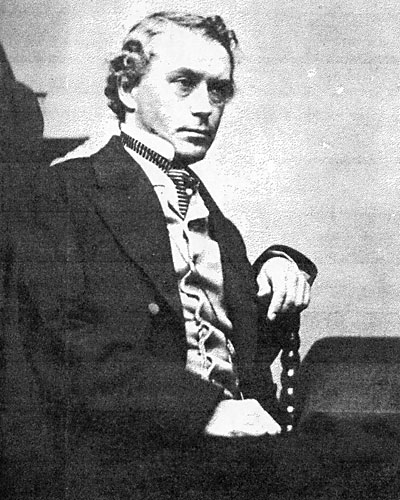
The Civil War: George Templeton Strong: Diary, April 13-16, 1861
Throughout the months leading up to the firing on Fort Sumter, there was widespread wonder about how the country would react to such a provocation; it was bound to be a cleave dividing the country and also its communities. Generations later—with the accordion of events neatly folded and the result of the war known—it would…
-
The Birth of the House
For many of the Founding Fathers, the biggest threat to the stability and success of the United States was tyranny. Tyranny was a force that could bring down the most free and just societies. Underlying much of the creation of the institutions that now define the American government, the judiciary, the legislature, and the executive,…
-
Adams’ Doubts
John Adams was amongst the most hopeful about America’s prospects for the future. At the time of the Declaration of Independence and the years of the American Revolution, he believed America could avoid the pitfalls of the European nations. But just ten years later, Adams was of a different mind. In 1787, he wrote his Defence of…
-
Alexander Hamilton’s Plan for Success
In 1790 and 1791, Alexander Hamilton, as Secretary of the Treasury, proposed the creation of a financial system in four reports, which covered the topics of a national bank, a mint, and manufactures. Gordon Wood, Revolutionary Characters: What Made the Founders Different, 133.
-
A Messianic Sense of Obligation
The effects of the American Revolution throughout the world were not immediately clear, but Thomas Jefferson opined that it would be “a movement on behalf of the rights of man.” Gordon Wood, Revolutionary Characters: What Made the Founders Different, 110.
-
The American Cincinnatus
George Washington, to some, is revered as a brilliant general. To others, he is to be remembered because in his will drafted in the summer of 1799, he freed all of his slaves and took the extra step of ensuring that the slaves would be taught to read and write and be prepared for “some…
-
The Legacy of the Founding Fathers
The Founding Fathers have a complicated legacy, and that legacy is constantly undergoing change. While the reverence of the Founding Fathers fluctuates generation-by-generation, certain questions emerge about the Founding Fathers’ effectiveness in setting the foundation for the United States. Gordon Wood, in Revolutionary Characters: What Made the Founders Different, presented the Founding Fathers’ legacy as: “If…

