-
Constitution Sunday: “Publius,” The Federalist LI [James Madison]
Independent Journal (New York) February 6, 1788 “But what is government itself but the greatest of all reflections of human nature?” This rhetorical question, which James Madison posed, is one that governments throughout the world—throughout history—have answered by showing that even the best-intentioned government fails where it does not take human nature into account.
-
The Civil War: Jefferson Davis: Message to the Confederate Congress
April 29, 1861 With only a few weeks at the helm of the Confederate government, president Jefferson Davis and the Confederate Congress had cause for concern—but also cause for inspiration. The whole of the South (and the whole of the North) was animated: men and women were mobilizing; making their preparations to contribute to the…
-
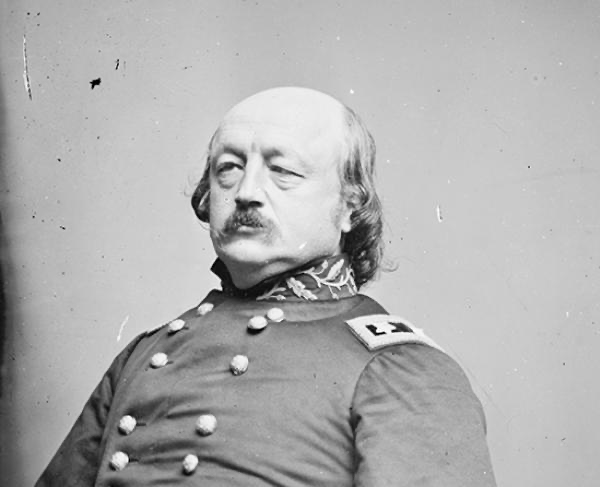
The Civil War: Benjamin F. Butler to Winfield Scott
One night in late May 1861, “three negroes”—who said they were field hands, slaves—delivered themselves to the picket line at Fort Monroe in Virginia. Fort Monroe, sat on the peninsula between the York River and James River, had at its helm Brigadier General Benjamin F. Butler. The fugitive slaves had come to the fort to…


-
The Civil War: William Howard Russell: from My Diary North and South
April 17, 1861 In the weeks and months leading up to the fall of Fort Sumter, the South had been brimming with excitement for the future. Charleston, South Carolina—with newly taken Fort Sumter in its harbor—was leading the South into that future both through its rhetoric and through its actions. Enthusiasm was abound for what…
-
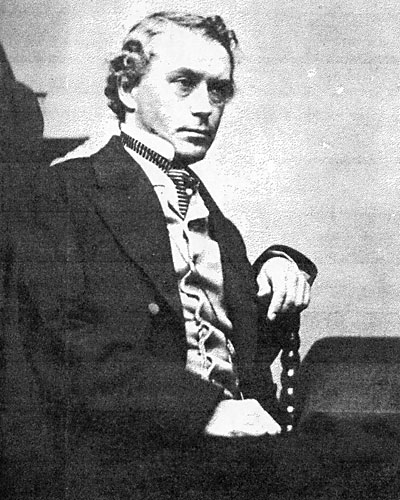
The Civil War: George Templeton Strong: Diary, April 13-16, 1861
Throughout the months leading up to the firing on Fort Sumter, there was widespread wonder about how the country would react to such a provocation; it was bound to be a cleave dividing the country and also its communities. Generations later—with the accordion of events neatly folded and the result of the war known—it would…
-
The Setting Sun of the Founding Fathers
As the 1800s progressed, the era of the Founding Fathers was coming to an end. Thomas Jefferson and John Adams would outlast most of the Founding Fathers, only to die on the same date: July 4, 1826. The Founding Fathers would leave a profoundly different country than the one they created. Common Americans had created…
-
The Happiest People Upon the Earth
At the beginning of the 1800s, the American economy was becoming an unconventionally successful economy. Domestic commerce was “incalculably more valuable” than foreign commerce and “the home market for productions of the earth and manufactures is of more importance than all foreign ones.” Gordon Wood, Empire of Liberty, 707 quoting Nathan Miller, The Enterprise of a Free People: Aspects…
-
The Republicanization of America
The United States, as the 18th Century transitioned into the 19th Century, introduced to the world a host of ideas and beliefs that strayed from the Enlightenment period. The North American Review, in 1816, concluded that America was unlike any other country “in the points of greatness, complexity, and the number of its relations.” Gordon…
-
The Most Sublime Gift of Heaven
In the early 1800s, America underwent a campaign of infrastructure building. The building of new roads, bridges, and canals were done in a spirit of “national grandeur and individual convenience.” Gordon Wood, Empire of Liberty, 730 quoting Charles G. Haines, Considerations on the Great Western Canal (Brooklyn, 1818), 11. In 1806, Samuel Blodgett, an economist and architect, concluded…
-
An Outraged America
In March 1816, Congress passed a Compensation Act, “which raised the pay of congressmen from six dollars per diem to a salary of fifteen hundred dollars a year.” Gordon Wood, Empire of Liberty, 718-19. This was the first raise in the pay for congressmen since 1789. Id. at 719. Robert Wright, a Congressman in 1816, and previously…
-
The Emerging Middle Class and Entrepreneurial Spirit
Albert Gallatin knew as early as 1799 that the United States “had become commercially and socially different from the former mother country” England. Gordon Wood, Empire of Liberty, 704. At that time, Gallatin was a Congressman, but he would later serve as Secretary of the Treasury from 1801 to 1814. In realizing that America was different,…

