-
Constitution Sunday: “Publius,” The Federalist LI [James Madison]
Independent Journal (New York) February 6, 1788 “But what is government itself but the greatest of all reflections of human nature?” This rhetorical question, which James Madison posed, is one that governments throughout the world—throughout history—have answered by showing that even the best-intentioned government fails where it does not take human nature into account.
-
The Civil War: Jefferson Davis: Message to the Confederate Congress
April 29, 1861 With only a few weeks at the helm of the Confederate government, president Jefferson Davis and the Confederate Congress had cause for concern—but also cause for inspiration. The whole of the South (and the whole of the North) was animated: men and women were mobilizing; making their preparations to contribute to the…
-
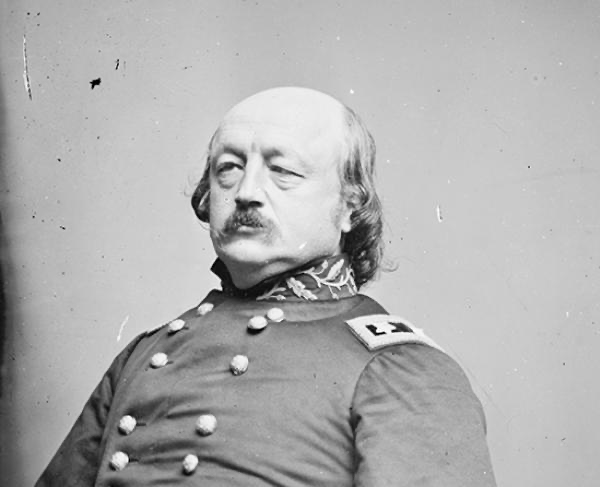
The Civil War: Benjamin F. Butler to Winfield Scott
One night in late May 1861, “three negroes”—who said they were field hands, slaves—delivered themselves to the picket line at Fort Monroe in Virginia. Fort Monroe, sat on the peninsula between the York River and James River, had at its helm Brigadier General Benjamin F. Butler. The fugitive slaves had come to the fort to…


-
The Civil War: William Howard Russell: from My Diary North and South
April 17, 1861 In the weeks and months leading up to the fall of Fort Sumter, the South had been brimming with excitement for the future. Charleston, South Carolina—with newly taken Fort Sumter in its harbor—was leading the South into that future both through its rhetoric and through its actions. Enthusiasm was abound for what…
-
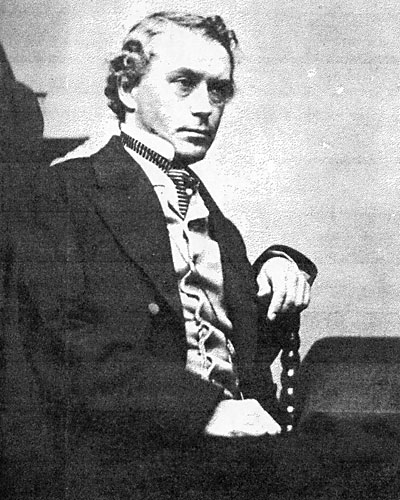
The Civil War: George Templeton Strong: Diary, April 13-16, 1861
Throughout the months leading up to the firing on Fort Sumter, there was widespread wonder about how the country would react to such a provocation; it was bound to be a cleave dividing the country and also its communities. Generations later—with the accordion of events neatly folded and the result of the war known—it would…
-
Infancy, Manhood, and Decline
The political spirit of the colonies in the 1700s, while unfamiliar in many respects, has parallels to the modern political landscape in America. The colonies political thought was closer to Niccolo Machiavelli and Montesquieu, rather than John Locke. The colonists generally “did not conceive of society in rational, mechanistic terms; rather society was organic and…
-
Franklin The Turncoat?
Benjamin Franklin, one of the most well-known and most revered Founding Fathers, had a more controversial history than most modern Americans realize. In the late 1750s and early 1760s, Franklin was a “complete Anglophile.” Gordon Wood, Revolutionary Characters: What Made the Founders Different, 79. He made “disparaging comments about the provinciality and vulgarity of America in…
-
People Versus Rulers
For many colonists and early Americans, politics was a contentious, yet simple subject. Many believed that politics “was nothing more than a perpetual battle between the passions of the rulers, whether one or a few, and the united interest of the people.” Gordon Wood, The Creation of the American Republic: 1776-1787, 18. Thomas Gordon, an Englishman and…
-
The Adulation of the Founding Fathers
Gordon Wood began his 2006 book Revolutionary Characters: What Made the Founders Different by stating that “[n]o other major nation honors its past historical characters, especially characters who existed two centuries ago, in quite the manner we Americans do.” Gordon Wood, Revolutionary Characters: What Made the Founders Different, 3. He continued, stating that Americans “want to know…
-
Empire of Reason
The American Revolution is one of the most extraordinary revolutions to have taken place in world history. Not only would it result in the birth of one of the most influential and most powerful nations ever known, but it would also be a revolution with seemingly peculiar triggers. As Gordon Wood in The Creation of the…

