-
Constitution Sunday: “Publius,” The Federalist LI [James Madison]
Independent Journal (New York) February 6, 1788 “But what is government itself but the greatest of all reflections of human nature?” This rhetorical question, which James Madison posed, is one that governments throughout the world—throughout history—have answered by showing that even the best-intentioned government fails where it does not take human nature into account.
-
The Civil War: Jefferson Davis: Message to the Confederate Congress
April 29, 1861 With only a few weeks at the helm of the Confederate government, president Jefferson Davis and the Confederate Congress had cause for concern—but also cause for inspiration. The whole of the South (and the whole of the North) was animated: men and women were mobilizing; making their preparations to contribute to the…
-
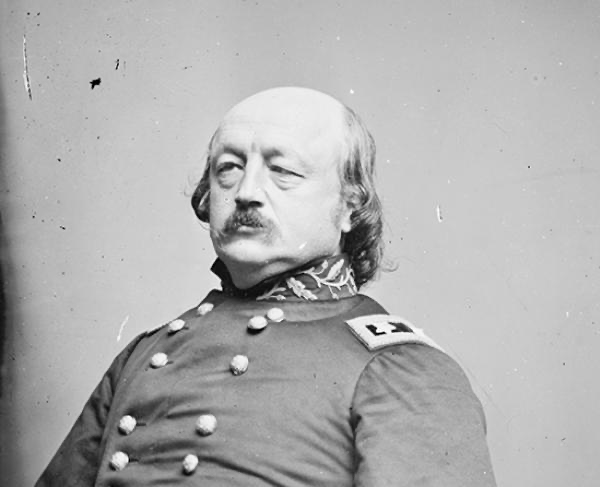
The Civil War: Benjamin F. Butler to Winfield Scott
One night in late May 1861, “three negroes”—who said they were field hands, slaves—delivered themselves to the picket line at Fort Monroe in Virginia. Fort Monroe, sat on the peninsula between the York River and James River, had at its helm Brigadier General Benjamin F. Butler. The fugitive slaves had come to the fort to…


-
The Civil War: William Howard Russell: from My Diary North and South
April 17, 1861 In the weeks and months leading up to the fall of Fort Sumter, the South had been brimming with excitement for the future. Charleston, South Carolina—with newly taken Fort Sumter in its harbor—was leading the South into that future both through its rhetoric and through its actions. Enthusiasm was abound for what…
-
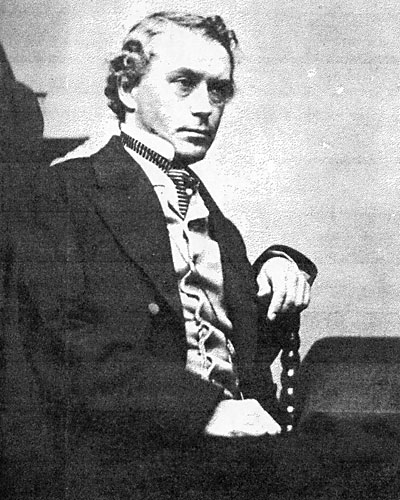
The Civil War: George Templeton Strong: Diary, April 13-16, 1861
Throughout the months leading up to the firing on Fort Sumter, there was widespread wonder about how the country would react to such a provocation; it was bound to be a cleave dividing the country and also its communities. Generations later—with the accordion of events neatly folded and the result of the war known—it would…
-
The Symbolism of the Early Republic
In the earliest years of the Republic, the Founding Fathers sought to design the symbols and designs that would characterize the United States. One of the most prominent symbols of the early Republic is the Great Seal of the United States. Benjamin Franklin, Thomas Jefferson, and John Adams all tried to design the Great Seal.…
-
An Educated Society
Charles Willson Peale was an “artist, politician, scientist, tinker, and showman,” who was one of the leaders in enhancing civic society. Namely, he created a museum, which he said was to promote “the interests of religion and morality by the arrangement and display of the works of nature and art.” Lillian B. Miller, Patrons and Patriotism:…
-
The Thirst for Knowledge
Throughout the development of early civil society in America, the familiar infrastructure to contemporary Americans rapidly developed. For example, as a result of new postal roads and turnpikes throughout the country, the postal system was able to achieve remarkable speeds for the time. For example, in 1790, “it had taken more than a month for…
-
The Justifications for Slavery
Early Americans, both pro-slavery and anti-slavery, explored the potential justifications for slavery in the United States. In 1764, James Otis of Massachusetts asked “Can any logical inference in favor of slavery be drawn from a flat nose, a long or short face?” after pondering why only blacks had been enslaved. James Otis, The Rights of the…
-
Decline and Decay
In the late 1790s, Constantin Francois Volney published Ruins; or, Meditations on the Revolution of Empires, one of the most popular publications of its day. This publication not only attacked monarchical tyranny, but it reinforced amongst Americans ideals familiar to Americans then and now: that nations are fragile and seem to inevitably decay and decline. Gordon…

