-
Constitution Sunday: “Publius,” The Federalist LI [James Madison]
Independent Journal (New York) February 6, 1788 “But what is government itself but the greatest of all reflections of human nature?” This rhetorical question, which James Madison posed, is one that governments throughout the world—throughout history—have answered by showing that even the best-intentioned government fails where it does not take human nature into account.
-
The Civil War: Jefferson Davis: Message to the Confederate Congress
April 29, 1861 With only a few weeks at the helm of the Confederate government, president Jefferson Davis and the Confederate Congress had cause for concern—but also cause for inspiration. The whole of the South (and the whole of the North) was animated: men and women were mobilizing; making their preparations to contribute to the…
-
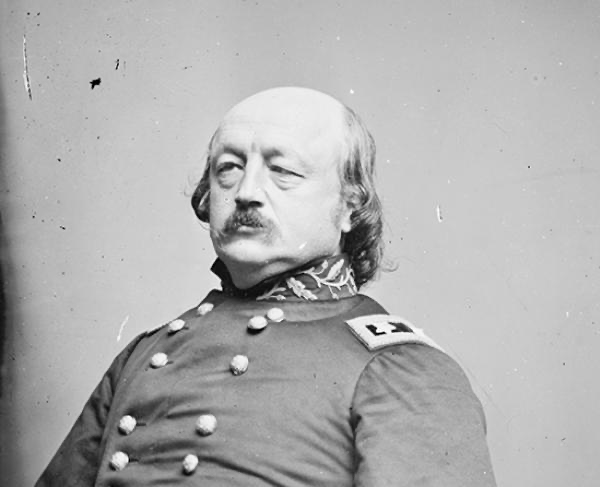
The Civil War: Benjamin F. Butler to Winfield Scott
One night in late May 1861, “three negroes”—who said they were field hands, slaves—delivered themselves to the picket line at Fort Monroe in Virginia. Fort Monroe, sat on the peninsula between the York River and James River, had at its helm Brigadier General Benjamin F. Butler. The fugitive slaves had come to the fort to…


-
The Civil War: William Howard Russell: from My Diary North and South
April 17, 1861 In the weeks and months leading up to the fall of Fort Sumter, the South had been brimming with excitement for the future. Charleston, South Carolina—with newly taken Fort Sumter in its harbor—was leading the South into that future both through its rhetoric and through its actions. Enthusiasm was abound for what…
-
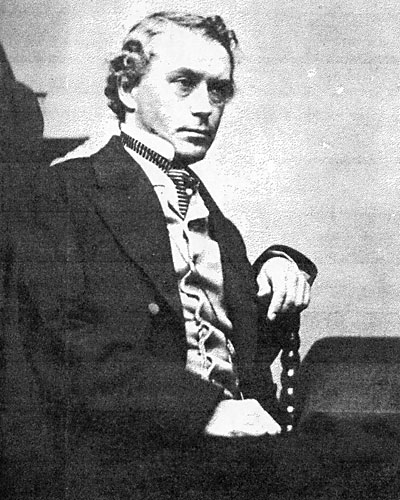
The Civil War: George Templeton Strong: Diary, April 13-16, 1861
Throughout the months leading up to the firing on Fort Sumter, there was widespread wonder about how the country would react to such a provocation; it was bound to be a cleave dividing the country and also its communities. Generations later—with the accordion of events neatly folded and the result of the war known—it would…
-
Early Americans’ Views on Slavery
Early Americans had varying views on slavery, which would set the course for slavery to become a main point of contention for Americans by the time the Civil War erupted. For example, in the late 1700s, many Chesapeake farmers hired out their slaves to other farmers. Gordon Wood, Empire of Liberty, 511. This development led some…
-
Equality for Some
Shortly after the Revolution, new principles emerged that permeated all of society, from government institutions to societal norms to family life. Egalitarianism spread to families. The family became an “autonomous private institution whose members had their own legal rights and identities.” Gordon Wood, Empire of Liberty, 500 citing Michael Grossberg, Governing the Hearth: Law and the Family in Nineteenth-Century…
-
Early American Punishment
By the time the United States declared its independence, capital punishment was common for murder, robbery, forgery, housebreaking, and counterfeiting. Gordon Wood, Empire of Liberty, 492. Some states had as many as two dozen crimes designated for capital punishment. Id. Further, “[e]xecution of the condemned criminals were conducted in public, and they drew thousands of spectators.” Id. The early…
-
Tyranny Founded on Ignorance
The early Republic were the years where American civil society was developing its own distinctive character. One component of that civil society was the newly created educational institutions, which many early Americans viewed as one of the safeguards against the dangerous ignorance that was supposed to allow a monarchy to continue. For example, Simeon Doggett…
-
A Small Key to a Big Door
The Supreme Court of the United States, led by Chief Justice John Marshall made a crucial decision in Dartmouth College v. Woodward in 1819. This decision resulted “in placing all private corporations under the protection of the United States Constitution.” Gordon Wood, Empire of Liberty, 466. The vast majority of corporations thus were “no longer exclusive monopolies,” but…

