-
Constitution Sunday: “Publius,” The Federalist LI [James Madison]
Independent Journal (New York) February 6, 1788 “But what is government itself but the greatest of all reflections of human nature?” This rhetorical question, which James Madison posed, is one that governments throughout the world—throughout history—have answered by showing that even the best-intentioned government fails where it does not take human nature into account.
-
The Civil War: Jefferson Davis: Message to the Confederate Congress
April 29, 1861 With only a few weeks at the helm of the Confederate government, president Jefferson Davis and the Confederate Congress had cause for concern—but also cause for inspiration. The whole of the South (and the whole of the North) was animated: men and women were mobilizing; making their preparations to contribute to the…
-
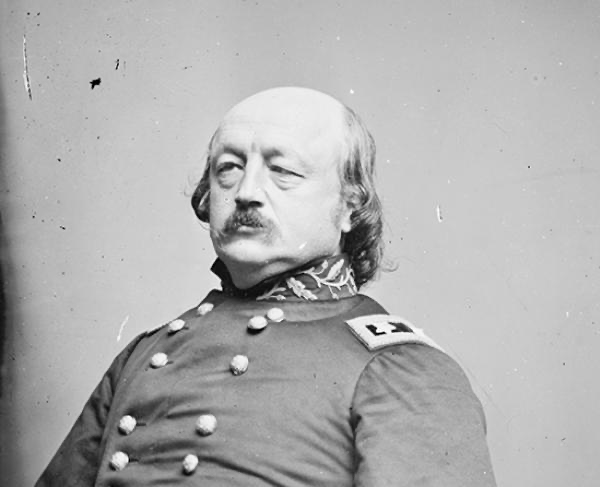
The Civil War: Benjamin F. Butler to Winfield Scott
One night in late May 1861, “three negroes”—who said they were field hands, slaves—delivered themselves to the picket line at Fort Monroe in Virginia. Fort Monroe, sat on the peninsula between the York River and James River, had at its helm Brigadier General Benjamin F. Butler. The fugitive slaves had come to the fort to…


-
The Civil War: William Howard Russell: from My Diary North and South
April 17, 1861 In the weeks and months leading up to the fall of Fort Sumter, the South had been brimming with excitement for the future. Charleston, South Carolina—with newly taken Fort Sumter in its harbor—was leading the South into that future both through its rhetoric and through its actions. Enthusiasm was abound for what…
-
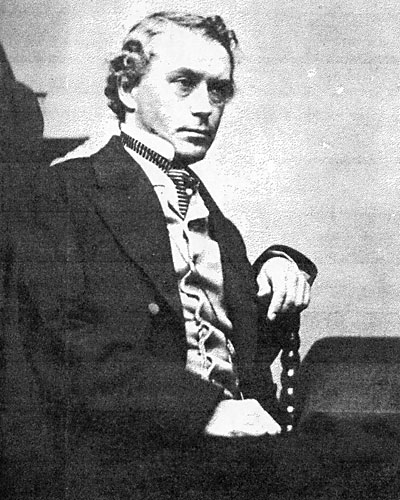
The Civil War: George Templeton Strong: Diary, April 13-16, 1861
Throughout the months leading up to the firing on Fort Sumter, there was widespread wonder about how the country would react to such a provocation; it was bound to be a cleave dividing the country and also its communities. Generations later—with the accordion of events neatly folded and the result of the war known—it would…
-
The Louisiana Controversy
The Louisiana Purchase in 1803 added approximately 823,000 square miles to the United States’ territory. At that time, Thomas Jefferson favored the purchase, as it protected America from the threat of France or Britain invading the United States, particularly through New Orleans. Gordon Wood, Empire of Liberty, 369. The acquisition also would force the territory of…
-
The Ohio System
Ohio was admitted into the Union in 1803, and it introduced a new political system to the United States. Each county in Ohio had county commissions that each county’s citizens elected, rather than the states of the South and Southwest, who had self-perpetuating commissions. Gordon Wood, Empire of Liberty, 365. Further, each county commission had overlapping…
-
The Great Replacement
By 1776, indentured servitude had become a widespread and prominent part of English life. By the 1810s, however, indentured servitude was seen by most Americans as inherently at conflict with the “natural rights of man.” Gordon Wood, Empire of Liberty, 346. Some Americans concluded that servitude as a whole was “highly anti-republican.” Id. However, as indentured servitude…
-
Early American Behavior
Americans in the late 1700s were “known for pushing and shoving each other in public and for their dread of ceremony.” Gordon Wood, Empire of Liberty, 329. Further, violence, rioting, and demonstrations in America had become commonplace, more than in England. See id. at 335-36. Some blamed this uniquely American behavior as being caused by an excessively alcohol-centered…
-
The American Spirit of Work
Arthur Young, an English writer who was supposedly enlightened and known for his writings about agriculture commented that “Everybody but an idiot knows that the lower class must be kept poor or they will never be industrious.” Derek Jarrett, England in the Age of Hogarth, (London, 1974), 79-80. This English belief, that the lower rungs of…
-
Shift to Idealism
The early Republic years were filled with hope and optimism for what the new country could achieve. The Republicans, through the 1790s and into the first decade of the 1800s, had a new idea about what government should be and how it should fit into the citizens’ lives. Republicans imagined “that people’s natural sociability and…

