-
Constitution Sunday: “Publius,” The Federalist LI [James Madison]
Independent Journal (New York) February 6, 1788 “But what is government itself but the greatest of all reflections of human nature?” This rhetorical question, which James Madison posed, is one that governments throughout the world—throughout history—have answered by showing that even the best-intentioned government fails where it does not take human nature into account.
-
The Civil War: Jefferson Davis: Message to the Confederate Congress
April 29, 1861 With only a few weeks at the helm of the Confederate government, president Jefferson Davis and the Confederate Congress had cause for concern—but also cause for inspiration. The whole of the South (and the whole of the North) was animated: men and women were mobilizing; making their preparations to contribute to the…
-
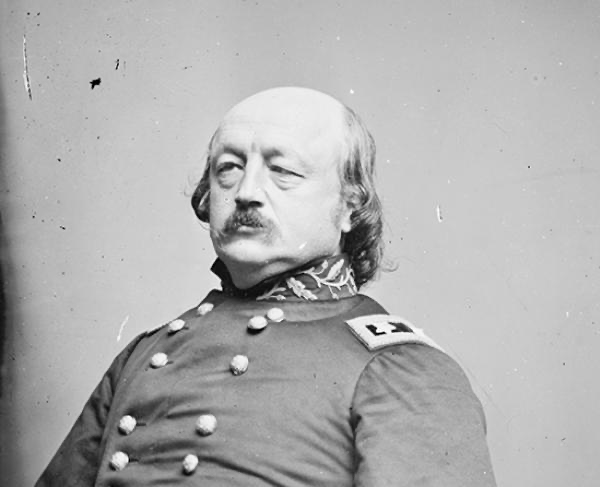
The Civil War: Benjamin F. Butler to Winfield Scott
One night in late May 1861, “three negroes”—who said they were field hands, slaves—delivered themselves to the picket line at Fort Monroe in Virginia. Fort Monroe, sat on the peninsula between the York River and James River, had at its helm Brigadier General Benjamin F. Butler. The fugitive slaves had come to the fort to…


-
The Civil War: William Howard Russell: from My Diary North and South
April 17, 1861 In the weeks and months leading up to the fall of Fort Sumter, the South had been brimming with excitement for the future. Charleston, South Carolina—with newly taken Fort Sumter in its harbor—was leading the South into that future both through its rhetoric and through its actions. Enthusiasm was abound for what…
-
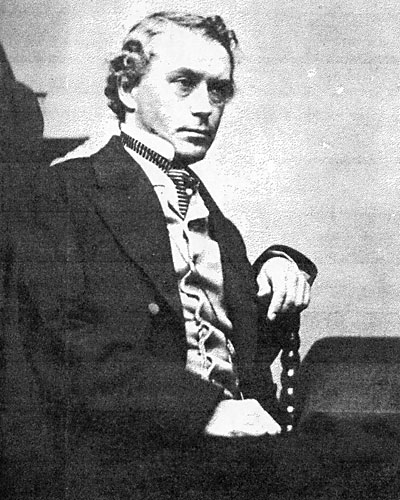
The Civil War: George Templeton Strong: Diary, April 13-16, 1861
Throughout the months leading up to the firing on Fort Sumter, there was widespread wonder about how the country would react to such a provocation; it was bound to be a cleave dividing the country and also its communities. Generations later—with the accordion of events neatly folded and the result of the war known—it would…
-
A Conscientious Path of Moderation
The Constitution, in combination with the Judiciary Act of 1789, created the three-tiered court system that is familiar to modern Americans. However, one of the defining features of the judiciary is the concept of judicial review. Judicial review is the doctrine that permits a court, such as the Supreme Court in Marbury v. Madison, to declare…
-
The Assertive Judiciary
In the early years of the Republic, there was an itching for reformation of the systems and processes that had come to define colonial life. This reformation began with “enactment of an increasing number of laws.” Gordon Wood, Empire of Liberty, 405. Thomas Jefferson and James Madison led this movement of reformation. While they and…
-
A Most Flawed Inheritance
Prior to the Revolution, the colonists relied on a court system with royally appointed judges that served indefinitely “during good behavior,” which ultimately meant that judges would hold office so long as the crown was pleased with them. Gordon Wood, Empire of Liberty, 400. This led to the colonists ultimately associating the judiciary with the “resented…
-
The First Casualties
The friction between the Native Americans and colonizing settlers is well documented and known. However, the general policy underlying that friction is perhaps best captured by Thomas Jefferson’s perspective on the subject: “let the natural demographic growth and movement of white Americans take their course.” Gordon Wood, Empire of Liberty, 398. Jefferson believed that this would…
-
Preservation of America and its Virtues
Europeans and early Americans both believed that the New World, America included, was made of a climate “harmful to all living creatures, including the Indians, who were the only humans native to the New World.” Gordon Wood, Empire of Liberty, 386. George Louis Leclerc, comte de Buffon, wrote in his 36-volume book Natural History that the…
-
The Zeal for Land
Thomas Jefferson, from his earliest years, imagined that all of the North American land known in the 1790s would one day belong to the United States. He imagined that Florida would become part of the United States, that Cuba would join, that Mexico’s provinces would join, and that ultimately, Canada would join as well. Gordon…

