
War heroes earn respect through their service. The Civil War brought out more heroes than perhaps any other war in American history. They were men who served their country at its inflection point, and they could be assured that their time on the battlefield could translate to time in public office. General Winfield Scott Hancock was but one example. He was “a patriotic hero, a stainless gentleman, and an honest man.”[i] He became one of the greatest Generals in the war: one that the soldiers, officers, and citizens were glad to have. He got out from under a famous name and created his own legacy, becoming a regular name in the wartime newspapers. But there was still a question of whether his post-war career would be as glamorous as his time during the war. Although he had a reputation for “honest heroism and personal character,” he was a Democrat; and at a time when Democrats simply could not expect to win the Presidency.[ii]
(more…)Tag: Battle of Antietam
-

The Battle of Gettysburg
By the spring of 1863, the Union had given the Confederacy every reason to remain defensive: for the duration of the war, federal troops had invaded points throughout the south forcing the rebels to shift to the location of each incision. Allowing this dynamic to continue to play out meant the only way for a Confederate success was a negotiated peace. On May 15, the southern brain trust, including General Robert E. Lee and President Jefferson Davis, convened in Richmond to discuss strategy. Lee proposed that he lead an effort that would remove the threat to Richmond, throw the Yankees on their heels, spell political doom for the Republicans (led by Abraham Lincoln in the White House), open up the possibility of Britain or France recognizing the Confederacy, and, at worst, an armistice that resulted in the Confederate States of America coexisting with the United States.[i] While Postmaster-General John Reagan and other Confederates felt that Lee should have sent troops to protect Vicksburg and the west from the trouble Ulysses S. Grant and his men were causing, Lee did not want to oblige the Confederacy to remain on the defensive but instead introduce the “prospect of an advance” as it would change “the aspect of affairs.”[ii] (more…)
-
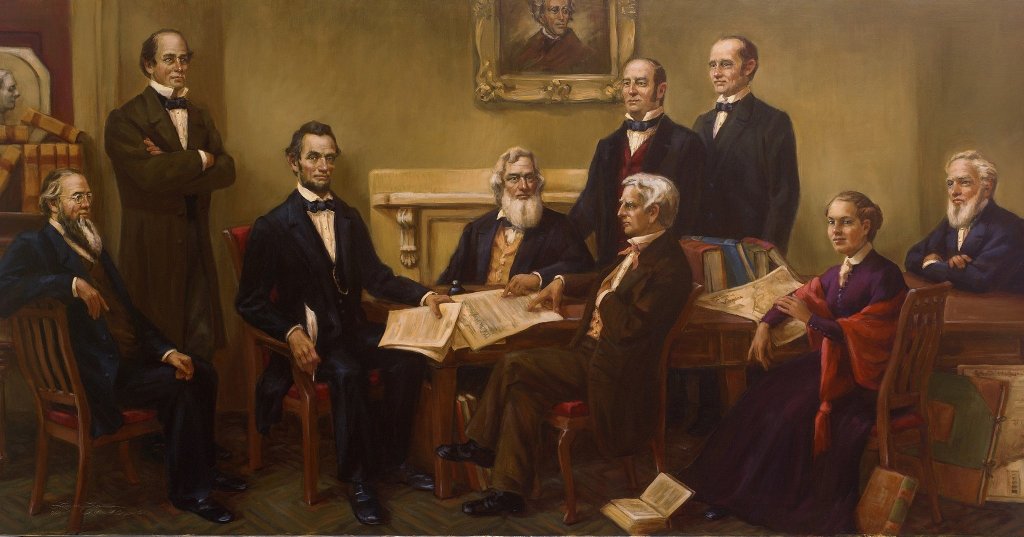
The Emancipation Proclamation
American history is replete with instances of the public pressuring a president to take action on an issue. On far fewer occasions, presidents, through speaking to voters, calling for congressional action, or issuing executive orders, have risked political capital to lead the public to advance on a prominent issue. In the middle of 1862, President Abraham Lincoln convened his Cabinet to discuss taking action on an issue that had been consuming him for weeks but was likely to endanger his bid for reelection in 1864 and was certain to change the direction of the ongoing and increasingly bloody Civil War. (more…)
-
The Battle of Fredericksburg
Throughout 1862, the Union embraced a defensive, passive approach to prosecuting the Civil War—shying away from incisive troop movements and relentless pursuits even after battles that left Confederates fatigued and fleeing—while the Confederacy had most recently displayed its more aggressive strategy by its attack near the Antietam Creek in Maryland. At the helm of the Union army, and the epitome of its quiescent nature, stood General George McClellan: a man who had come under fire for his failed Peninsula Campaign and refusal to pursue Confederate General Robert E. Lee after the Battle of Antietam. The latter decision prompted action from the White House. President Abraham Lincoln, whom McClellan had labeled as the “Gorilla,” replaced McClellan with General Ambrose E. Burnside on November 7, 1862.[i] (more…)
-
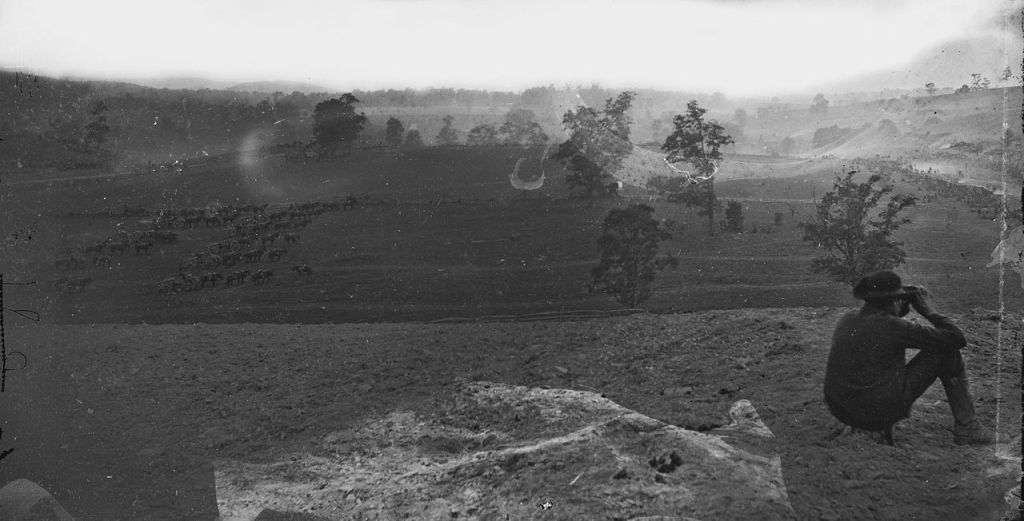
The Battle of Antietam
Years before the Civil War started, Harpers Ferry, Virginia was the site of a federal armory that abolitionist John Brown raided with the hope of starting a revolution, causing distress throughout the Union that a revolution was in the making. In September 1862, Harpers Ferry became a thorn in the Union side yet again as Confederate General Stonewall Jackson raided and easily captured the town which occupied a strategically important position: the intersection of the Shenandoah and Potomac Rivers. After taking the town, Jackson and his men advanced toward Sharpsburg, Maryland and the bubbling Antietam Creek flowing past the outskirts of Sharpsburg.[i] (more…)
 Last Best Hope of Earth