
By the spring of 1864, changes were abound on the Union side. Three generals—Ulysses S. Grant, William Tecumseh Sherman, and Philip Sheridan—had become the preeminent leaders of the northern army. With Congress having revived the rank of lieutenant general, a rank last held by George Washington, President Abraham Lincoln promoted Grant to that rank and bestowed on him the title of general in chief.[i] While the North was in the ascendancy, the Confederate army had suffered through the winter. The Confederate Congress had eliminated substitution, which had allowed wealthy southerners to avoid conscription, and “required soldiers whose three-year enlistments were about to expire to remain in the army.”[ii] Even with Congress taking the extraordinary step of adjusting the draft age range to seventeen years old through fifty years old, the rebels still numbered fewer than half their opponents.[iii] Nonetheless, hope was not lost: a camaraderie pervaded the Southern army—particularly amongst the many veteran soldiers—which was perhaps best encapsulated in General Robert E. Lee’s saying that if their campaign was successful, “we have everything to hope for in the future. If defeated, nothing will be left for us to live for.”[iv] (more…)
Tag: Confederate States of America
-
The Battle of Chickamauga

The Site of the Outbreak of the Battle of Chickamauga. Courtesy: Library Photograph Collection. Near the end of September 1863, Union General William Rosecrans had gathered his men in the valley of West Chickamauga Creek in Georgia, and Confederate General Braxton Bragg was preparing to attack the Union left flank and force a reversal into a nearby valley from which Rosecrans could not escape.[i] The maneuver would be the ideal Confederate response to the federal successes at Gettysburg and Vicksburg. Fortunately for the federal troops, September 18 brought Confederate inaction and allowed General George Thomas, known as “Old Slow Trot” or “Pap” to his men, to reinforce Rosecrans’ left line.[ii] The next morning dawned what would become the “bloodiest battle in the western theater of the war.”[iii] (more…)
-
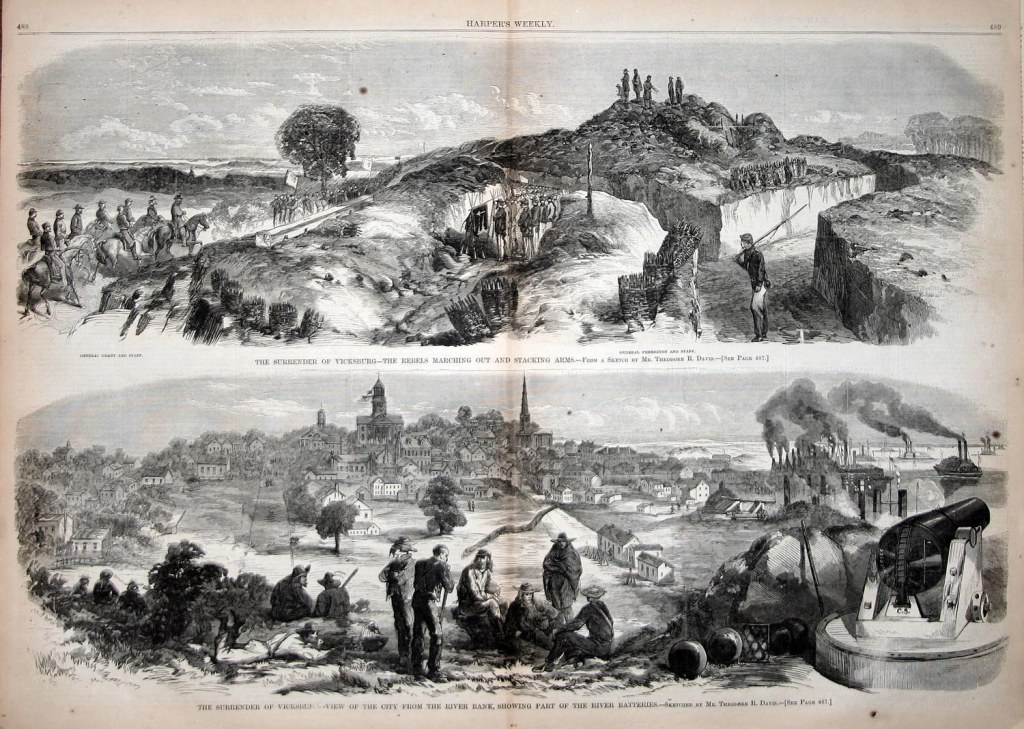
The Siege of Vicksburg
In the western theater of war, Ulysses S. Grant had set his sights on a goal early in his campaigning: Vicksburg, a town hugging the Mississippi River on the border of Louisiana and Mississippi. Taking the city would not only secure the Mississippi River; taking it would give the Union a lasso around the Confederacy. Just as spring of 1863 was getting underway, Grant had drawn up a plan to take the town and tighten the Union grip on the Confederacy. (more…)
-
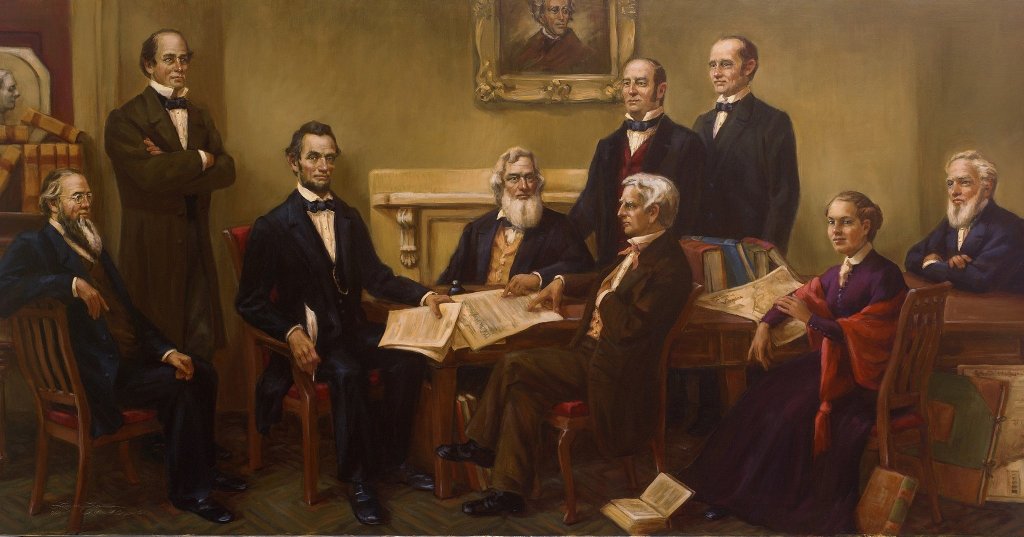
The Emancipation Proclamation
American history is replete with instances of the public pressuring a president to take action on an issue. On far fewer occasions, presidents, through speaking to voters, calling for congressional action, or issuing executive orders, have risked political capital to lead the public to advance on a prominent issue. In the middle of 1862, President Abraham Lincoln convened his Cabinet to discuss taking action on an issue that had been consuming him for weeks but was likely to endanger his bid for reelection in 1864 and was certain to change the direction of the ongoing and increasingly bloody Civil War. (more…)
-
The Second Battle of Bull Run
After General George McClellan’s campaign to take Richmond fell flat, he became even more disenchanted with the Lincoln administration but vowed that if provided with 50,000 men, he would mount another attack on the Confederate front.[i] Whether a man who had “lost all regard and respect” for President Lincoln and had called the Lincoln administration “a set of heartless villains” was dedicated to restoring the Union became a question for years to come, and Lincoln recognized that even if he sent 100,000 men, McClellan would find Confederate General Robert E. Lee to have 400,000.[ii] Regardless, a Union general from the Western Theater, John Pope, had come to the Eastern Theater prepared to replace McClellan as the top commander in the East and take on the Confederates with the tenacious and fearless approach to fighting that had characterized the western battles.[iii] (more…)
-

McClellan’s Peninsula Campaign
General George McClellan, commanding 400 ships, 100,000 men, 300 cannons, and 25,000 animals, prepared to execute one of the greatest invasions in the history of the American military: a plan to take the Virginia Peninsula, a perceived weak point in the Confederacy, and march on Richmond.[i] He brought hope to his men that they would be part of the greatest campaign not just of 1862 but in military history. However, President Abraham Lincoln anticipated that it would be a futile effort as the Union men would “find the same enemy, and the same, or equal [e]ntrenchments” on which they had fruitlessly tried to advance before.[ii] Worse than that, he feared that the Confederates would take advantage of the massive Union deployment on the Peninsula and march on Washington. (more…)
-
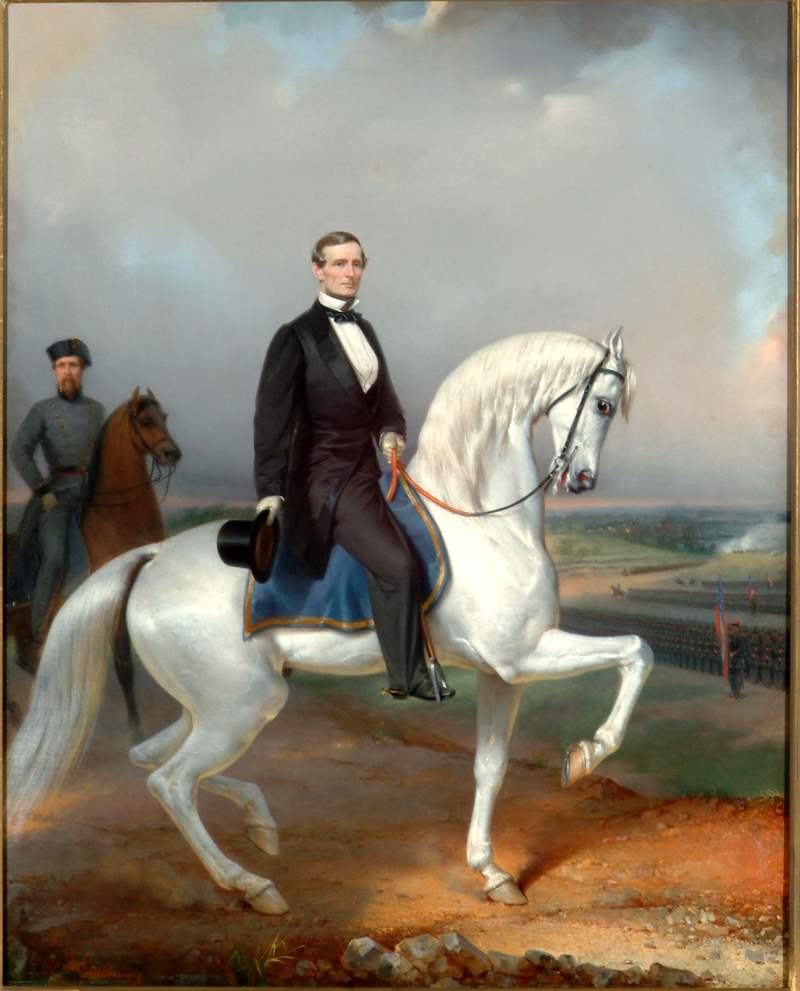
The Second Inauguration of Jefferson Davis
Confederate President Jefferson Davis, on the 130th anniversary of George Washington’s birthdate, was due to be inaugurated for a second time. Davis ran unopposed in the first (and only) presidential election in the Confederate States of America and was set to begin his six-year term on February 22, 1862. His daily responsibilities as president left him more involved in paperwork than any other activity, and the beginning of the day of his second inauguration was scarcely different from any other day for Davis: he did an hour of paperwork before preparing for the ceremony.[i] (more…)
-
The Battle of Wilson’s Creek
The First Battle of Bull Run, which was fought near Manassas, Virginia, inaugurated the Eastern Theater of the Civil War. Weeks later, the first major battle of the Western Theater would occur on the banks of a creek in Missouri: Wilson’s Creek. The battle resulted in another Confederate victory and the first death of a Union general in the war. It also served as foreshadowing to the Confederacy; showing it that the Union was going to make a vigorous effort to prevent any other states from joining the Confederacy. (more…)
-

The Outbreak of the Civil War
Within a matter of weeks of Abraham Lincoln’s presidency beginning, the gravest crisis of perhaps any president confronted him and the nation: civil war. (more…)
-
The North’s Attempt at Salvation
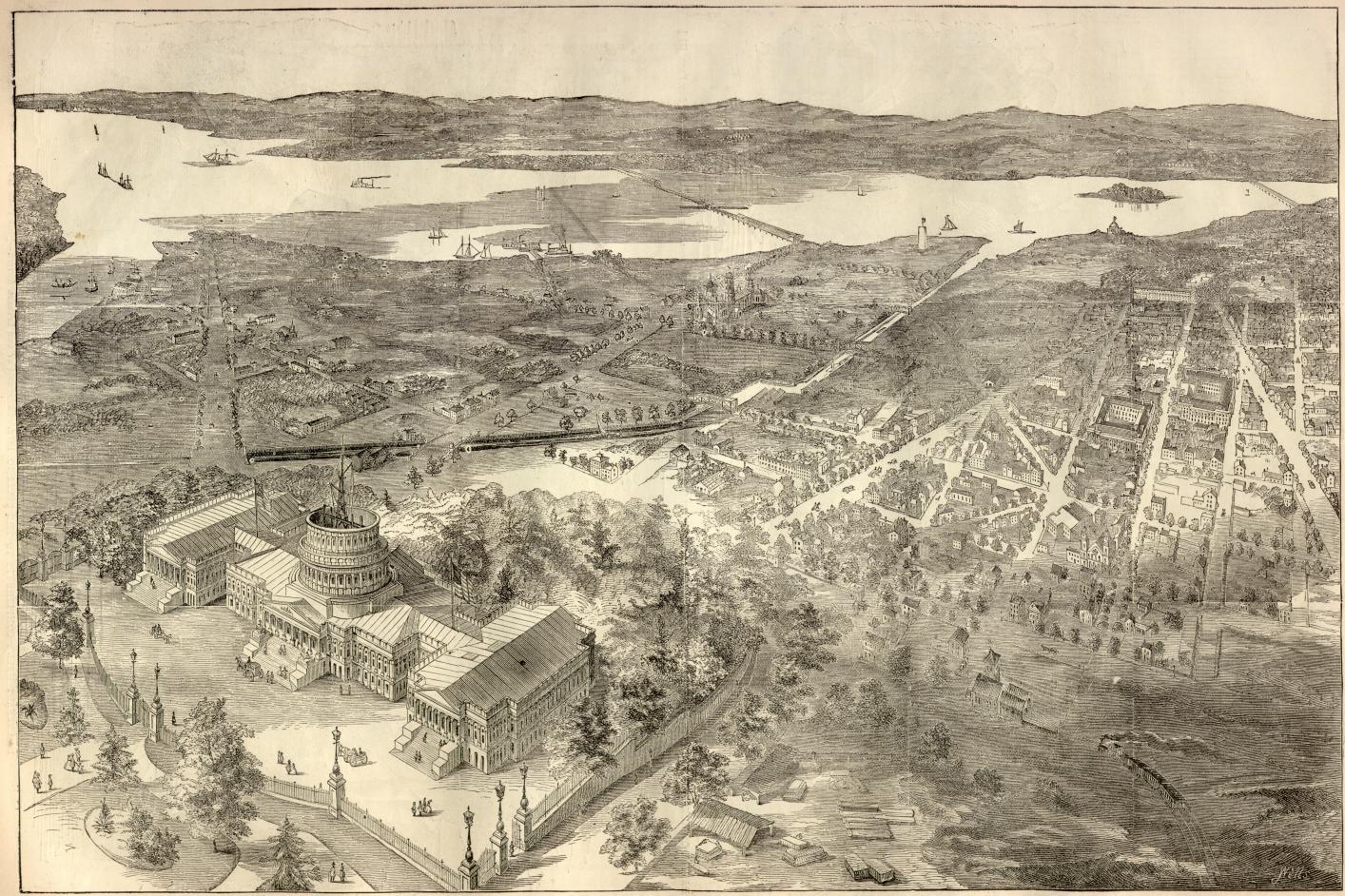
Aerial Perspective of Washington DC in 1861. The Deep South’s animating of a Second American Revolution, by seceding from the Union and laying the foundation for an operational Confederate government, forced the North to either suppress the South’s uprising or craft a resolution. The likelihood of war would deter any widespread northern suppression, leaving the question: What compromise could the North propose that appeased the South and put both sections of the country on a path of coexistence? While variations of this question had been posed in the years leading up to 1860, at no prior point were states seceding from the Union en masse to form a rival government. (more…)
 Last Best Hope of Earth