Tag: Constitution

  • The Adulation of the Founding Fathers

    founding_fathers
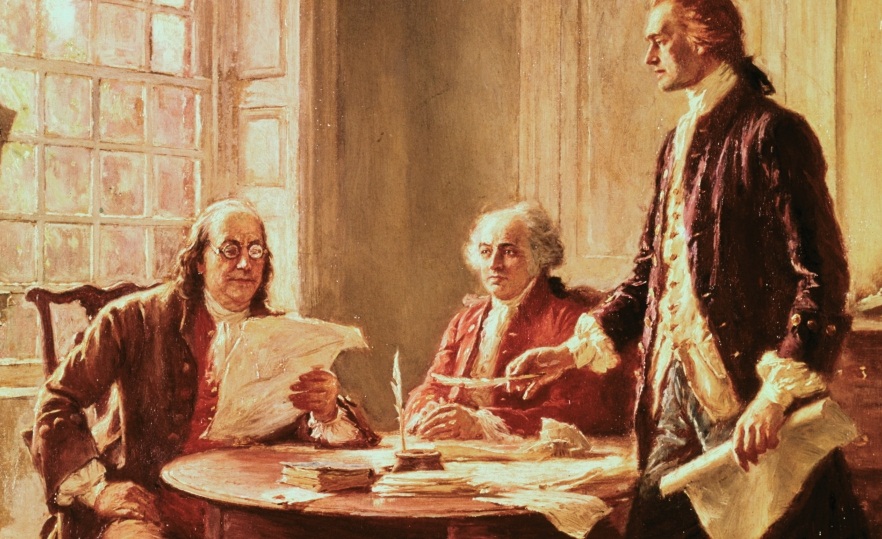
    Depiction of Benjamin Franklin, John Adams, and Thomas Jefferson.

    Gordon Wood began his 2006 book Revolutionary Characters: What Made the Founders Different by stating that “[n]o other major nation honors its past historical characters, especially characters who existed two centuries ago, in quite the manner we Americans do.” Gordon Wood, Revolutionary Characters: What Made the Founders Different, 3.

    He continued, stating that Americans “want to know what Thomas Jefferson would think of affirmative action, or George Washington of the invasion of Iraq.” Id.

    Scholars apparently have varying views as to why modern Americans revere the Founding Fathers, over two centuries after they first acquired their fame. Id. at 4.

    Some scholars believe that it is because Americans are concerned “with constitutional jurisprudence and original intent” forming the basis for the Constitution. Id.

    Other scholars posit that analyzing the Founding Fathers allows modern Americans to “recover what was wise and valuable in America’s past.” Id.

    Another set of scholars explain that Americans look to the Founding Fathers to define the American identity. Id.

    As Gordon Wood explained, this was not always the case. Toward the late 1800s and early 1900s, some Americans questioned the wisdom, accomplishments, and place of the Founding Fathers. Id. at 5. Nonetheless, for a significant portion of the 1900s and continuing into the 2000s, Americans look to the Founding Fathers for guidance.

    While scholars may disagree as to the underlying purpose for modern Americans to honor the Founding Fathers, it can likely be explained by two points: (1) the Founding Fathers rigorously worked to create the best form of government possible and (2) the Founding Fathers knew adversity, difficulty, and hardship and yet held the country together.

    As to the first point, the Founding Fathers engaged in one of the most substantial debates in history as to how a country should be best governed by its people to best ensure their happiness and prosperity. The resulting government was not only revolutionary and coherent, it has facilitated America’s success for two centuries with only 27 amendments to the Constitution being necessary.

    The second point weighs a little heavier. The United States has endured many wars, tragedies, and difficulties. Few rival the tumultuous, uncertain times of the Revolution. Regardless, in both stable times and otherwise, America and its leaders have looked to the Founding Fathers for guidance. The logic underlying that goes “If the Founding Fathers could lead a revolution and fight a war against a mighty empire successfully, how would they deal with this scenario?”

    All of the scholars’ views as to why Americans honor the Founding Fathers feeds into this point. When Americans ask these questions, like “What would the Founding Fathers do?”, they do so out of a wishful curiosity that leads to no clear answer.

    This is a result that would likely please the Founding Fathers. The Founding Fathers did not have a secret to making the right decisions or coming to the right conclusions. They only did so through vigorous debate with each other and unyielding optimism about America’s future. That contentious debate spawned the system, institutions, beliefs, and ideals that define America.

    Those debates should rage on with vigor. It is the least that modern Americans can do to repay the Founding Fathers.
  • Ubiquitous But Controlled Religion

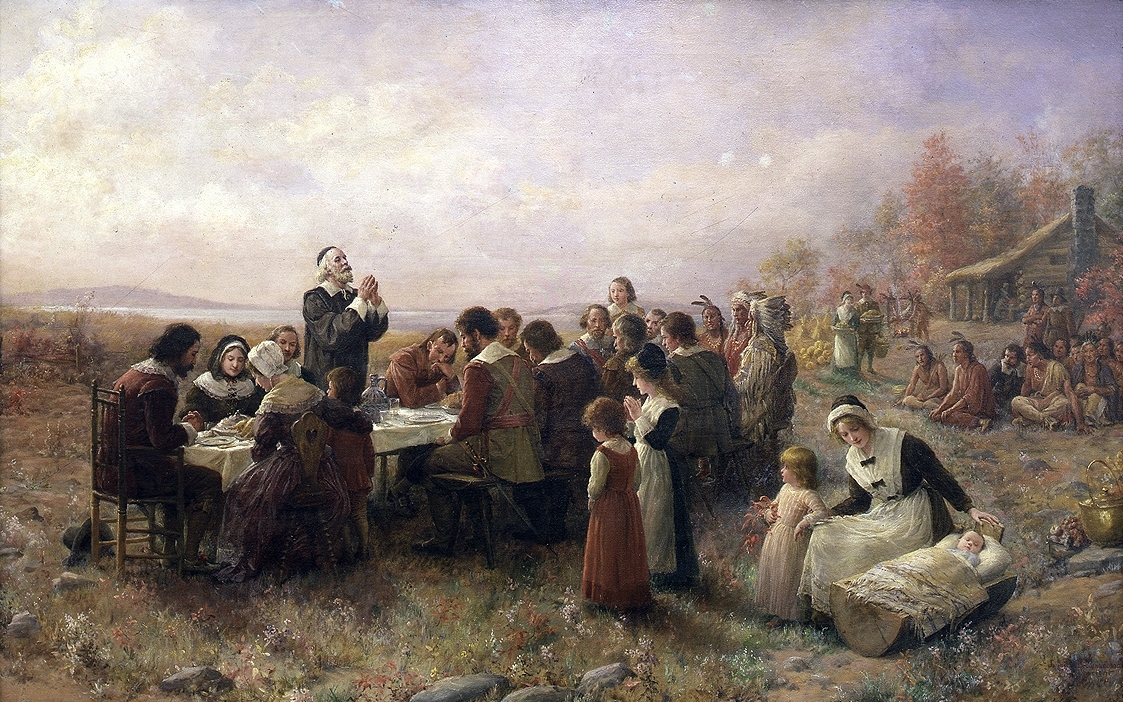
    Thanksgiving. By: Jennie Augusta Brownscombe. (1914)

    In the early Republic, religion took on a new role in society. In some segments of American society, religion became fervent. For example, in Cane Ridge, Kentucky in 1801, dozens of ministers of different denominations congregated with approximately 15,000-20,000 in a week-long conversion session. Gordon Wood, Empire of Liberty, 596. Amongst the “heat, the noise, and the confusion” were ministers, sometimes six preaching at a time, shouting “sermons from wagons and tree stumps.” Id. Many in the crowd “fell to the ground moaning and wailing in remorse; and they sang, laughed, barked, rolled, and jerked in excitement.” Id.

    Meanwhile, the states took varying approaches to dealing with religion in government. New Hampshire, Connecticut, New Jersey, North Carolina, and Georgia “required officeholders to be Protestant,” while “Maryland and Delaware [required] Christians,” while “Pennsylvania and Souther Carolina officials had to believe in one God and in heaven and hell,” while “Delaware required a belief in the Trinity.” Id. at 583 citing James H. Smylie, “Protestant Clergy, the First Amendment and Beginnings of a Constitutional Debate, 1781-91,” in Elwyn A. Smith, The Religion of the Republic (Philadelphia, 1971), 117.

    On the federal level, the Constitution of course provided protection for individuals to freely exercise their religion and also prohibited laws respecting an establishment of religion. U.S. Constitution, First Amendment. In 1802, Thomas Jefferson wrote that the First Amendment created a “wall of separation between church and state.” Thomas Jefferson to Messrs. Nehemiah Dodge and Others, 1 Jan. 1802, Jefferson: Writings, 510.

    The role that religion would ultimately play in American society was not clear in the early years of the Republic. The hysteria that surrounded some of the religious ceremonies like described in Cane Ridge made clear that religion would play a central role to many. Thomas Jefferson, and the drafters of the Constitution realized that while religion may play a central role to the lives of many Americans, it could neither be endorsed nor prohibited by the government.

    This careful move by the Founding Fathers ensured that while religion would be freely exercised and even ubiquitous in society, it would not be a democracy characterized by religion and certainly not a theocracy. The system embraced individual freedom and excluded government involvement where unnecessary. Fortunately, this system has largely been preserved by subsequent generations of Americans. Current and future public officials would do well to ignore any populist notions of the role religion should play in society and be keen on preserving the status quo of this effective system.

  • Early American Punishment

    Eastern State Penitentiary, 1820s. By: The Library Company of Philadelphia.

    By the time the United States declared its independence, capital punishment was common for murder, robbery, forgery, housebreaking, and counterfeiting. Gordon Wood, Empire of Liberty, 492. Some states had as many as two dozen crimes designated for capital punishment. Id. Further, “[e]xecution of the condemned criminals were conducted in public, and they drew thousands of spectators.” Id.

    The early Republicans, including Thomas Jefferson, formulated a new approach to punishment that was more proportionate to the crimes. There were some who looked at capital punishment and believed it was too harsh for the crimes being committed, however, these early Americans would hardly be seen as compassionate, by today’s terms. Jefferson proposed the law of retaliation, lex talionis, meaning “the state would poison the criminal who poisoned the victim and would castrate men guilty of rape, polygamy, or sodomy.” Id. at 493 citing Thomas Jefferson, A Bill for Proportioning Crime and Punishments in Cases Heretofore Capital (1776-1786), Papers of Jefferson, 2: 492-507.

    Pennsylvania was one state that led the way in more humane forms of punishment, sure not to violate the Constitution’s prohibition against cruel and unusual punishment. Pennsylvania, throughout the 1780s and 1790s enacted laws that “abolished all bodily punishments such as burning in the hand and cutting off the ears and ended the death penalty for all crimes except murder.” Gordon Wood, Empire of Liberty, 493 (internal quotations omitted).

    Ultimately, these developments led to the development of the penitentiary, a uniquely American concept that is ubiquitous in contemporary American society. A British traveler in 1806, observing an American penitentiary commented that the penitentiary is “happily adapted to the genius of the government of the country, mild, just, and merciful.” Id. at 495.

    Nonetheless, these early years of the development of the criminal justice system carry many legacies forward to today. The federal government and 31 states still allow capital punishment, however, it is considerably more rare than the earliest days of the Republic, as described. The movement toward more lenient punishment has been embraced by parts of Europe and other parts of the world, who have seemed to conclude that capital punishment does not serve as a strong enough deterrent to be relied on and is too humane to be justified.

    Americans have strong views on the subject, which are divisive and often debated. Even in the campaign for 2016, Hillary Clinton has made comments about capital punishment, which has divided Democratic supporters. New York Times, Death Penalty Could Provide Debate Fodder for Hillary Clinton and Bernie Sanders, Oct. 30, 2015, available at http://www.nytimes.com/politics/first-draft/2015/10/30/death-penalty-could-provide-debate-fodder-for-hillary-clinton-and-bernie-sanders/?_r=0.

    One thing is clear, however: America has deep roots in using capital punishment. Some will always believe that reforming criminals is impossible, whether that is because of mental illness, environmental factors, or otherwise. Others believe that reformation is possible for anybody, citing the numerous examples of criminals who reformed themselves while in prison to go on and do extraordinary things with their lives.

    Regardless of where most individuals fall on that spectrum of justification, capital punishment continues to exist in a limited set of circumstances. Other punishments have been abandoned in favor of imprisoning criminals. As policymakers grapple with these issues, remembering the beginnings of punishment in America and the ineffective nature of those harsh punishments would likely be valuable.

  • The American Spirit of Work

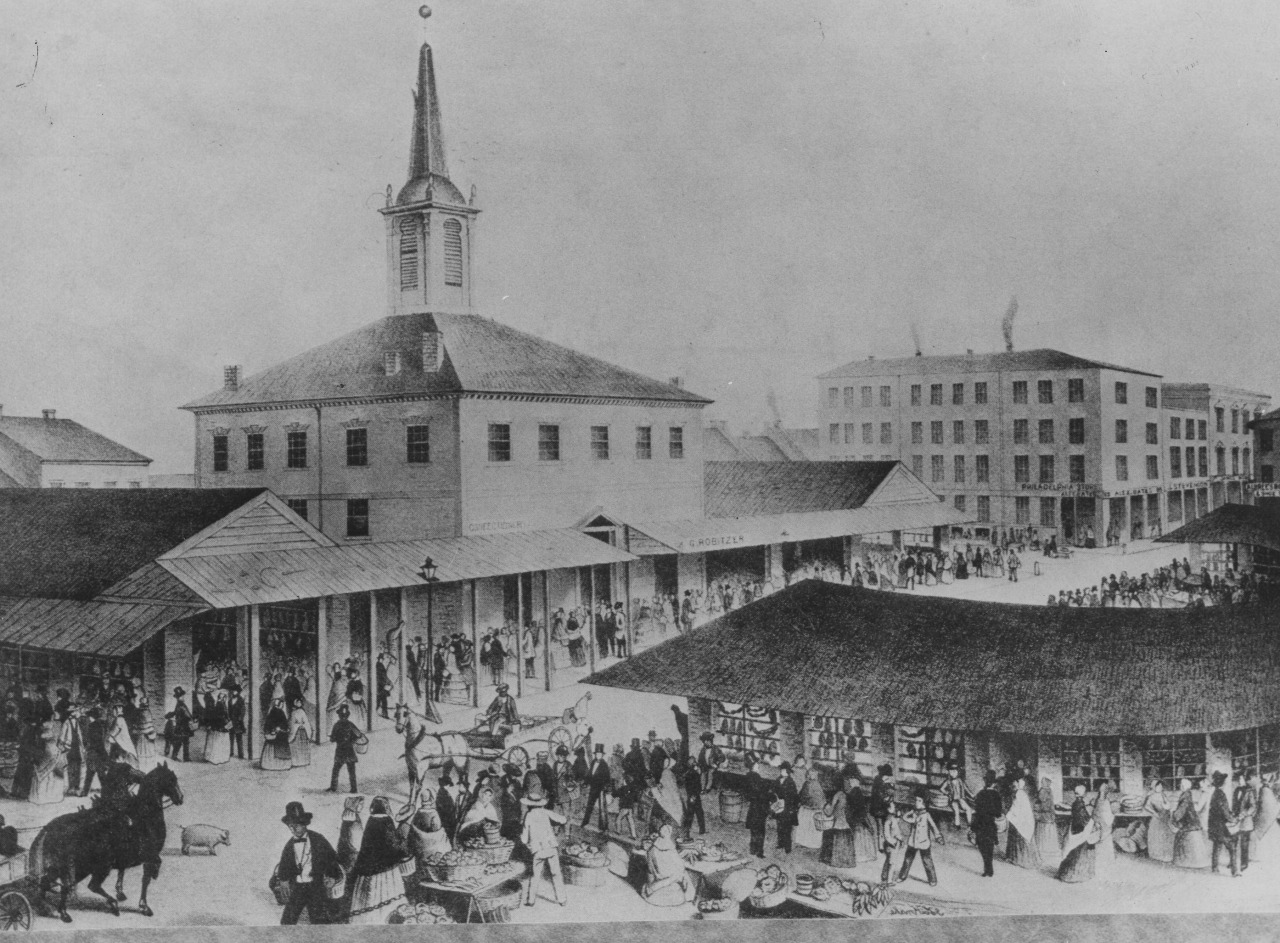
    Pittsburgh, 1790s.

    Arthur Young, an English writer who was supposedly enlightened and known for his writings about agriculture commented that “Everybody but an idiot knows that the lower class must be kept poor or they will never be industrious.” Derek Jarrett, England in the Age of Hogarth, (London, 1974), 79-80.

    This English belief, that the lower rungs of society were not entitled to an equal chance with their peers, captured the view of many for centuries leading up to the American Revolution. Most people in England believed that “people would not work unless they had to.” Gordon Wood, Empire of Liberty, 324.

    Benjamin Franklin, in 1784, asked the question: “Is not the Hope of one day being able to purchase and enjoy Luxuries a great Spur to labour and Industry?” Benjamin Franklin to Benjamin Vaughn, 26 July 1784. In the 1790s and early 1800s, farmers were now working hard and participating in national commerce “to increase their purchase of luxury goods and become more respectable,” not just to stay “out of poverty” or work by mere necessity. Gordon Wood, Empire of Liberty, 324.

    The equality amongst citizens in the early Republic was not only captured in the Constitution, but also had become woven into the fabric of American society. There was a universal belief that individuals were capable of accomplishing goals, of moving up in their profession, and of not being hindered by their modest means.

    Some would look to these formative years as the spark that led to the great American economy. It is not clear how this culture emerged, or what prompted this culture to emerge, but it became obvious by the early 1800s that the American economy was a force to be reckoned with, largely in part because of its burgeoning population and rapid expansion westward.

    That American spirit of work carries forward to today. Often, many politicians, commentators, and common folk are quick to explain that the American dream is dead. At least a part of the American dream, the ability for individuals to generate enough income to purchase luxuries to enjoy, has been present in Americans’ minds since the early Republic. Few would question whether this portion of the American dream is still being fulfilled by ordinary Americans.