Tag: Constitution

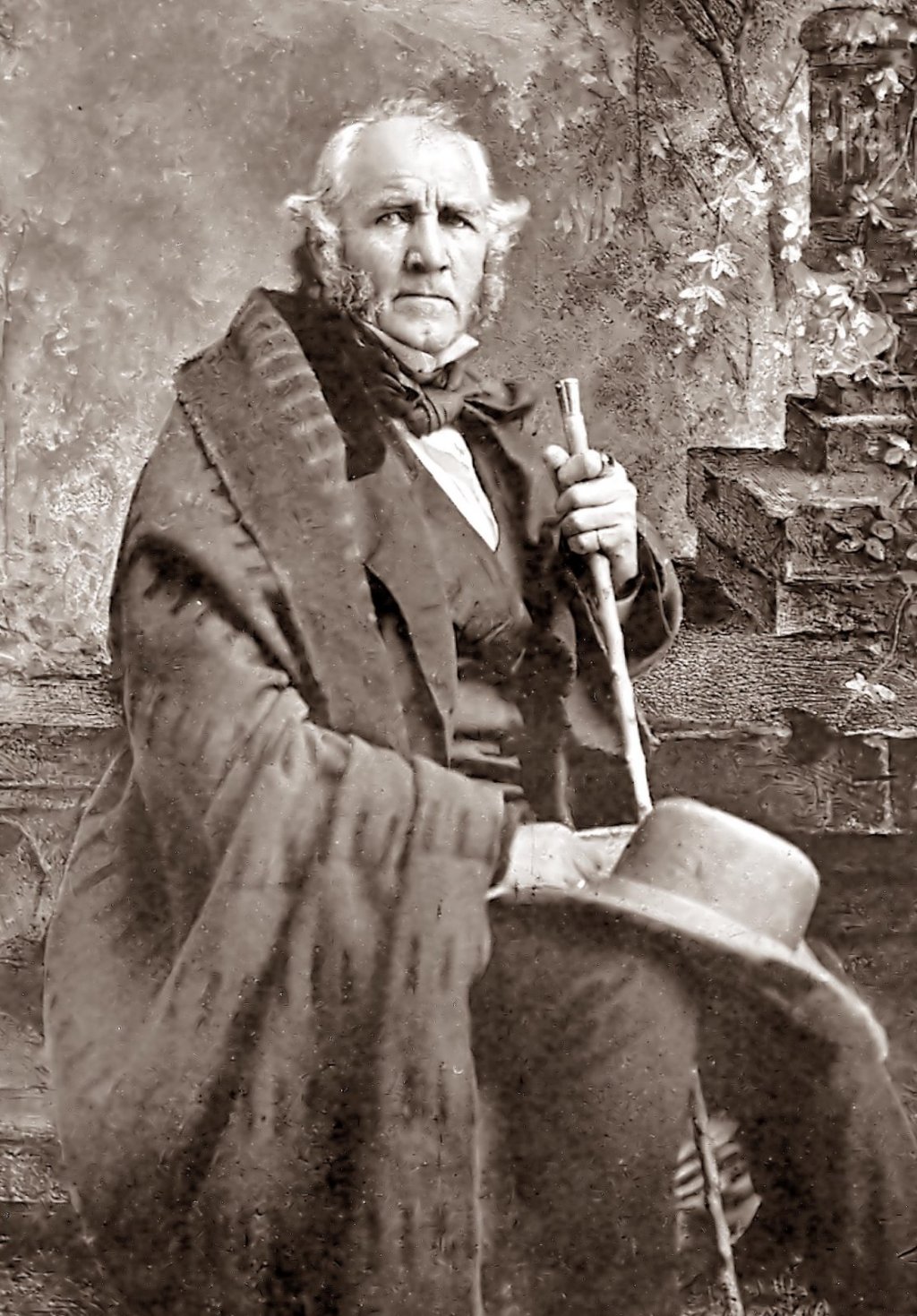
  • The Civil War: Sam Houston to H.M. Watkins and Others

    The Civil War: Sam Houston to H.M. Watkins and Others

    Sam Houston to H.M. Watkins and Others

    November 20, 1860

    Politicians who have become household names have an ability to sway public opinion—and they know it. They can use their precious political capital to that end. But it’s a risky proposition. If they see odds they like and place their bets only to lose, they may see themselves fall out of favor, out of office, and out of the public eye. If, however, they read the moment correctly and positioned themselves just right, they may ascend further still—higher in esteem and maybe even earn their place in the collective memory of the nation.

    (more…)
  • Constitution Sunday: David Ramsay to Benjamin Lincoln

    Charleston, South Carolina

    January 29, 1788

    A letter from a South Carolinian to a Massachusettsan—and from a budding historian to a Revolutionary War hero—captured the spirit of the moment as South Carolina was preparing to assemble its convention to consider the Constitution. David Ramsay, who would soon publish a two-volume book about the American Revolution, wrote to Benjamin Lincoln of the recent happenings in South Carolina’s legislature and the tenor of the time as states were analyzing the potential for coexisting with a federal government.

    (more…)
  • Constitution Sunday: “Publius,” The Federalist XLVI [James Madison]

    New-York Packet

    January 29, 1788

    James Madison, who would later become the fourth President of the United States, sought to quell fears of an overreaching and overly powerful federal government. The Constitution’s opponents had shared their fears—fears that Madison called “chimerical”—of a federal government that took power from the states and dominated the country’s governing. Rather than the states governing themselves and the federal government keeping to its own affairs, many of which related to international relations, the thinking was that the federal government would subsume those states’ powers and undermine their sovereignty.

    (more…)
  • The Civil War: New York Daily News: The Right of States to Secede

    November 16, 1860

    With the idea of secession permeating the public discourse, there were questions of whether states even had the right to secede. These questions were not confined to academics and lawyers; even the newspapers of New York City explored these questions—one of which, the New York Daily News, was a conservative newspaper that had supported John C. Breckinridge in the election of 1860.

    (more…)
  • Constitution Sunday: “Publius,” The Federalist XLV [James Madison]

    Independent Journal (New York)

    January 26, 1788

    A nation comprised of states (or provinces) will inevitably have tension between the national government and each of the state governments. Most frequently, at the center of that tension is sovereignty; one state’s policy preference may be anathema to another state.

    (more…)
  • Constitution Sunday: “Publius,” The Federalist XLIV [James Madison] Part II

    New-York Packet

    January 25, 1788

    The Federalist XLIV [James Madison] Part II Article I, Section 8, Clause 18 of the Constitution has long sparked controversy, granting Congress the power to create necessary and proper laws to execute its other powers. James Madison, in the Federalist Papers, defended this provision against those who deemed it excessive. For Constitution supporters, the Clause was crucial to prevent Congress from becoming ineffective and unimportant compared to state legislatures. James Madison argued that the Clause was essential, otherwise, the Constitution would become meaningless.

    Everywhere in the city, which had become his home, there were reminders of the inspiration he had brought.

    (more…)
  • Constitution Sunday: “Publius,” The Federalist XLIV [James Madison] Part I

    New-York Packet

    January 25, 1788

    In a country comprised of states, there is bound to be overlap between what those states’ governments may do and what the federal government may do. But the draft Constitution clarified those boundaries and identified many of the rights that states have and don’t have. Crucially, the Constitution sets limits for what states may do to hinder their economies and to prosecute criminal behavior.

    (more…)
  • Constitution Sunday: “Brutus” X

    New York Journal

    January 24, 1788

    History is replete with military coups. At a time when a country’s government has grown weak, the temptation to make drastic change can become overwhelming. Sometimes, rather than wait for the next election, the military makes its move—to the detriment of the democracy, the people, and the chances for protecting the people’s rights. There are some who believe that the best way to prevent such coups is to prohibit having a standing army altogether. In 1788, an author, using the pen name Brutus, saw that the liberties of the people faced imminent threat if there was a “large standing army” allowed in the United States and made the case that the Constitution should prohibit such an army as it created too much of a danger to the viability of the Republic.

    (more…)
  • Constitution Sunday: “Centinel” [Samuel Bryan] XII

    Independent Gazetteer (Philadelphia)

    January 23, 1788

    When a group of people conspire, their interests are aligned to work toward a result and bring about that result. The reasons for participating in a conspiracy may be varied, but often, enriching oneself—either with money, influence, or power—is at the heart of it. Conspiracies are usually simple in design as enriching oneself need not be overly complicated. But, it is the allegation of grander conspiracies that often capture the public’s attention and imagination. Sometimes, this is because those grander conspiracies can explain the world’s events—which are often overwhelming and complex—in a clear, definite way. These conspiracies aren’t the type for which believers require detailed evidence; adherents would say that these conspiracies involve too many people with power and money to leave a trail of evidentiary breadcrumbs back to the wrongdoers. In their view, the most damning evidence simply cannot exist. Nonetheless, believers will find what they can, however weak or speculative or trivial it may be, and have no choice but to rely on it because otherwise the allegation of conspiracy collapses in on itself. And there is motivation to do this: it may be easier to maintain that facade of a conspiracy by adding to it weak evidence than to confront the complex realities of the world. It was within this context, at the beginning of 1788, that Samuel Bryan published an article in Philadelphia that, in his view, finally called out the framers of the Constitution, the Federalists, for the conspirators that they were.

    (more…)
  • Constitution Sunday: “Publius,” The Federalist XLIII [James Madison]

    Independent Journal (New York)

    January 23, 1788

    An effective government is supposed to take care of its people’s problems. To even pretend to take care of people’s problems, a government must learn of the problems. When problems arise in smaller countries, those governments are likelier than those in large countries to have their governments learn of the problems: the proximity between the government and its people is closer. But in large countries, with their expanded geography and higher populations, arguably more problems arise, and problems can be confined to certain regions. This raises tensions between those regions—which can be far from the capital and have little chance to even voice the problems—, and it invariably leads to calls for a more responsive government. Sometimes, it even leads to calls for secession—for the region to break away and to have its own government that is tuned into the local issues. A system that has a federal government and local governments, in theory, should account for such regional issues. But there are some issues that add layers of complexity: if the local problem is one that can fester into violence, or insurrection, this raises questions about how a federal government should handle the situation. In a country with a federal government and state governments, with overlapping spheres of power between them, questions arise: what if a state begins to move away from a republican form of government or there is an outbreak of political violence or insurrection? What might the federal government do, based on the Constitution, to intervene and control the situation? There is a section of the Constitution—rarely discussed—that addresses these issues, and in The Federalist XLIII, James Madison deeply analyzed that portion of the Constitution.

    (more…)